
Common Room Alternatives (2026): Community Listening Without the GTM Suite
Common Room started as a community platform, became an AI-GTM suite, and joined Zoom's revenue platform in July 2026 — with pricing that now starts at $2,500/mo. If what you actually needed was to hear your community, you don't need a sales suite. We compared 6 alternatives, split into two honest buckets: tools that do the essential part — listening — and tools that do the GTM part Common Room added later.

Charlotte Schmitt
Co-Founder at Octolens, ex-crowd.dev · Last updated September 2026
Why teams look for a Common Room alternative
Common Room earned its reputation with community teams: one place to see what members were saying across channels, who your advocates were, and where the conversations were happening. Then the product followed the money. Today it describes itself as person-level buyer intelligence with AI agents for revenue teams, its plans are packaged around prospecting credits, and in July 2026 Zoom acquired it to power Zoom Revenue Accelerator. Three walls send people searching for an alternative:
- The price left community budgets behind: Common Room's Essential plan runs $2,500/month billed annually — $30,000/year before you talk to sales about anything bigger. Community managers on Reddit describe it as “way too expensive for most teams,” and that thread was started by someone who just wanted community analytics after Orbit shut down.
- It became a sales tool: RoomieAI research credits, Prospector credits, buyer-intent scoring — the product is now built for pipeline generation. If you're a DevRel or community person, you're paying for a GTM suite to get the listening features underneath it.
- The Zoom acquisition adds uncertainty: Common Room is being folded into Zoom's revenue platform. This category has already watched Orbit sunset within 90 days of its Postman acquisition — nobody wants to migrate twice.
So the right alternative depends on which Common Room you were using. If you used it for buyer signals and pipeline, the GTM tools in this list — Clay, Warmly, UserGems — do that job honestly, and some do it better. But if you used it for the essential part — hearing what real people say about you across Reddit, X, Hacker News, GitHub, and the rest of the public internet — you don't need to replace the suite at all. A dedicated listening tool like Octolens does only that job, from $199/month flat, with API, webhooks, and MCP access on every plan. Below we compare all 6 alternatives — clearly labeled by which job they do — plus free options for teams with no budget at all.
How We Evaluated Common Room Alternatives
We split the list into two buckets — community listening tools and GTM signal tools — because Common Room stopped being one product years ago. We weighed each tool on the criteria below, with extra weight on listening coverage, honest pricing, and whether the vendor's core business matches what you're buying (the lesson of Orbit and Threado).
We've done this job ourselves
Before co-founding Octolens, I ran operations at crowd.dev — the open-source community data platform, through its acquisition by the Linux Foundation. Tracking what developers said across Reddit, Hacker News, and GitHub was literally my job, and the gap we kept hitting there is the reason Octolens exists. This page reflects that bias openly: we think listening is the durable, essential part of what Common Room used to be — and we build a tool that does only that. Where a GTM tool or crowd.dev itself is the better fit, this page says so.
Listening Coverage
Which public platforms are actually monitored — Reddit, X, Hacker News, GitHub, Stack Overflow, podcasts, newsletters — and how much noise you have to sort by hand
Community vs GTM Focus
Whether the tool serves community/DevRel teams or revenue teams — because "Common Room alternative" now means two completely different shopping lists
Owned-Community Analytics
Member-level analytics for spaces you run (Slack, Discord, GitHub orgs) — the part of old Common Room that listening tools don't replace
Pricing Model
Published vs sales-gated pricing, flat vs credit-based, and the realistic annual cost for a small team — stated with its billing basis
Data Access & API
API, webhooks, MCP, and exports — and whether they're included, an add-on, or locked behind an enterprise contract
Survival Odds
This category has a graveyard: Orbit, Threado, and now Common Room itself have shut down or been absorbed. We weigh whether the vendor's core business is the thing you're buying
We build Octolens, so we have an obvious interest here — which is exactly why this page recommends Clay, Warmly, UserGems, and crowd.dev where they're the better fit. Pricing reflects publicly listed rates as of September 2026 and can change; always confirm current pricing with each vendor.
Compare Common Room Alternatives
All 6 alternatives at a glance, with Common Room as the baseline (top row). Pricing verified September 2026.
| Tool | Focus | Starting Price | Public-Web Listening | Owned-Community Analytics | Data Access |
|---|---|---|---|---|---|
| Common Room | GTM / buyer intelligence (now part of Zoom) | $2,500/mo billed annually (Essential) | Included, tuned for sales signals | ✓ Slack, Discord, product data | Enterprise-oriented |
| OctolensOur pick | Community listening (public web) | $199/mo flat ($159 annual) | Core product + AI filtering, 15+ platforms | ✗ Public web only | All plans (API, MCP, webhooks) |
| LFX CDP (crowd.dev) | Owned-community analytics | Free (open source, self-hosted) | Limited to connected channels | ✓ GitHub, Discord, Slack & more | Full (it's your database) |
| Syften | Niche community alerts | From $29.95/mo | Keyword alerts, dev communities | ✗ | API from $49.95/mo, MCP on PRO |
| Clay | DIY GTM signals & enrichment | Free tier; Launch from $167/mo (monthly) | Build-your-own via integrations | ✗ | Core to the product (credits) |
| Warmly | Website-visitor intent | From $10,000/yr | ✗ (visitor de-anonymization) | ✗ | CRM & outbound integrations |
| UserGems | Job-change signals | From $40,000/yr (Core) | ✗ (contact tracking) | ✗ | CRM integrations |
What happened to the community-tools category
Before picking a replacement, it's worth seeing the pattern. Community tooling has consolidated into sales platforms or shut down outright — which is why we weigh “survival odds” as an evaluation criterion.
Acquired by Postman; the community product was sunset within ~90 days
The best-loved community analytics tool of its generation disappeared in one quarter. Its users are still asking on Reddit what to replace it with.
Company dissolved after pivoting from community management to AI support
Pivoted away from community first, shut down second. The community dashboard its early users bought stopped being the product long before the end.
Acquired by Zoom to power Zoom Revenue Accelerator
Not dead — but no longer a community company. Its buyer intelligence is being folded into a sales platform, and its cheapest plan is $2,500/mo billed annually.
The takeaway: buy the job, not the bundle. A tool whose entire business is the thing you need — listening, community data, or GTM signals — is far less likely to sunset it under a new owner.
1. Octolens — The Listening Half of Common Room, Without the Rest
Let's be precise about the trade you're making. Octolens does not replace all of Common Room. There's no member CRM, no identity graph stitching your Slack members to their LinkedIn profiles, no intent scoring, and no prospecting agents. If those are the features you actually use, skip to Clay, Warmly, or UserGems. What Octolens replaces is the part community and DevRel teams tell us they actually relied on: knowing what real people are saying about you, everywhere on the public internet, without reading ten feeds a day.
Octolens monitors 15+ platforms — X, LinkedIn, YouTube, TikTok, Bluesky, news, podcasts, newsletters, and crucially the developer web: Reddit, Hacker News, GitHub, Stack Overflow, and Dev.to. AI relevance scoring filters out the noise, sentiment and tags come pre-applied, and every mention is structured JSON you can consume however you work: in Slack, via one API, through webhooks, or straight into an AI agent via the MCP server. All of that is on every plan — the category norm of enterprise-gating data access is the thing we set out to break.
It's how teams like Supabase, Vercel, Cursor, and PostHog keep ears on their communities — mostly without opening the app at all: mentions land in Slack channels, dashboards, and agent workflows. And on the question this page keeps circling — will the tool still exist next year? — Octolens is a profitable, independent business. Listening isn't a feature we might sunset after an acquisition; it's the entire company.
Key Features
- The essential job, done fully: every public mention across social, forums, news, podcasts, video, and newsletters — one keyword setup, one feed.
- Developer-web coverage: Reddit, Hacker News, GitHub, Stack Overflow, Dev.to — where developer communities actually talk about your product.
- Agent-ready by default: API, MCP, and webhooks on all plans, so mentions flow into Slack, Linear, your CRM, or your own agents without an enterprise contract.
- AI filtering built for noisy brands: relevance scoring, sentiment, and topical tags on every mention, so a common-word name doesn't bury you.
Platform Coverage
Pricing Comparison
| Feature | Octolens | Common Room |
|---|---|---|
| Starting Price | $199/month flat ($159 annual) | $2,500/month billed annually (Essential, 5 seats) |
| Built for | Community, DevRel & GTM teams that need listening | Revenue teams (buyer intelligence, AI SDR agents) |
| Public-web listening | ✓ 15+ platforms incl. developer web | ✓ Tuned for buying signals |
| Owned-community analytics | ✗ Not included | ✓ Slack, Discord, product data |
| API, MCP & webhooks | ✓ All plans | Enterprise-oriented |
| Ownership | Independent & profitable — listening is the whole company | Part of Zoom (July 2026) |
Who It's Best For
- Community and DevRel teams who used Common Room to hear their community, not to prospect
- Teams priced out by the $2,500/mo floor — including the ex-Orbit crowd
- Devtools and product-led companies whose users talk on Reddit, HN & GitHub
- Teams that want mentions in Slack, their CRM, or an AI agent — not a dashboard
Who Should Skip It
- Teams that need member-level analytics for their own Slack or Discord (see crowd.dev)
- Revenue teams buying intent scoring and prospecting workflows (see Clay & co.)
- Anyone who wants one platform to do community, intent, and outreach together
Pros & Cons
Pros
- Does only the essential part: listening — no GTM suite to pay for
- Covers 15+ public platforms incl. Reddit, Hacker News, GitHub & Stack Overflow
- AI relevance scoring cuts the noise common-word brands drown in
- API, MCP server & webhooks on every plan — no enterprise gate
- $199/mo flat ($159 annual) vs Common Room's $2,500/mo floor
- Trusted by Supabase, Vercel, Cursor & PostHog
- Profitable, independent business — listening is the whole company, nothing to pivot away from
Cons
- No owned-community analytics (Slack/Discord internals, member profiles)
- No community CRM or member-level identity graph
- No GTM workflows, intent scoring, or prospecting features
- Monitors the public web only — by design
The Other 5 Common Room Alternatives
Tools 2–3 replace the community-listening half; tools 4–6 replace the GTM half. Badges mark which job each one does.
LFX Community Data Platform (crowd.dev)
Community listening & analyticsBest for Open-Source & Owned Communities
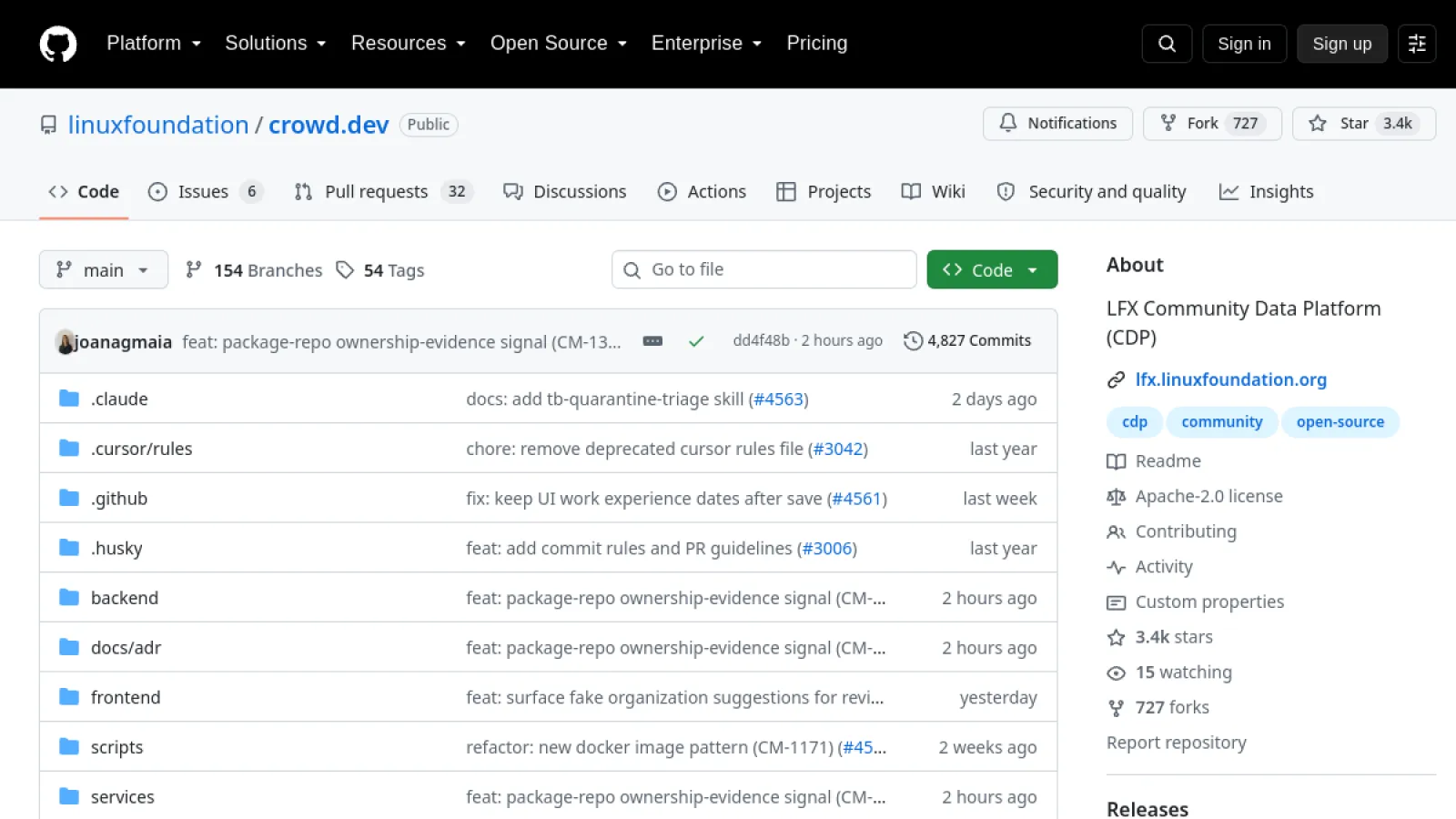
crowd.dev — now the LFX Community Data Platform under the Linux Foundation — is the closest living relative of what Orbit and early Common Room used to be: member-level community analytics across GitHub, Discord, Slack, and more, with identity resolution across platforms. It's open source (Apache 2.0), self-hostable for free, and actively maintained through 2026.
Key differentiator
It covers exactly the half of old Common Room that a listening tool doesn't: your owned community. Member profiles, engagement history, and community health for the spaces you run — and because it's open source, no acquirer can sunset your deployment.
Pricing
Free and open source (Apache 2.0) when self-hosted; the hosted LFX platform serves Linux Foundation projects. Budget real engineering time for self-hosting.
Best for
- Open-source projects and devtools with GitHub-centric communities
- Teams that need member-level profiles and identity resolution
- Ex-Orbit users who want community analytics that can't be acquired away
Pros
- Free, open source, and self-hostable
- Member-level analytics with cross-platform identity resolution
- Backed by the Linux Foundation, actively maintained
- Full control of your community data
Cons
- Self-hosting takes real setup and maintenance effort
- Not a public-web listening tool — it analyzes channels you connect
- Hosted version is oriented to Linux Foundation projects
- No AI relevance filtering for brand mentions
Syften
Community listeningBest Budget Option for Niche Communities
Syften is a lean keyword-alerting tool for niche communities — Slack groups, forums, Reddit, Hacker News, and the corners of the dev internet where a founder's first users hang out. It ships fast (near-daily releases), added MCP support in May 2026, and starts at $29.95/month. It's alerts rather than analytics: no member profiles, no sentiment dashboards, just 'someone said your keyword, here's the link.'
Key differentiator
Price and niche coverage. At $29.95/mo it's the cheapest real answer on this page, and it monitors public Slack communities and small forums most listening tools ignore.
Pricing
Entry $29.95/mo (3 community filters), Standard $49.95/mo (adds API and AI filtering), PRO $119.95/mo (adds webhooks and MCP). Verified September 2026.
Best for
- Bootstrapped founders and non-profits priced out of everything else
- Monitoring niche Slack communities and small forums
- Simple keyword alerts without an analytics layer
Pros
- Cheapest credible option ($29.95/mo entry)
- Covers niche communities (public Slack, forums) others skip
- API from $49.95/mo; webhooks and MCP on PRO
- Actively developed, indie and focused
Cons
- Alerts, not analytics — no dashboards or member data
- Filter counts are tight on lower tiers
- Lighter AI filtering than dedicated listening platforms
- Single-developer scale — support is one person
Clay
GTM signalsBest for DIY GTM Signal Workflows
Clay is the build-your-own answer to Common Room's GTM half. Instead of a fixed signals dashboard, you compose enrichment and intent workflows from 100+ data providers — job changes, hiring bursts, tech-stack changes, web intent — and pipe the results anywhere. It's the tool Reddit's GTM crowd most often names in the same breath as Common Room, and the flexibility cuts both ways: more control, more assembly required.
Key differentiator
Composability. Common Room gives you its signals; Clay lets you define your own from raw providers, with spreadsheet-style logic and per-row AI. If your team has a GTM engineer, it replaces the intent half at a fraction of the contract size.
Pricing
Free tier (500 actions/mo); Launch from $167/mo and Growth from $446/mo on monthly billing (annual billing is cheaper). Credit-based — heavy enrichment adds up. Verified September 2026.
Best for
- GTM engineers who want to build signal workflows, not buy them
- Teams replacing Common Room's prospecting credits with raw providers
- Outbound motions that need enrichment + intent in one flow
Pros
- Free tier to prototype on
- Enormous provider ecosystem and workflow flexibility
- Published pricing that starts under $200/mo
- Strong community and template library
Cons
- Assembly required — it's a toolkit, not a product with opinions
- Credit costs grow quickly at volume
- No community listening or member analytics at all
- Learning curve is real for non-technical teams
Warmly
GTM signalsBest for Website-Visitor Intent
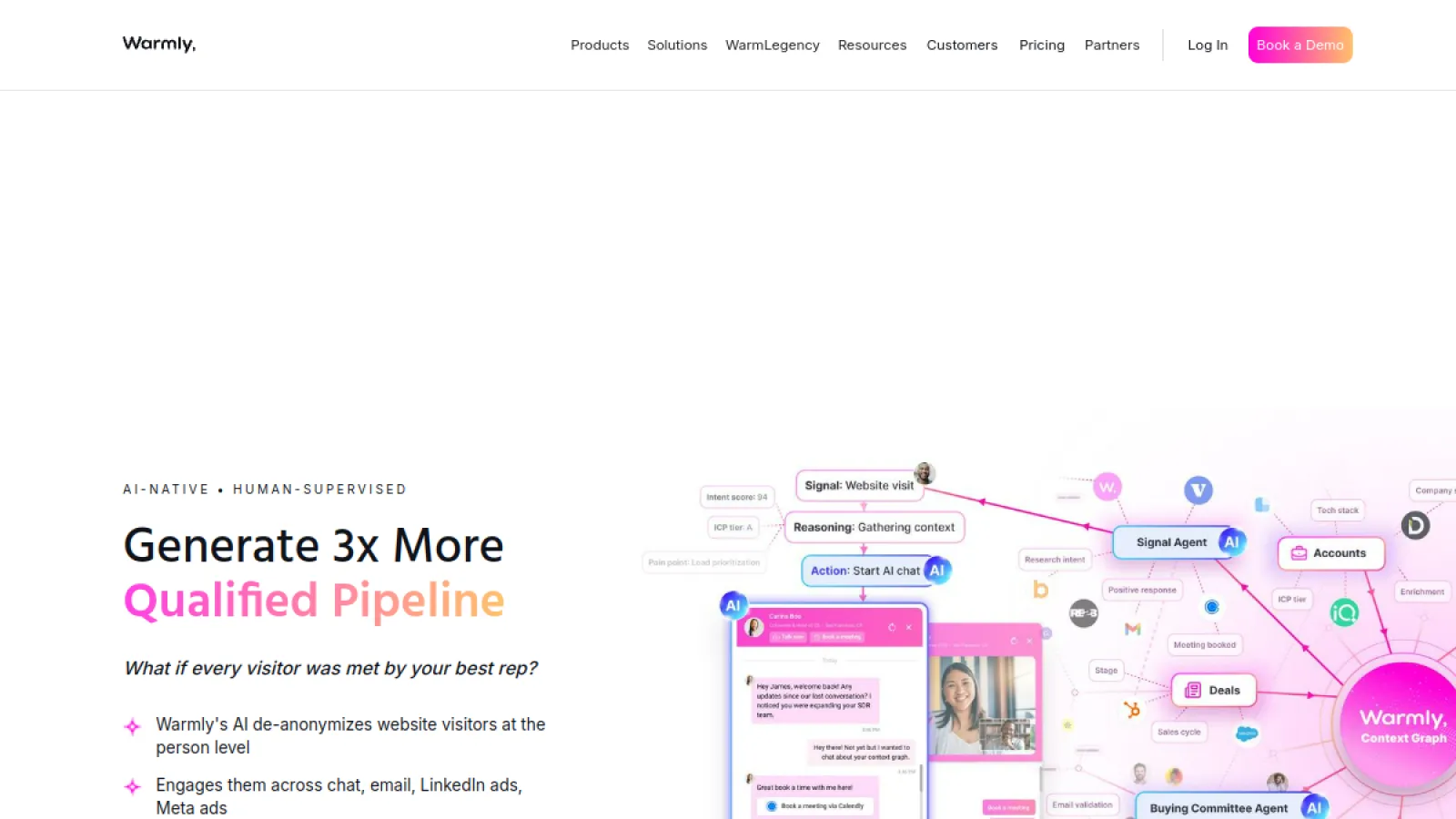
Warmly focuses on one high-value GTM signal: who is on your website right now, de-anonymized to the person and company level, with automated chat and outreach layered on top. If the Common Room feature you'll miss is 'someone from an in-market account is looking at us,' Warmly is the dedicated version of exactly that.
Key differentiator
Depth on a single signal. Instead of aggregating community, social, and product signals, Warmly goes deep on visitor identification and immediate action — chat, email, and orchestration triggered while the visitor is still on the page.
Pricing
From $10,000/yr (AI Web-Deanonymization); Inbound Chat $20,000/yr and AI Inbound Autopilot $30,000/yr; GTM Signals add-on $10,000/yr. No free tier. Verified September 2026.
Best for
- Sales teams that act on website-visitor intent
- Mid-market B2B with real inbound traffic
- Teams that want automated chat/outreach on hot visitors
Pros
- Best-in-class visitor de-anonymization
- Acts on signals in real time (chat, outreach)
- Simpler to adopt than a full GTM suite
- Meaningfully cheaper than Common Room's floor
Cons
- One signal type — no community or social listening
- Still a five-figure annual commitment
- Value scales with your inbound traffic
- Credit-based limits on identification volume
UserGems
GTM signalsBest for Job-Change & Champion Tracking
UserGems tracks the single GTM signal Reddit's sales crowd calls the most reliable: your champions changing jobs. When a happy user lands at a new company, UserGems surfaces it, enriches the contact, and routes it to your CRM with an ROI guarantee attached. It's a big contract — but it's the focused, proven version of Common Room's job-change alerts.
Key differentiator
Signal quality over signal quantity. One in eight contacts changes jobs each year, and champion moves convert at rates intent dashboards can't touch. UserGems does this one thing with published pricing and a money-back ROI guarantee.
Pricing
Core $40,000/yr, Advanced $75,000/yr, Elite $150,000/yr — published, credit-based, with tiered ROI guarantees. Verified September 2026.
Best for
- Sales orgs with a real customer base to mine for champion moves
- Teams that route signals directly into CRM sequences
- Companies consolidating point intent tools into one proven signal
Pros
- The highest-quality single GTM signal, done properly
- Published pricing with an ROI guarantee
- Clean CRM integrations and routing
- AI agents for list building and research included
Cons
- Starts at $40k/yr — enterprise-sized commitment
- No community, social, or web listening
- Overkill without a sizeable existing customer base
- Credit model requires volume planning
Free Common Room Alternatives
Running a non-profit or pre-revenue community? You can cover the basics for $0 — with honest trade-offs.
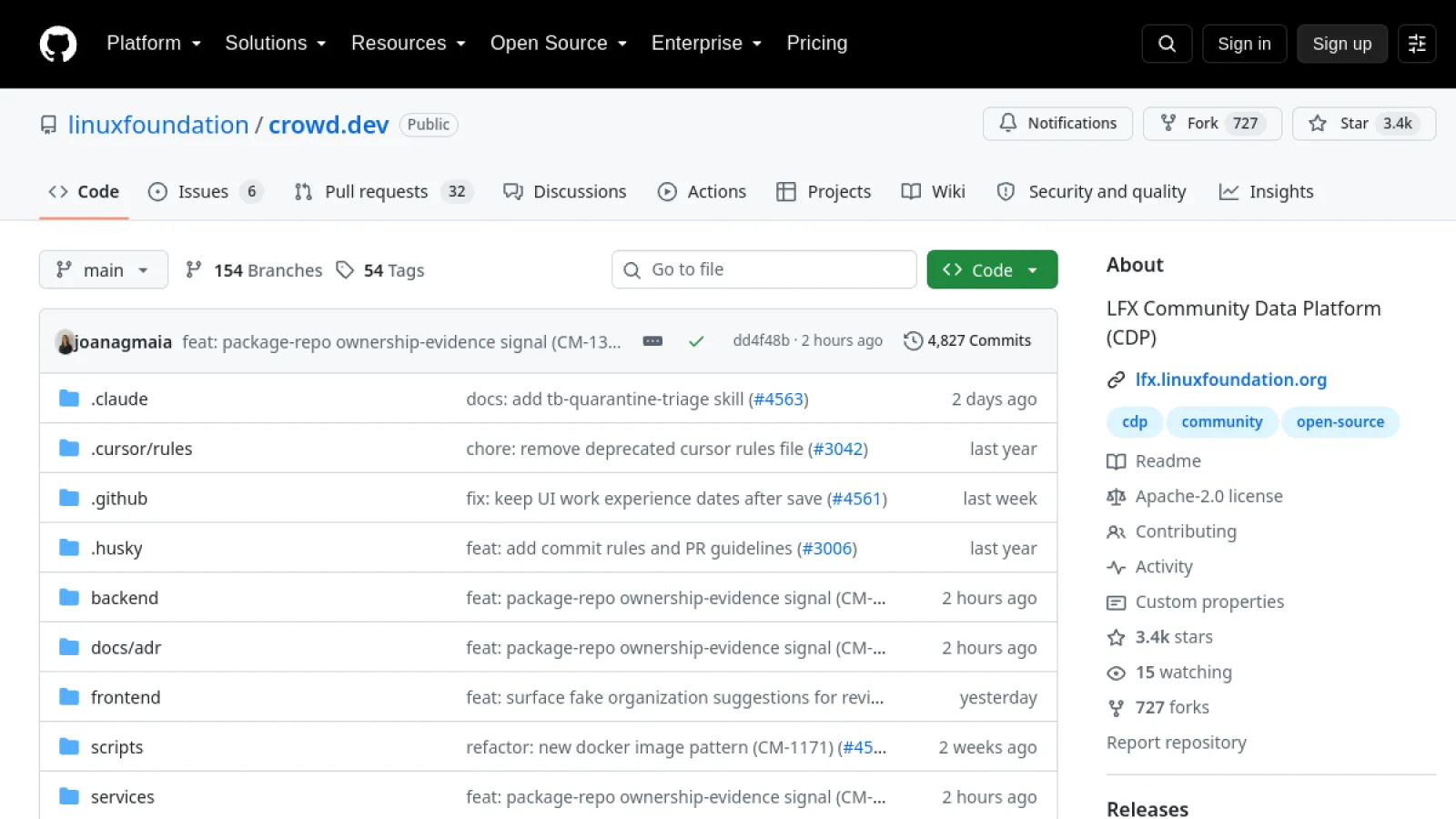
crowd.dev (self-hosted)
The full open-source LFX Community Data Platform, run on your own infrastructure.
Member analytics for GitHub, Discord, Slack & connected channels
You're the ops team: setup, upgrades, and hosting costs are on you. No public-web listening.
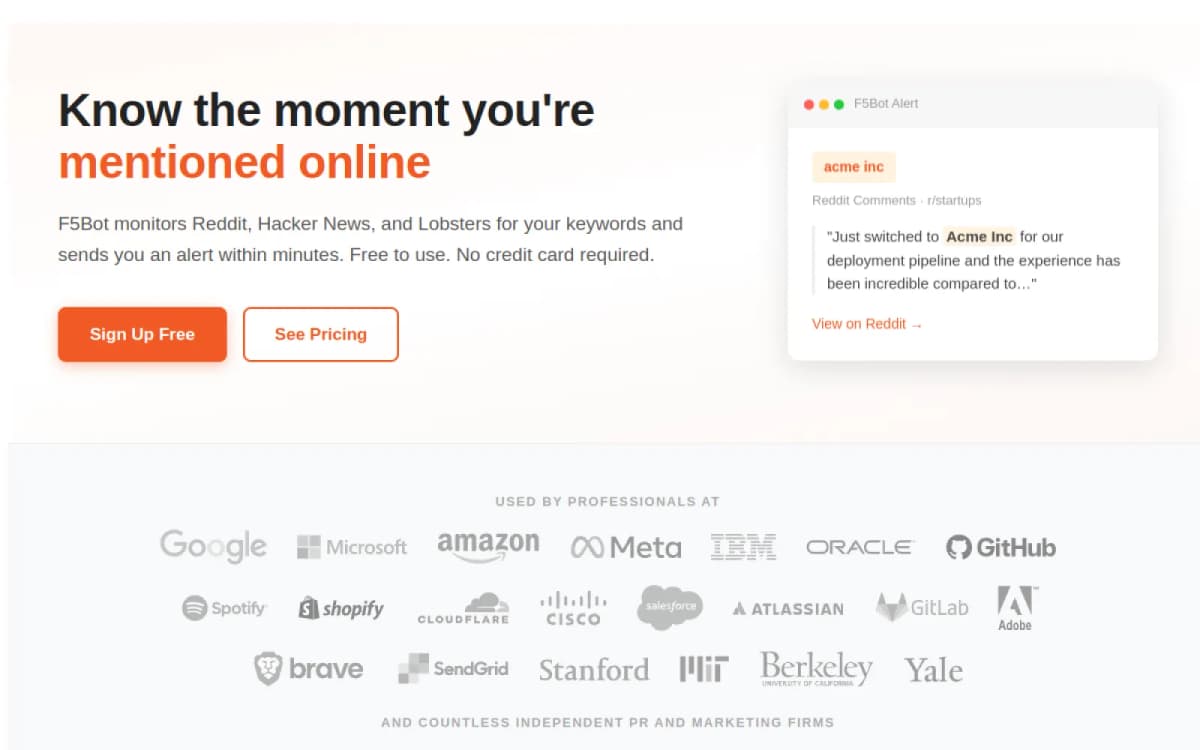
F5Bot
Free email alerts whenever your keyword appears on Reddit, Hacker News, or Lobsters.
Reddit, Hacker News, Lobsters
Email-only, no filtering — common-word brands get buried. No X, LinkedIn, or API.
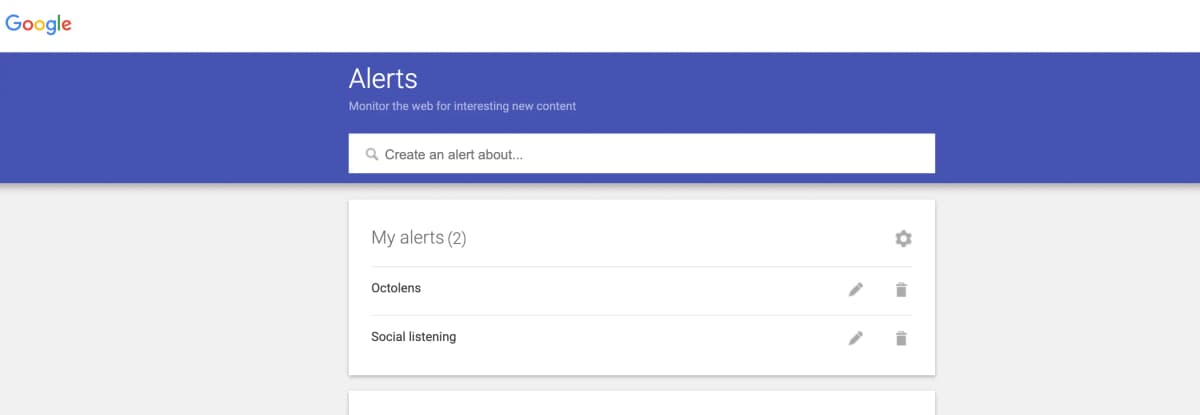
Google Alerts
The classic: email digests when Google indexes new pages matching your query.
News sites, blogs, and the indexed web
Misses most social and community platforms entirely, and often lags by days.
A workable $0 stack: self-hosted crowd.dev for your owned community, F5Bot for Reddit and Hacker News, Google Alerts for the news. What you give up is everything in between — X, LinkedIn, podcasts, newsletters — plus relevance filtering and any API.
How to Choose the Right Common Room Alternative
Start from the job you actually used Common Room for — listening, community analytics, or GTM signals
This is the essential job, and a dedicated listening tool does it better than a GTM suite: 15+ public platforms including Reddit, Hacker News, and GitHub, AI relevance filtering, and API/MCP/webhooks on every plan — at $199/mo flat ($159 annual) instead of a $30,000/yr contract.
Owned-community analytics is the half of old Common Room that listening tools don't do. crowd.dev is open source, free to self-host, backed by the Linux Foundation, and can't be sunset by an acquirer. Pair it with a listening tool and you've rebuilt old Common Room for a fraction of the cost.
At $29.95/mo it's the cheapest credible monitoring on this page, and it covers niche communities — public Slack groups, small forums — that bigger tools skip. Upgrade to Standard ($49.95) when you need the API and AI filtering.
Clay rebuilds Common Room's intent workflows from raw providers with far more control and a free tier to prototype on. It's a toolkit, not a turnkey product — budget the assembly time.
Visitor de-anonymization with immediate action (chat, outreach) is Warmly's entire product. From $10,000/yr — a real budget, but a third of Common Room's floor.
The r/sales consensus is that job-change signals are the one intent type that reliably converts. UserGems does only that, with published pricing (from $40k/yr) and an ROI guarantee — right-sized only if you have a real customer base to mine.
That product no longer exists at a community-team price. Stay on Common Room inside Zoom if the budget works — or pair Octolens (public-web listening) with crowd.dev (owned community) and cover both halves for under $250/mo plus hosting.
Octolens is API-first: one API, an MCP server, and webhooks on every plan, delivering structured, AI-filtered JSON. Your agents get ears without an enterprise contract — the same reason teams like Vercel and PostHog consume mentions outside the app entirely.
Still Not Sure?
Ask what you'd miss if Common Room disappeared tomorrow. If it's pipeline — intent scores, prospect lists, champion alerts — pick the GTM tool that matches your strongest signal. If it's knowing what your community is saying, that's listening: start with Octolens, add crowd.dev if you also need member analytics for spaces you run.
We watched this category consolidate from the inside
Why the team behind a community data platform ended up building a listening-only tool
The crowd.dev years
Octolens co-founder Charlotte Schmitt ran operations at crowd.dev — the open-source community data platform — through its acquisition by the Linux Foundation. The job was the same one Common Room's early customers had: know who your community is, and know what they're saying about you across GitHub, Reddit, Hacker News, and everywhere else developers talk.
What that vantage point taught us
- The two halves have different buyers: owned-community analytics serves community teams; public-web listening serves everyone — community, DevRel, marketing, founders, and increasingly AI agents. Bundling them forces one buyer to fund the other's roadmap.
- The money pulls platforms toward sales: revenue teams have bigger budgets than community teams, so every bundled platform drifts toward GTM — Common Room being the clearest example, all the way into Zoom.
- Listening is the part that survives: whatever happens to platforms, the need to hear what real people say about you doesn't go away. That's why we built Octolens to do only that — and made the data available via API on every plan, so it plugs into whatever stack you run next.
What the listening-only trade looks like
Teams like Vercel, PostHog, Cursor, and Tally use Octolens this way — mentions delivered into Slack channels, dashboards, and agent workflows rather than another dashboard to check. Read more on the customers page.
What people actually say about Common Room
Real, public posts — unedited and linked to the source. Two conversations run in parallel: community folks priced out and still mourning Orbit, and sales folks debating whether intent dashboards pay off at all.

Quotes are verbatim from public posts; brackets mark editorial substitutions and ellipses mark truncation. Opinions belong to their authors and are not endorsements.
Compare other social listening tools
See how Octolens compares to other popular social listening platforms.
Frequently Asked Questions
It depends on which job you used Common Room for. For community listening — hearing what people say about you across Reddit, X, Hacker News, GitHub, and the rest of the public web — Octolens is the best alternative: listening is its entire product, from $199/month flat ($159 annual) with API, MCP, and webhooks on every plan. For member analytics in communities you run (Slack, Discord, GitHub), crowd.dev / LFX Community Data Platform is the open-source pick. For the GTM half — intent signals and prospecting — Clay, Warmly, and UserGems each do one part of that job well.
Zoom announced a definitive agreement to acquire Common Room on July 2, 2026, and the deal closed the same month. Common Room's buyer-intelligence platform is being folded into Zoom Revenue Accelerator, Zoom's AI revenue platform. The product had already evolved well before the acquisition: from community management into AI-native GTM intelligence, with plans packaged around RoomieAI research and Prospector credits for sales teams.
Common Room's published Essential plan is $2,500/month billed annually — $30,000/year — for 5 seats and up to 100k contacts, with RoomieAI and Prospector credit allowances. Advanced and Enterprise tiers are custom-priced. There is no free tier (verified September 2026). Always confirm current pricing with the vendor, especially during the Zoom integration.
Nothing replaced Orbit one-for-one after Postman acquired it in April 2024 and sunset the product about 90 days later. The closest successor is crowd.dev — now the LFX Community Data Platform under the Linux Foundation — which is open source and covers member-level analytics across GitHub, Discord, and Slack. For the listening side of what Orbit's users tracked, a dedicated tool like Octolens covers public-web mentions. Many ex-Orbit teams pair the two.
Partially. Self-hosting crowd.dev (open source, Apache 2.0) gives you owned-community analytics for free if you can run it yourself. F5Bot sends free keyword alerts for Reddit and Hacker News, and Google Alerts covers indexed news and blogs. What no free stack replaces is filtered, cross-platform listening with an API — that's where paid tools start, at $29.95/mo (Syften) or $199/mo (Octolens).
No — deliberately. Octolens does only the listening: it monitors 15+ public platforms, filters mentions with AI, and delivers them to Slack, email, webhooks, its API, or an MCP server. It does not build member profiles, resolve identities across your Slack and Discord, score intent, or run outreach. If you need those, pair Octolens with crowd.dev (community analytics) or a GTM tool like Clay.
Depends on your strongest signal. Clay (free tier; from $167/mo monthly billing) if you want to build custom intent workflows from raw data providers. Warmly (from $10k/yr) if website-visitor de-anonymization is the signal you act on. UserGems (from $40k/yr, with an ROI guarantee) if champion job-changes drive your pipeline. All three are cheaper than Common Room's $30k/yr floor — but none of them do community listening.
crowd.dev / LFX Community Data Platform connects directly to Slack, Discord, and GitHub for member-level analytics of communities you run. Syften monitors a curated set of public Slack communities for keyword mentions. Octolens does not ingest Slack or Discord — it monitors the public web (Reddit, X, Hacker News, GitHub, news, podcasts, newsletters, and more).
Octolens includes its API, webhooks, and an MCP server on every plan from $199/month — mentions arrive as structured JSON your team or your AI agents can consume. crowd.dev is open source, so the data layer is fully yours. Syften includes API access from its $49.95/mo Standard tier and MCP on PRO. Clay is itself a data-workflow tool, while Warmly and UserGems focus on CRM integrations rather than open APIs.
If you're happy and the budget works, staying put is reasonable — acquisitions can take quarters to change anything. But the category's recent history argues for a plan B: Orbit was sunset within ~90 days of its acquisition, and Threado dissolved after its pivot. If your use case is community rather than revenue, you're no longer the core customer of a product inside a sales platform — which is exactly when roadmaps drift away from you.
For the listening half, switching is light: add your brand, product, and competitor keywords to the new tool and mentions start flowing within minutes — run both in parallel until you trust the coverage. For owned-community analytics, export your member data and reconnect your channels (GitHub, Discord, Slack) in crowd.dev. GTM signal tools like Clay or UserGems connect to your CRM directly. There's no heavyweight migration in any of the three paths.
You can reach us at hi@octolens.com. We'll get back to you within 24 hours (usually much faster) — including an honest 'that's not us, use crowd.dev or Clay' when your use case is community analytics or GTM signals rather than listening.
Keep the listening. Skip the suite.
Octolens does the one job that made Common Room worth checking every morning: every public mention of your brand, across 15+ platforms, AI-filtered, delivered to Slack or your agents. $199/mo flat — not $2,500. API, MCP, and webhooks on every plan.