
11 Best Brand Monitoring Tools in 2026
Discover the top 11 brand monitoring tools for 2026. Get actionable insights and find the right software to track mentions, feedback, and competitors.
Keeping an ear to the ground isn't just a good idea anymore; it's essential for survival and growth. For B2B SaaS companies, a single Reddit thread, X (formerly Twitter) post, or podcast mention can change your company's trajectory overnight. The challenge isn't a lack of information, but an overwhelming amount of digital noise. Who has time to manually sift through it all?
Choosing the right brand monitoring tools separates the teams that simply react from the teams that strategically lead. Instead of drowning in endless alerts, you can pinpoint critical conversations, gather unfiltered product feedback from developers and community members, and spot competitor moves before they become a real threat. These platforms are crucial for not just tracking mentions but also for actively measuring and shaping brand perception, allowing you to implement proven strategies to improve brand awareness with data-backed confidence.
This guide cuts through the marketing fluff to give you a real-world look at the top 12 tools on the market, from established giants like Brandwatch to specialized platforms like our own, Octolens. We'll explore their true strengths, hidden weaknesses, ideal use cases, and who they're really for. Each option includes screenshots, direct links, and a practical analysis of its features, pros, and cons. Our goal is simple: to help you find the perfect fit to protect your brand and stay genuinely connected to the communities that matter most to your success.
Octolens stands out as a top choice among modern brand monitoring tools, specifically built for the fast-paced B2B SaaS and developer tool world. It moves beyond traditional, often noisy, keyword alerts by using AI to filter and surface only high-signal conversations. This core function is its greatest strength: it saves teams countless hours by eliminating irrelevant mentions and delivering actionable insights directly where they work.
Instead of a bloated dashboard you have to log into constantly, Octolens pushes real-time, vetted notifications to Slack, email, or webhooks. This lets marketing, community, and founding teams react instantly to everything from a glowing review on Hacker News to critical feedback in a niche subreddit, making it a powerful tool for proactive reputation management and customer engagement.
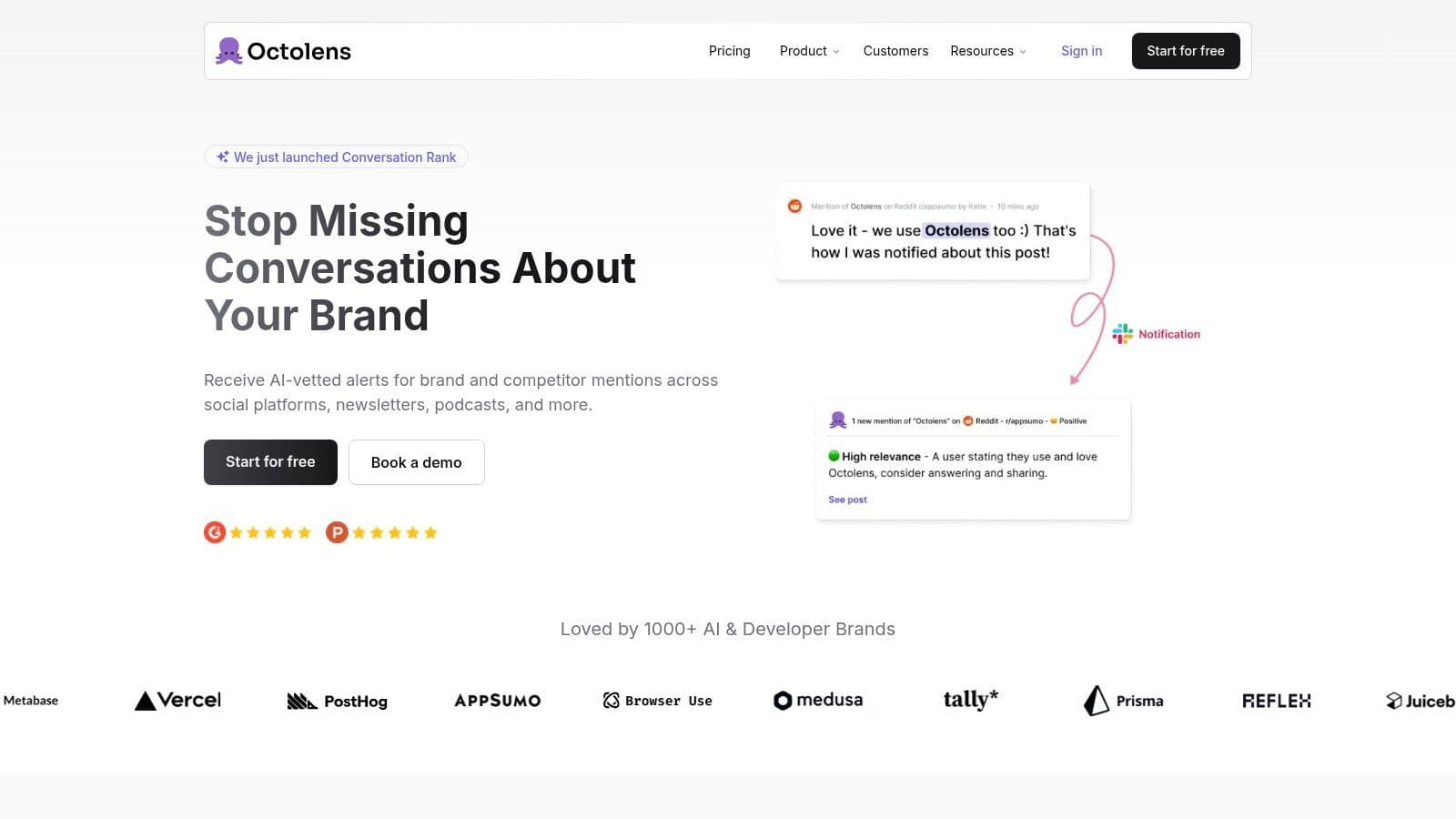
- AI-Powered Relevance Scoring: The standout feature is its intelligent filtering. It analyzes the context, sentiment, and intent behind a mention, ensuring you only see what truly matters. This is a game-changer for tracking competitor launches or gathering genuine user feedback without the noise.
- Broad, High-Impact Source Coverage: The platform scans critical channels where tech conversations happen, including Reddit, X (formerly Twitter), Hacker News, GitHub, newsletters, podcasts, and emerging platforms like Bluesky. This is perfect for developer relations teams tracking repository issues or for founders keeping a pulse on industry newsletters.
- Seamless Workflow Integration: By delivering alerts directly into Slack, Octolens embeds brand monitoring into your team's existing daily workflow. This encourages immediate action, whether it's a developer advocate jumping into a technical discussion or a marketer amplifying positive praise.
- Proactive Competitor Tracking: Set up alerts not just for your brand, but for your key competitors. This allows you to identify their customers' pain points, spot new feature announcements, and capitalize on opportunities as they arise in real-time.
Octolens offers transparent, startup-friendly pricing that scales with your needs. Plans start at $69/month, and they provide a 7-day free trial to experience the AI-vetting process firsthand. The user experience is frequently praised for its simplicity and quick onboarding, allowing teams to get set up and receive valuable alerts in minutes, not days.
Feature Details Best For B2B SaaS, AI, and developer tool companies. Pricing Starts at $69/month, with a 7-day free trial. Integrations Slack, Email, and Webhooks for custom workflows. Website
Pros:
- AI-powered filtering delivers exceptionally relevant, high-signal mentions.
- Real-time alerts integrate directly into team workflows like Slack.
- Covers essential, hard-to-track platforms for tech and SaaS brands.
- Simple, intuitive interface and straightforward pricing.
Cons:
- Currently lacks a dedicated mobile application for on-the-go monitoring.
- No native API is available yet, though webhooks cover most integration needs.
Brandwatch, now part of Cision, is an enterprise-level powerhouse in the world of brand monitoring tools. It’s built for global brands that need to process massive volumes of data from over 100 million sources, including social media, forums, blogs, and news sites. Its core strength lies in its consumer intelligence capabilities, using AI to sift through conversations and identify trends, sentiment, and emerging narratives relevant to your brand.
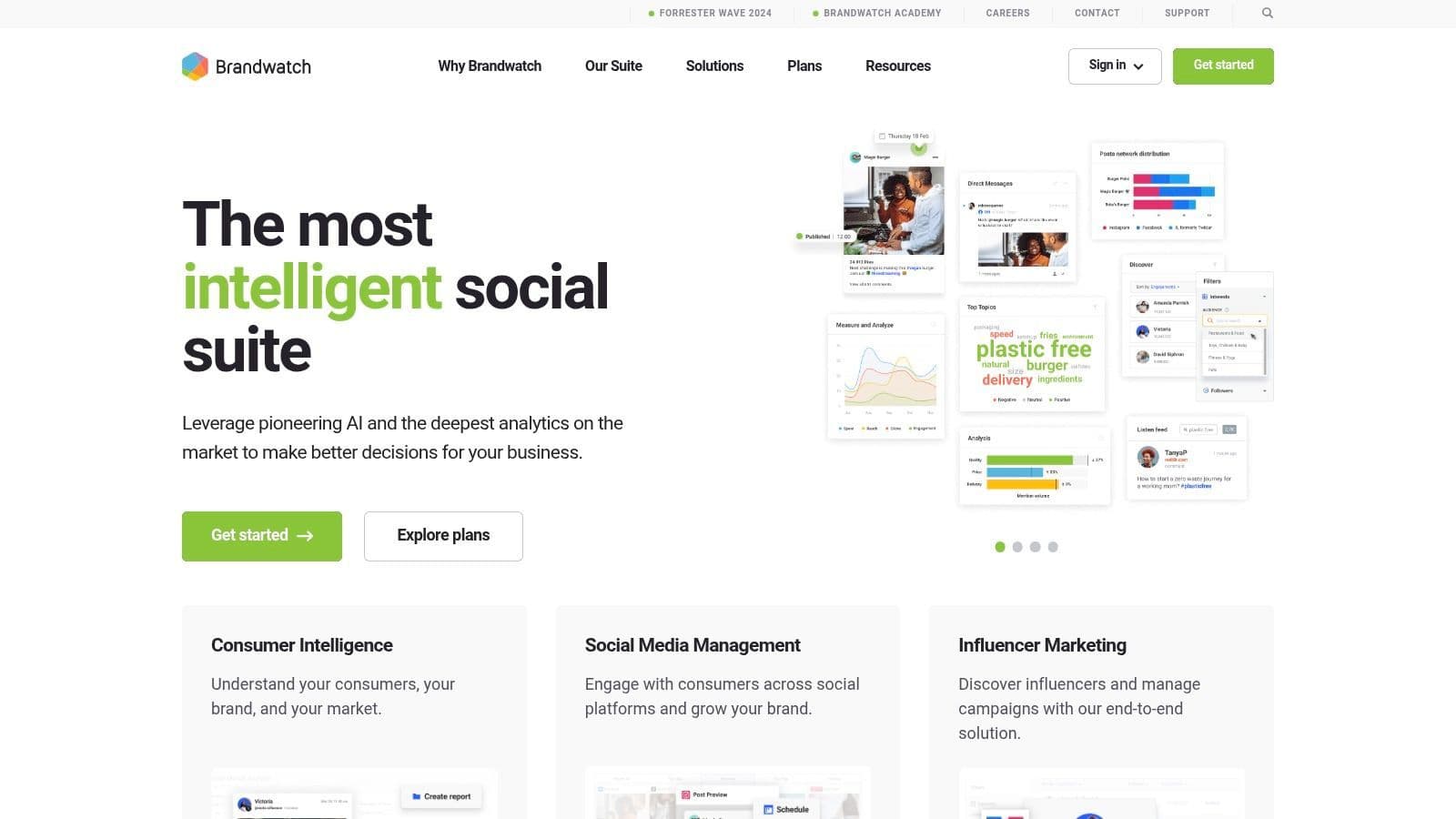
Unlike tools focused solely on social listening, Brandwatch integrates these insights into a broader suite that includes social media management and influencer marketing. This allows large marketing and PR teams to manage workflows from listening and analysis to engagement and publishing within a single ecosystem. It excels at handling complex queries and multilingual monitoring, making it a go-to for corporations with a global footprint.
The platform's real-time alerts and customizable dashboards are crucial for crisis management and campaign tracking. Access to historical data also enables deep dives into long-term brand perception shifts. However, this level of sophistication comes at a cost.
Feature Highlights Best For Potential Drawback Consumer Intelligence & AI Insights Global enterprise teams High complexity for new users Integrated Social Media Suite Crisis management & PR Opaque, enterprise-level pricing 100M+ Monitored Sources In-depth market research May be overkill for smaller businesses
Actionable Tip: Leverage the Brandwatch Academy. The platform is incredibly powerful but has a steep learning curve. Dedicating time to their training resources is essential to unlock its full potential and maximize your ROI. You can find more details in our complete guide to the best brand tracking software.
Website: https://www.brandwatch.com
Talkwalker is a powerful competitor in the brand monitoring tools landscape, known for its extensive data coverage and impressive multilingual capabilities. It pulls insights from over 150 million sources, including social media, blogs, print, and TV/radio broadcasts, making it a comprehensive solution for global brands. Its core differentiator is the Blue Silk AI engine, which powers sentiment analysis, image recognition, and predictive analytics to give teams a forward-looking view of brand trends.
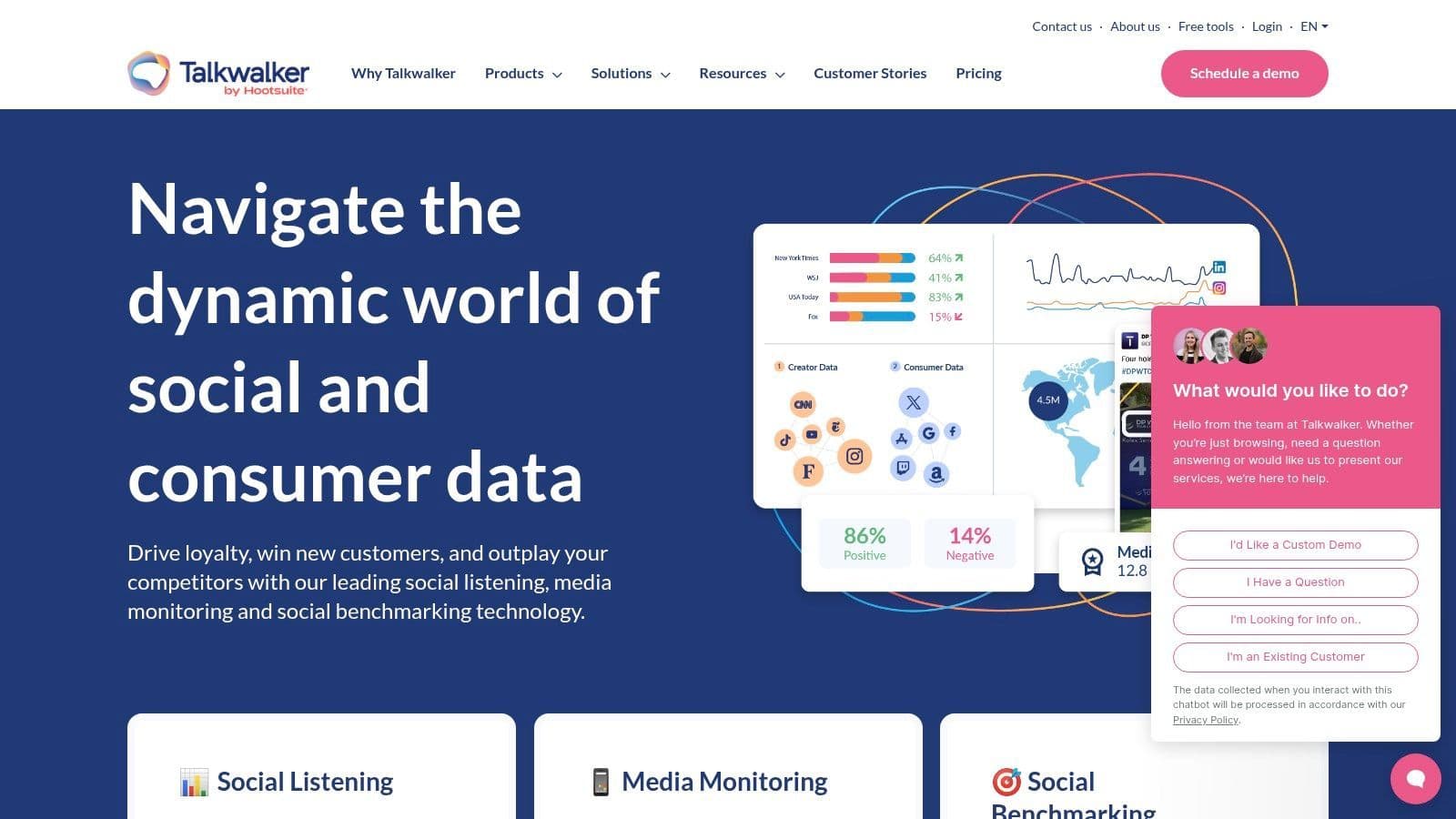
The platform is designed to scale with your organization's needs, offering plans suitable for various maturity levels and, uniquely, providing unlimited user seats on all subscriptions. This encourages widespread adoption across marketing, PR, and consumer insights teams. With pre-built dashboards called 'IQ Apps' and robust governance features, Talkwalker enables both quick analysis and deep, enterprise-grade benchmarking.
Talkwalker excels at turning vast, unstructured data into actionable intelligence with its AI-driven summarization and trendspotting. While its power is immense, the initial setup can be complex for users new to advanced listening platforms. The inclusion of training and onboarding is a significant plus, helping teams get up to speed.
Feature Highlights Best For Potential Drawback Blue Silk AI-Powered Insights Global brands needing deep analytics Complex initial configuration 150M+ Sources & 187 Languages Multilingual campaign monitoring Pricing is not publicly available Unlimited User Seats Large, collaborative teams Steep learning curve for beginners
Actionable Tip: Start with the pre-built 'IQ Apps' dashboards. Instead of trying to build complex custom reports from scratch, use these templates to understand how the platform organizes data for common use cases like campaign tracking or competitive analysis. This can significantly shorten your learning curve. You can learn more about the nuances of social listening vs. monitoring.
Website: https://www.talkwalker.com
Meltwater is a comprehensive media and social intelligence platform designed primarily for public relations and communications teams. Its standout feature is the powerful integration of social listening with access to premium, paywalled news content from sources like Bloomberg and Dow Jones/Factiva. This makes it one of the most effective brand monitoring tools for tracking brand mentions across both mainstream media and the social web in a single, unified view.

Unlike platforms focused solely on social media, Meltwater provides a full-stack solution that supports the entire PR workflow, from monitoring and analysis to influencer outreach and reporting. The platform is continuously innovating with emerging AI features, such as the GenAI Lens, which acts as an AI assistant to help teams quickly synthesize and understand key narratives from brand mentions. This focus on premium data and PR-centric tools gives it an edge for organizations where media relations are paramount.
Meltwater’s robust alert system and customizable dashboards are essential for tracking media coverage, managing crises, and measuring campaign impact. The platform excels at generating detailed reports that showcase the value of PR and communications efforts to key stakeholders. However, the system's extensive capabilities mean it often comes with a higher price tag and requires a dedicated implementation period.
Feature Highlights Best For Potential Drawback Premium News & Editorial Sources PR and corporate comms teams High-end, custom enterprise pricing Integrated PR & Influencer Tools Measuring media campaign ROI Can require significant time for training Emerging AI-Driven Analysis Crisis management and monitoring May be too complex for smaller teams
Actionable Tip: Use Meltwater's reporting features to create dedicated dashboards for different stakeholders. Build one for your executive team focusing on share of voice and sentiment, and another for your marketing team tracking specific campaign mentions. This tailored approach ensures everyone gets the insights they need without information overload.
Website: https://www.meltwater.com
Sprout Social is a comprehensive social media management platform renowned for its user-friendly interface and robust analytics. While primarily known for scheduling and publishing, its brand monitoring capabilities are powerful, offered through an advanced listening add-on. This makes it an ideal choice for businesses, from SMBs to enterprises, that want to integrate brand monitoring directly into their social media management workflow, rather than using a separate, standalone tool.
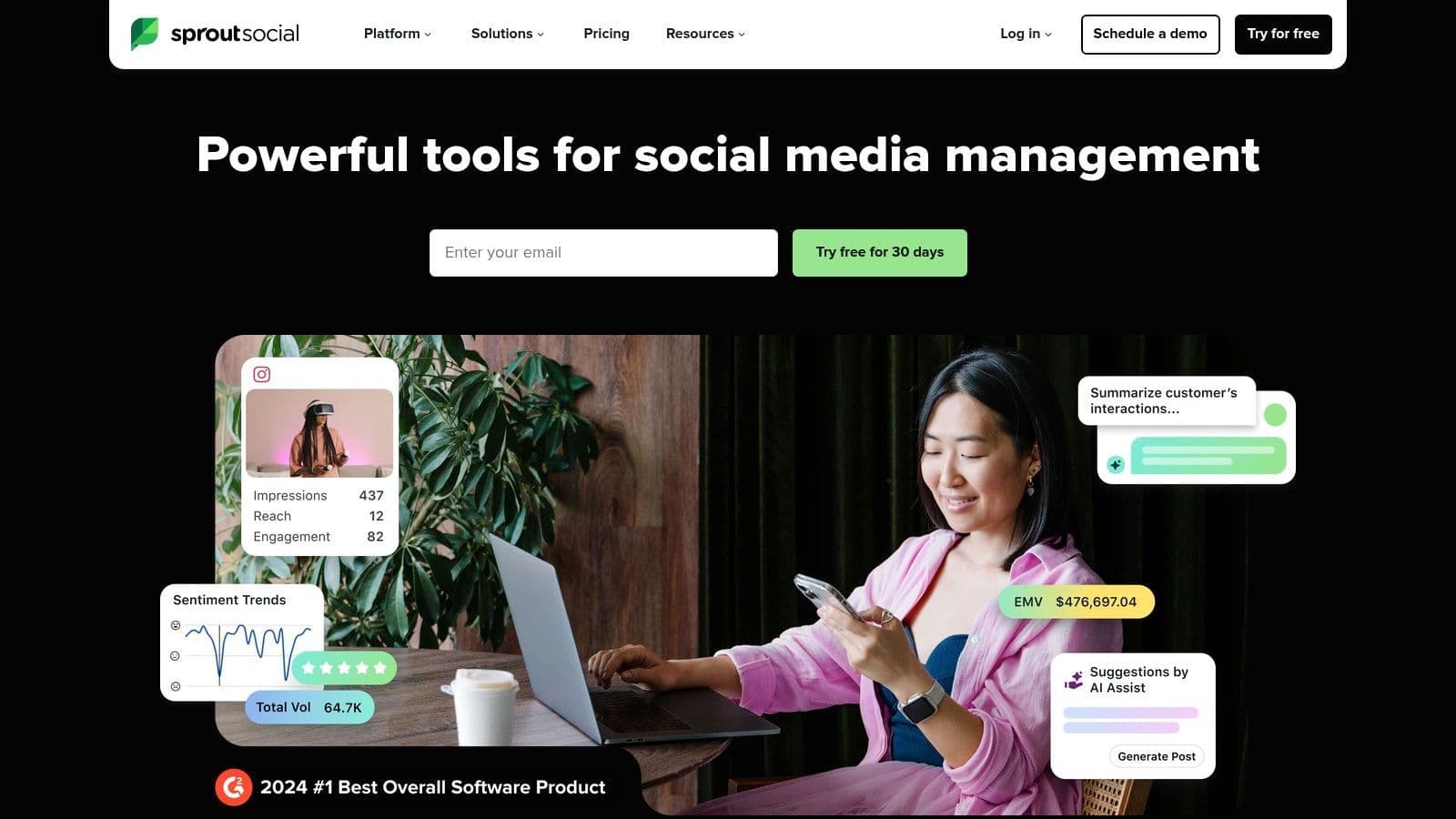
The platform excels at turning social listening data into actionable insights with features like AI-assisted query building and pre-built listening templates for competitor analysis and crisis detection. Its Smart Inbox unifies mentions from various networks, allowing teams to tag conversations by sentiment and respond quickly. This unified approach helps marketing and community management teams stay aligned and efficient. While Sprout Social offers robust brand monitoring capabilities, for holistic social media management and content planning, businesses also benefit from exploring top social media scheduling tools.
Sprout Social’s main appeal is its seamless integration of listening, engagement, and publishing, which simplifies team collaboration. The platform’s transparent pricing and 30-day free trial allow teams to fully evaluate its capabilities before committing. However, it's important to note that the advanced listening features are an add-on, and the per-seat pricing model can become costly for larger teams.
Feature Highlights Best For Potential Drawback Integrated Social Media Suite Teams needing a unified workflow Listening is a separate add-on Listening Templates & AI Queries Brand health and crisis monitoring Per-seat pricing can be expensive Smart Inbox & Sentiment Tagging Efficient community management May not have the data depth of enterprise-only tools
Actionable Tip: Use the listening templates as a starting point. Sprout provides excellent pre-configured queries for brand health, competitor analysis, and industry trends. Customize these templates with your specific keywords and exclusions to quickly build a sophisticated monitoring strategy without starting from scratch.
Website: https://sproutsocial.com
Hootsuite is best known as a comprehensive social media management platform, but it has evolved into a robust tool for brand monitoring by integrating powerful listening capabilities. While basic mention tracking is available in its lower-tier plans, its enterprise-level solutions, powered by Talkwalker, provide deep insights into brand health, sentiment, and competitive intelligence across social media, forums, and news sites. This integration makes it a strong contender for teams that want to consolidate their publishing, engagement, and monitoring workflows into a single dashboard.
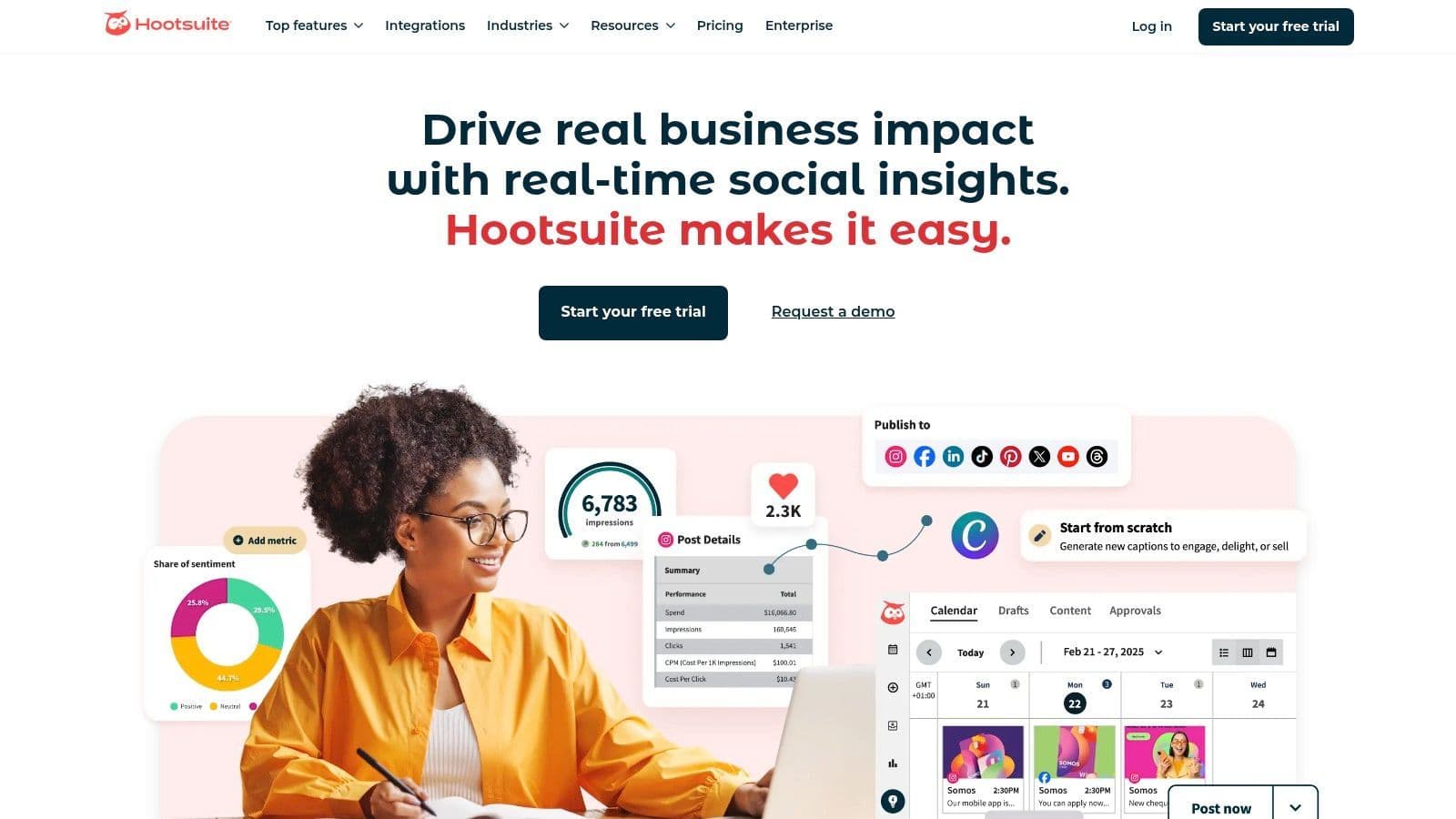
The platform's strength lies in its ability to connect listening directly to action. You can monitor brand conversations and instantly assign mentions to team members for a response, all from one inbox. Hootsuite’s AI-powered summaries help distill large volumes of data into actionable insights, saving time and clarifying key trends. For larger organizations, the inclusion of features like image and logo recognition makes it a versatile choice among brand monitoring tools.
Hootsuite’s unified dashboard is its biggest draw, reducing the friction of switching between separate tools for publishing and listening. However, to unlock the most advanced brand monitoring features, such as deep web and forum tracking, you'll need to subscribe to the more expensive Enterprise plans.
Feature Highlights Best For Potential Drawback Integrated Publishing & Listening Marketing teams wanting a unified workflow Advanced monitoring is limited to high-tier plans Real-time Alerts & Sentiment Analysis Social media managers and community teams Pricing can be unclear and requires a sales call Competitor & Trend Benchmarking SMBs and enterprises tracking their market position Less specialized than dedicated monitoring-only tools
Actionable Tip: Use the "Streams" feature for at-a-glance monitoring. You can set up dedicated streams to track keywords, hashtags, and mentions related to your brand, competitors, and industry. This creates a persistent, real-time dashboard that keeps you constantly informed without having to run new searches.
Website: https://www.hootsuite.com
Brand24 strikes a balance between powerful features and affordability, making it one of the most accessible brand monitoring tools for small to medium-sized businesses and agencies. It provides a comprehensive view of your brand’s online presence by tracking mentions across social media, news sites, blogs, forums, and even podcasts and newsletters on higher tiers. The platform is designed for ease of use, allowing teams to get up and running quickly without a steep learning curve.
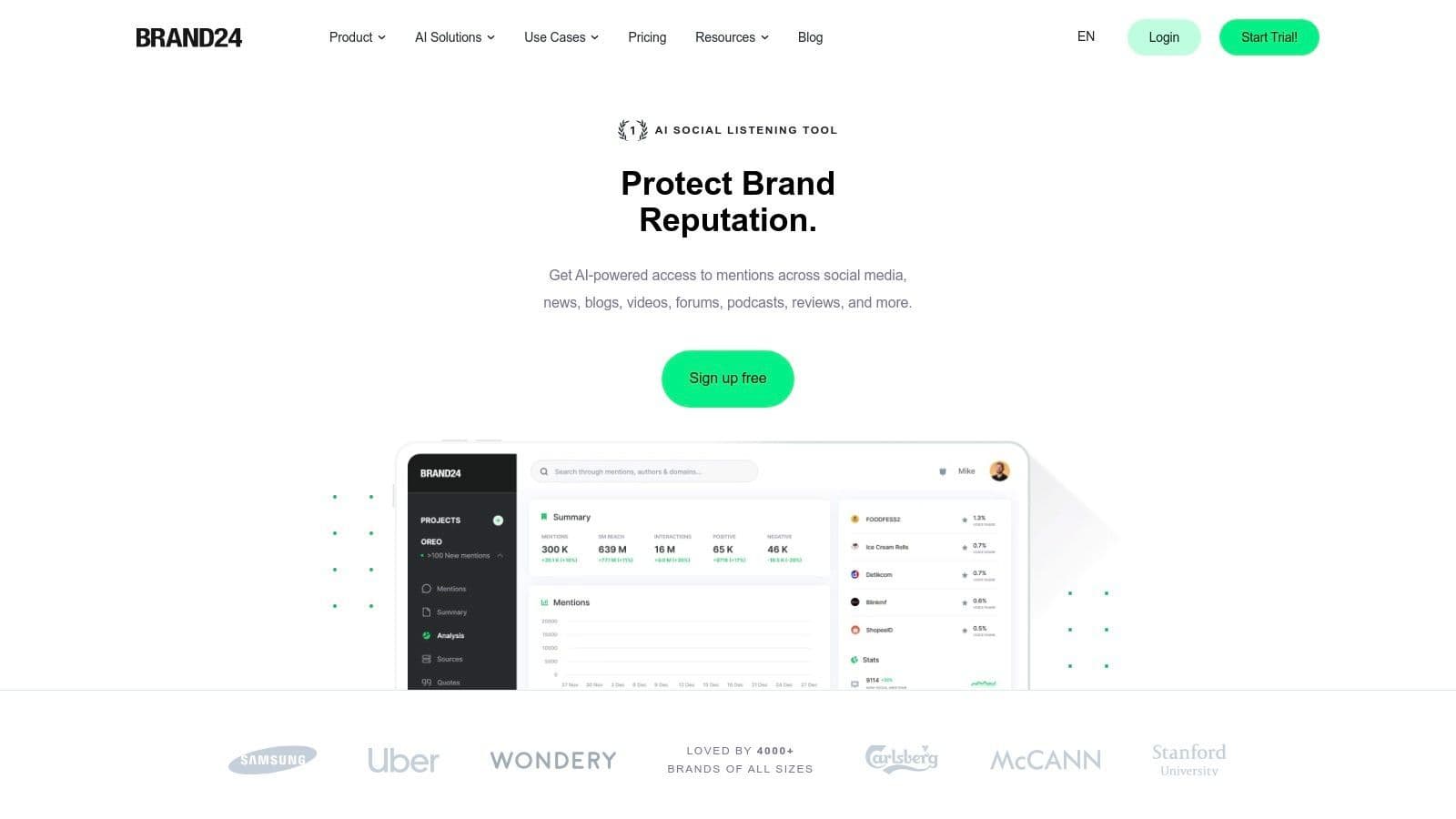
Unlike enterprise-grade solutions, Brand24 offers transparent pricing and a straightforward setup, democratizing access to real-time brand intelligence. Its strength lies in its user-friendly interface, which presents data like sentiment analysis, reach, and share of voice in an easily digestible format. This makes it ideal for teams that need actionable insights without the complexity or cost associated with more advanced platforms. The mobile app with push notifications is also a significant plus for monitoring on the go.
The platform's real-time alerts and AI-driven sentiment analysis are crucial for spotting trends and managing customer feedback promptly. While its entry-level plan is quite capable, more advanced source coverage (like Reddit and TikTok) and higher mention limits are reserved for premium plans.
Feature Highlights Best For Potential Drawback Real-time alerts & mobile app SMBs and marketing agencies Entry plan updates every 12 hours AI-powered sentiment analysis Social media and community managers Limited monthly mentions on lower tiers Transparent pricing & free trial Teams needing a fast setup Advanced sources require higher plans
Actionable Tip: Start with the 14-day free trial to precisely define your monitoring keywords and filters. A well-crafted project setup is key to avoiding noise and ensuring the mention data you collect is relevant, which is especially important when you have monthly limits. If you're exploring other options, consider our guide on finding the right Brand24 alternative.
Website: https://brand24.com
Mention is a powerful yet accessible brand monitoring tool that excels at real-time media tracking and social listening. It monitors over 1 billion sources daily, including social media, news sites, forums, blogs, and an impressive range of over 75 review platforms. This makes it particularly strong for brands focused on managing their online reputation and responding quickly to customer feedback, whether it’s a Tweet or a new Yelp review.
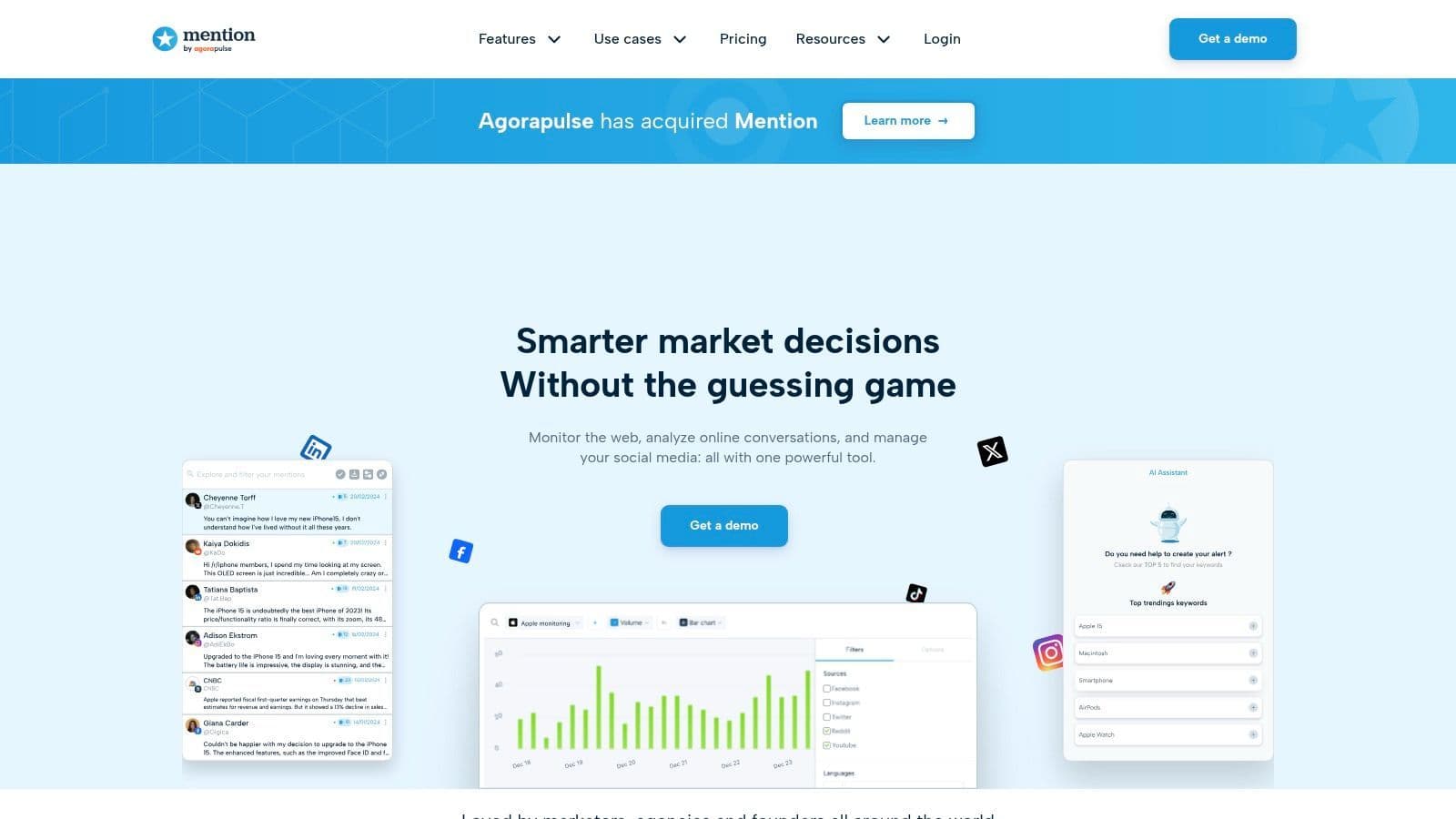
The platform is built around an alert-centric system, notifying you instantly when your brand, competitors, or keywords are mentioned online. This approach is ideal for proactive community management and catching potential PR issues before they escalate. While it offers sophisticated features like sentiment analysis and competitive tracking, its core value lies in its straightforward and immediate approach to monitoring, making it a favorite for both agencies and in-house marketing teams.
Mention's strength is its blend of simplicity for core alerts with deeper analytics available for those who need it. The tailored 'Company' plan provides advanced features like API access and historical data, catering to larger organizations with more complex monitoring needs. Pricing is more transparent for higher tiers, starting at $599/month for the Company plan, with discounts available for annual billing.
Feature Highlights Best For Potential Drawback Real-time Alerts & Notifications Proactive reputation management Advanced features are gated in premium plans Extensive Review Site Monitoring B2C brands & local businesses Entry-level plans can be limiting Competitive Analysis Dashboards Tracking share of voice vs. rivals Cost can be high for the comprehensive 'Company' plan
Actionable Tip: Use Mention's Boolean search operators to refine your alerts. For example, use ("your brand" AND "customer service") NOT "job opening" to track specific conversations while filtering out irrelevant noise like recruitment posts. This precision makes your real-time alerts far more actionable.
Website: https://mention.com
Awario positions itself as a powerful yet affordable brand monitoring tool, making it an excellent entry point for SMBs and startups that need comprehensive tracking without an enterprise-level budget. Its core value proposition lies in providing generous mention quotas and unlimited keyword setup, allowing smaller teams to cast a wide net across social media, news sites, blogs, and forums without hitting restrictive limits common in lower-tiered plans of other platforms.
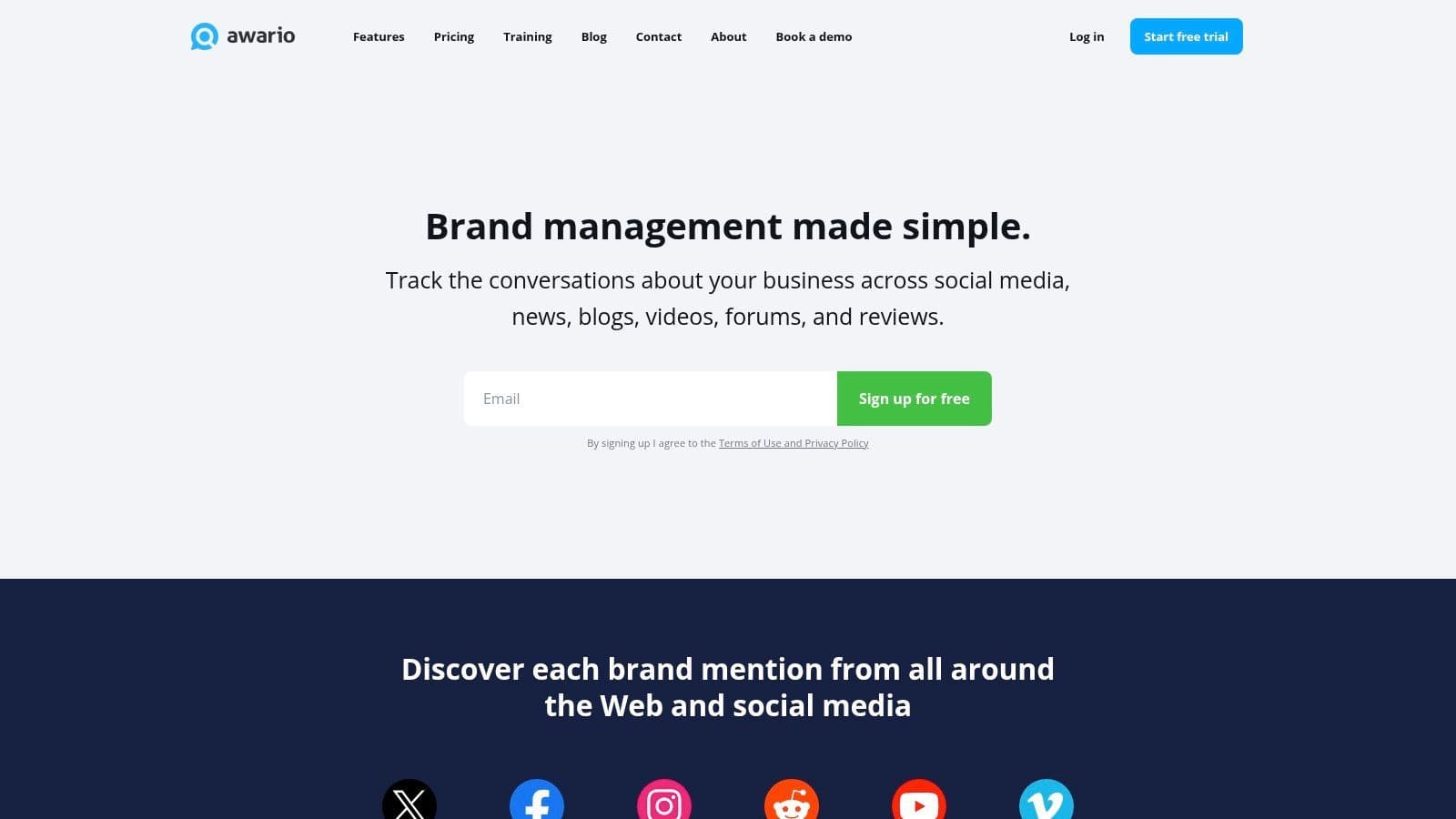
Unlike complex enterprise solutions, Awario prioritizes accessibility and ease of use. The platform supports Boolean search logic even in its starter plans, giving users a sophisticated way to refine queries and filter out noise. This focus on delivering core monitoring capabilities effectively makes it a pragmatic choice for companies focused on tracking brand health, identifying sales opportunities, and engaging with customer conversations directly.
The platform’s transparent pricing and clear feature tiers are a major plus, removing the guesswork often associated with SaaS procurement. While it may not have the deep AI-driven consumer intelligence of its pricier competitors, its white-label reporting and API access in higher plans provide significant value for agencies and marketing teams needing to integrate data into their workflows.
Feature Highlights Best For Potential Drawback Generous Mention Quotas Startups & mid-market businesses Limited historical data in lower tiers Unlimited Boolean Keywords Precise, targeted monitoring Fewer data sources than enterprise tools White-Label Reporting Marketing agencies & consultants Simpler UI with fewer customizations
Actionable Tip: Use the Boolean search setup to create highly specific alerts. For example, monitor your brand name alongside keywords like "alternative," "competitor," or "recommendation" to uncover sales leads and competitive intelligence opportunities you might otherwise miss.
Website: https://awario.com
BuzzSumo approaches brand monitoring from a content marketing and PR perspective. While not a traditional social listening tool, it excels at tracking how your brand is mentioned across the web, particularly in articles, blogs, and news content. Its strength lies in connecting brand mentions with content performance, helping you understand which publications and topics drive the most engagement and links.
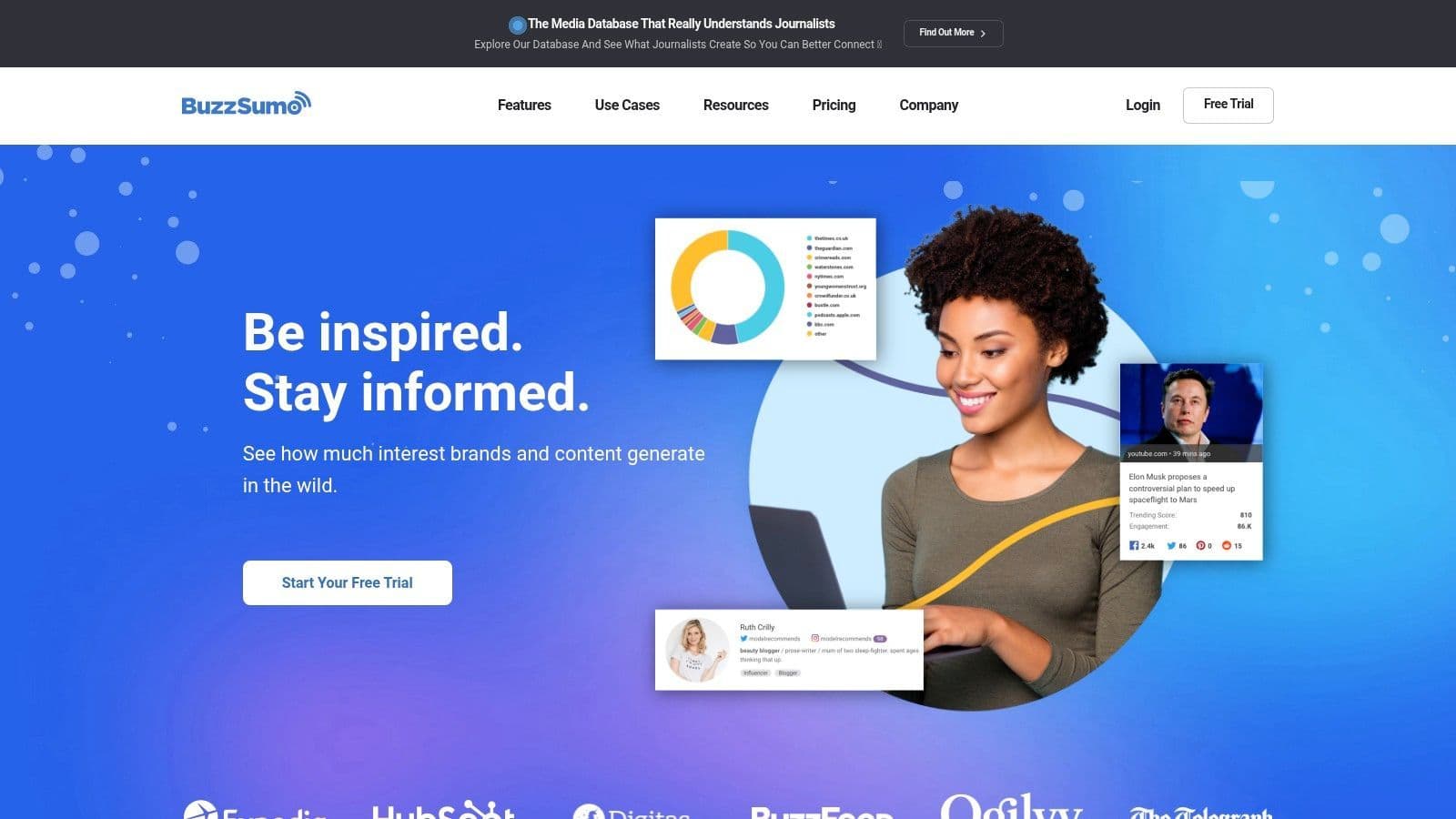
This makes it one of the best brand monitoring tools for teams focused on link-building, digital PR, and content strategy. Instead of just tracking a mention, BuzzSumo allows you to identify the author, find similar high-performing content, and analyze backlink profiles. The platform also includes a robust database of journalists and influencers, streamlining the outreach process directly from your monitoring dashboard. Its YouTube analyzer is another unique feature, letting you track video trends and competitor performance on the platform.
The platform's web mention alerts are highly effective for PR and communications workflows. Its self-serve subscription model is transparent, though it only offers a limited trial instead of a free plan.
Feature Highlights Best For Potential Drawback Web Mention & Content Alerts PR teams & content marketers Narrower social media coverage Journalist & Influencer Database Digital PR outreach No free plan, only a limited trial YouTube Content Analyzer Video content strategy Can be less intuitive for pure social listening
Actionable Tip: Use the "Content Ideas Generator" to turn brand monitoring into proactive content creation. When you see a competitor mentioned in a high-performing article, use the generator to find related "question" keywords and create a more comprehensive piece to capture that audience's interest.
Website: https://buzzsumo.com
For teams already embedded in the Semrush ecosystem for SEO and content marketing, the Brand and Media Monitoring apps in its App Center offer a highly convenient and integrated solution. Rather than being a standalone, enterprise-level platform, these tools function as add-ons, allowing you to track brand mentions, analyze sentiment, and monitor share of voice directly alongside your existing keyword and competitor data. This makes it an efficient choice for marketers who want to connect their SEO efforts with brand visibility.
The platform’s strength is its seamless integration. You can easily manage brand keyword tracking across multiple languages without leaving the Semrush interface you're already familiar with. While the depth of coverage might not match specialized, enterprise-only tools, its transparent pricing and accessibility make it an excellent entry point into the world of brand monitoring tools for small to mid-sized businesses.
The apps work best as a supplementary tool, providing core brand monitoring functionalities without the complexity or cost of a dedicated suite. The ability to adjust query limits via paid add-ons offers a degree of scalability as your needs grow, but be aware that full functionality may require a core Semrush subscription.
Feature Highlights Best For Potential Drawback Integration with Semrush SEO tools Existing Semrush subscribers Lighter coverage than dedicated platforms Transparent add-on pricing SMBs and marketing teams Requires core subscription for full value Brand & media keyword tracking Consolidating marketing analytics Limited advanced analytics features
Actionable Tip: Use the Brand Monitoring app to discover unlinked brand mentions online. Set up alerts for your company name, then filter for results that don't already link to your site. This is a powerful and efficient way to build high-quality backlinks as part of your SEO strategy.
Website: https://www.semrush.com/appcenter/
Tool Who It's For Price Point Octolens 🏆 B2B SaaS teams Startup-friendly ($69/mo+) Brandwatch (Cision) Large global brands Premium enterprise Talkwalker Mid to large enterprises Enterprise Meltwater PR & communications teams Higher-end, custom Sprout Social SMBs & enterprises Transparent, per-seat Hootsuite SMB to enterprise Varies, advanced on high-tiers Brand24 SMBs & agencies Affordable ($49/mo+) Mention Brands & agencies Starts at $599/mo (Company plan) Awario Startups to mid-market Affordable with discounts BuzzSumo PR & content marketers Clear plans, no free plan Semrush Apps Semrush users Affordable add-ons
Navigating the landscape of brand monitoring tools can feel overwhelming. We've journeyed through a dozen different platforms, from enterprise-grade behemoths like Brandwatch and Meltwater to more focused, agile solutions. The sheer volume of options highlights a critical truth: there is no single "best" tool for everyone. Your ideal solution depends entirely on your specific context, your team's size, your budget, and most importantly, what you’re trying to achieve.
The core challenge isn't just listening; it's understanding. A tool that delivers thousands of irrelevant mentions from across the web isn't helping, it's just creating more work. The real value lies in finding the high-signal conversations that can genuinely impact your roadmap, improve your customer support, and inform your growth strategy. For a B2B SaaS company or a developer tool, a single conversation on Reddit or a nuanced discussion on Hacker News can be infinitely more valuable than a hundred generic social media mentions.
As you evaluate your options, move beyond feature checklists and ask more strategic questions. Don't just ask, "Does it monitor X platform?" Instead, ask, "How does it help my team act on conversations from X platform?" The goal isn't data collection; it's actionable insight.
Before you commit to a long-term contract or a complex implementation, consider these final points:
- Define Your "Signal": What conversations truly matter? Is it technical support questions, competitor feature comparisons, user-generated content, or negative sentiment from key industry figures? Be specific. This clarity will be your North Star when comparing different brand monitoring tools.
- Workflow is Everything: A powerful dashboard that no one logs into is useless. The best tool integrates seamlessly into your team's existing workflow. For many modern tech companies, this means real-time alerts in platforms like Slack, where collaboration already happens. This reduces friction and ensures important mentions are seen and addressed immediately.
- Consider the Total Cost: The price tag is only one part of the equation. Factor in the time required for setup, training, and ongoing management. A more expensive but automated tool that saves your team ten hours a week is likely a better investment than a cheaper, manual alternative.
- Start with a Focused Trial: Don't try to boil the ocean. During your free trial, focus on monitoring 1-2 high-priority keywords or communities. This will give you a clear, tangible sense of the tool's value and its ability to filter out noise without overwhelming your team.
Choosing the right brand monitoring tool is a strategic decision that empowers you to be more customer-centric, responsive, and informed. It's about trading a wide, shallow net for a precise, effective spear. By focusing on the conversations that drive your business forward, you can transform monitoring from a passive, data-gathering exercise into an active, growth-driving engine. The goal is to spend less time sifting through dashboards and more time engaging with the people who matter most: your community and your customers.
Ready to cut through the noise and focus only on the brand mentions that matter? Octolens is designed for B2B SaaS and developer tools, delivering high-signal conversations from communities like Reddit, X, and Hacker News directly to your Slack. Start your free trial of Octolens and see how targeted brand monitoring can transform your team's workflow.
See How Teams Use Octolens
Founders
Stay close to your users while you scale. Catch issues early, find leads, and know what your market really thinks.
Learn moreMarketing Teams
Track brand health, measure campaign impact, and monitor competitors — all from one dashboard.
Learn moreDeveloper Relations
Show up where developers talk about you. Respond in minutes, not days. Correct misinformation before it spreads.
Learn moreAI Agents
Give your agents real-time social data via MCP, API, or webhooks. Build automations that act on live conversations.
Learn more