Best Brand Monitoring Tools in 2026 (Free Stack + Paid Compared)
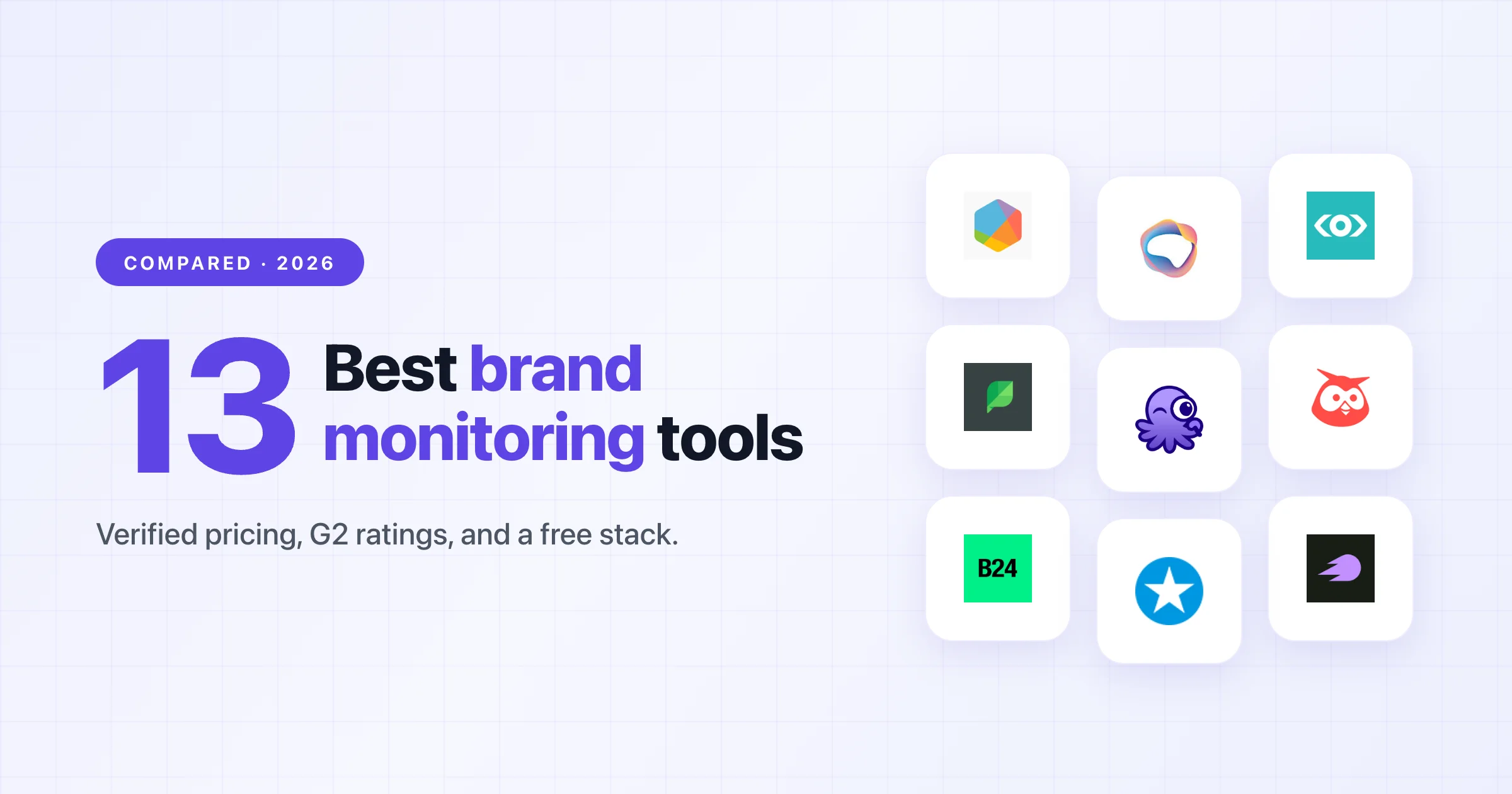
An honest comparison of 13 brand monitoring tools — verified pricing, G2 ratings, real user quotes, and which one fits your team.
I've spent the last three years evaluating brand monitoring tools, first as a customer, now as someone who builds one. So here's what I actually think about the options out there, not a list of repackaged feature pages.
Most of these tools fall into two camps. The enterprise platforms (Brandwatch, Meltwater, Talkwalker) are built for global consumer brands with six-figure budgets and dedicated analyst teams. The mid-market tools (Brand24, Mention, Awario, Mentionlytics, BrandMentions) are more accessible but tend to focus on traditional social media. If you're a B2B SaaS company or dev tool, neither camp is a great fit out of the box. (And if your main reason for looking is sentiment and risk rather than general tracking, read our brand reputation monitoring guide first — it will change which of these tools you shortlist.)
That segmentation isn't just my framing — it's how practitioners answer the question when someone asks:
"Really depends on the budget and the size of the company you work at. Large players use sprinklr, sprout, brandwatch." — r/DigitalMarketing
That's why we built Octolens, but I'll get to that. Let's start with how we compared everything, then the full landscape — including a free stack at the end if you have no budget at all.
Five things, in this order:
- Coverage. Does the tool actually see the places where your brand gets discussed — including Reddit comment threads, Hacker News, forums, podcasts, and newsletters — or just X and Facebook? This is the criterion buyers consistently rank first once they've been burned:
"One thing I've learned while testing brand monitoring tools is that coverage matters more than fancy dashboards. Some tools are great at tracking social mentions but they miss discussions happening on forums, blogs or smaller sites." — r/digital_marketing
- Signal quality. Relevance filtering and sentiment accuracy. This matters double if your brand name is a common word — a founder who builds monitoring software put the problem bluntly: "Think about a brand like 'Apple', 'Amazon', 'Shell', 'Target' or 'Stripe'. Without expensive AI not possible to do correctly, it would just be a random number generator." (r/b2bmarketing)
- Speed. How fast a mention becomes an alert, and whether the entry plan gives you real-time or 12-hour batches.
- Data access. Can you get mentions out — into Slack, your warehouse, or your AI agents — or is the API gated behind enterprise tiers?
- Honest pricing. What you'll actually pay, verified on the vendor's pricing page as of August 5, 2026. Where vendors hide pricing behind sales calls, I cite contract data (Vendr) and our own published research instead of guessing.
G2 ratings are included as of August 2026; review counts are approximate.
| Tool | Best for | G2 (Aug 2026) | Starting price | API |
|---|---|---|---|---|
| Octolens | B2B SaaS & dev tools | 5/5 (8) | $159/mo (annual) | Yes (all plans) |
| Brandwatch | Global enterprise brands | 4.4/5 (~730) | Custom (~$50k/yr median) | Enterprise only |
| Talkwalker (Hootsuite) | Multilingual global brands | 4.3/5 (~7,400) | Custom (enterprise) | Enterprise only |
| Meltwater | PR & comms teams | 4.1/5 (~2,700) | Custom ($10k+/yr) | Enterprise only |
| Sprout Social | Social media teams | 4.4/5 (~6,900) | $199/seat/mo + add-on | Higher tiers |
| Hootsuite | Publishing + basic monitoring | 4.3/5 (~7,400) | $99/user/mo | Enterprise only |
| Brand24 | Budget real-time alerts | 4.6/5 (355) | $199/mo (annual) | Higher tiers |
| Mention | Review-site coverage | 4.4/5 (~440) | Custom (Company plan) | Paid add-on |
| Mentionlytics | Multi-language SMB monitoring | 4.9/5 (~112) | $69/mo | Higher tiers |
| BrandMentions | Real-time web + social tracking | 4.9/5 (~240) | $79/mo (annual) | No |
| Awario | Boolean search on a budget | 3.9/5 (~50) | €49/mo | Enterprise only |
| BuzzSumo | Content marketing & digital PR | 4.5/5 (~107) | $199/mo | Higher tiers |
| Semrush Brand Monitoring | Existing Semrush users | — (app add-on) | $79/mo add-on | No |
Plus the free stack — Google Alerts, F5Bot, and ForumScout — at the end.
Best for: B2B SaaS and developer-tool companies that want mentions in their stack, not another dashboard | G2: 5/5 (8 reviews, August 2026)
Full disclosure: this is ours. I'm going to be straightforward about what it does well and where it falls short.
Octolens was built specifically for B2B SaaS and developer tool companies. The founding insight was simple: the conversations that matter most for technical products don't happen on Instagram or Facebook. They happen on Reddit, Hacker News, GitHub issues, Stack Overflow threads, and niche newsletters. Most monitoring tools either don't cover these platforms or bury them under a mountain of irrelevant social media noise.
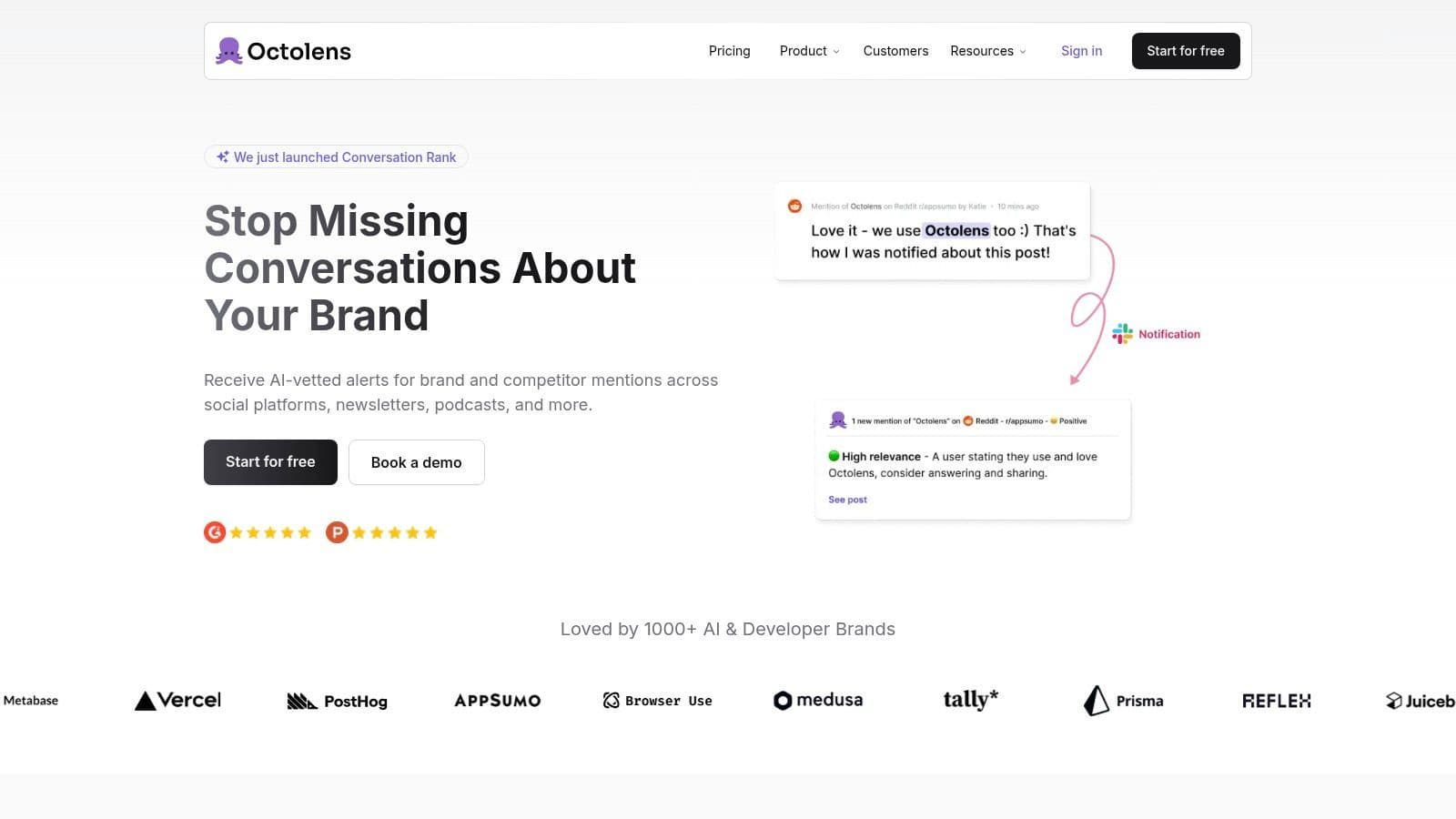
The AI filtering is the piece I'm proudest of. When Prisma started using Octolens, their previous tool was flooding them with every mention of the word "Prisma" regardless of context. As Marc Hess, their Manager of Developer Advocacy, put it: "The alerting system was hard to configure, and we were flooded with irrelevant noise." (full customer story) Octolens scores every mention for relevance, so you only see what's actually about your product — across our customer base, roughly 70–76% of keyword matches get scored irrelevant and filtered out before they reach anyone's Slack.
API-first architecture. The full REST API, webhooks, and MCP server access are available on every plan. This isn't an afterthought API bolted onto a dashboard product. The API is the product. The dashboard, CLI, and integrations all consume the same API. If you're building internal tools, feeding mentions into your data warehouse, or connecting to AI agents, this matters — trial users who connect the MCP or API convert at 4x our baseline, because that's the point where the tool stops being another tab.
15 platforms, one endpoint. Twitter/X, LinkedIn, Reddit, Bluesky, GitHub, YouTube, DEV.to, Hacker News, Stack Overflow, Newsletters, Podcasts, Product Hunt, Medium, TikTok, and 150k+ news outlets. Instead of managing separate APIs for each platform, you get structured data from all of them through a single integration.
Unlimited team seats on every plan. Vercel routes mentions into 20+ team Slack channels. We never wanted seat-based pricing to be the reason a DevRel team couldn't see what the support team was tracking.
| Detail | Info |
|---|---|
| Pricing | Pro $199/mo ($159/mo annual), 15,000 mentions, 10 keywords. Scale $599/mo ($499/mo annual), 50,000 mentions, 40 keywords. Enterprise custom. |
| Platforms | 15 (incl. Reddit, HN, GitHub, Stack Overflow, podcasts, newsletters) |
| API | All plans (REST + webhooks + MCP) |
| Free trial | 7 days on Pro |
Pros:
- Purpose-built coverage of developer and B2B communities no one else has
- AI relevance filtering that handles common-word brand names
- API, webhooks, and MCP on every plan — no enterprise gate
- Unlimited seats on every plan
- Transcribed podcast and video coverage (mentions that are said, not typed)
Cons:
- No mobile app yet
- If your brand gets fewer than a couple hundred mentions a month, the AI filtering won't have enough data to really shine
- No survey-based brand tracking or consumer-panel research
Customers include Vercel, PostHog, Cursor, and Lovable. Start a free trial and see if the mentions are relevant to you within the first day.
Website: https://octolens.com
Best for: Global enterprise brands with dedicated analyst teams | G2: 4.4/5 (~730 reviews, August 2026)
Brandwatch (part of Cision) is the 800-pound gorilla. It monitors over 100 million sources, handles dozens of languages, and has the deepest historical data archive in the industry. If you're a global consumer brand running multi-market campaigns, it's probably on your shortlist — and practitioners treat it as the default at that scale:
"If you're looking at something enterprise-grade, then Brandwatch is usually considered the 'industry leader' for social listening." — r/DigitalMarketing
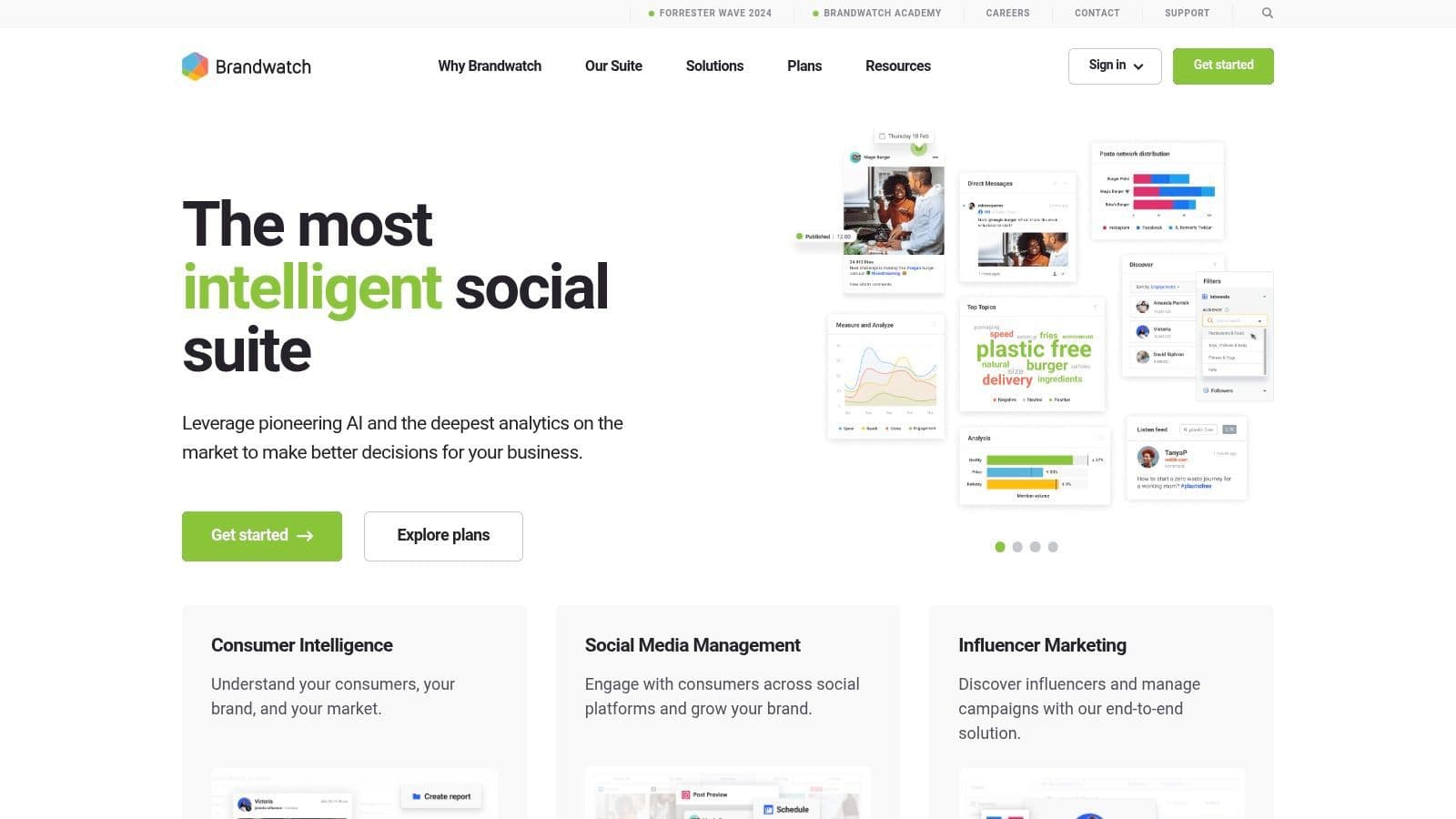
The consumer intelligence capabilities are genuinely impressive. The AI can identify emerging narratives across millions of conversations and surface trend shifts before they become obvious. The crisis management features are battle-tested by Fortune 500 companies.
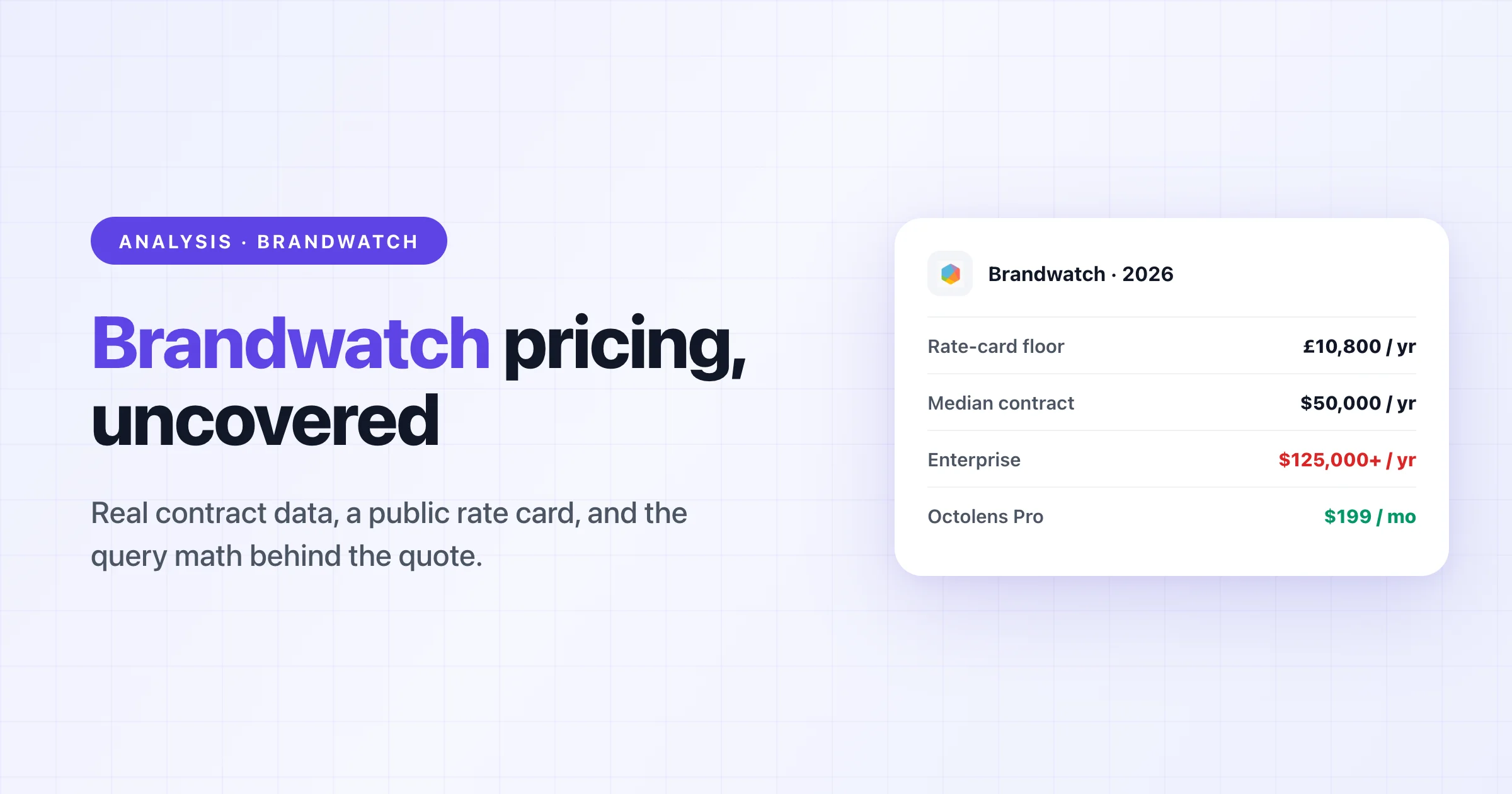
Here's the catch: pricing is opaque and enterprise-only. Vendr contract data puts the median Brandwatch contract around $50,000 per year, and if you're spending under a few hundred dollars a month on monitoring, you're not the customer they're built for. The platform also has a steep learning curve. Plan for a multi-week onboarding just to get your dashboards configured properly. Brandwatch Academy exists for a reason.
For B2B SaaS companies, Brandwatch is almost certainly overkill. The source coverage skews heavily toward mainstream social and news. Developer communities like GitHub, Hacker News, and Stack Overflow aren't its strength. (Weighing a switch? We compared the best Brandwatch alternatives with real contract data.)
| Detail | Info |
|---|---|
| Pricing | Custom, enterprise-only. Vendr median ~$50k/yr |
| Platforms | 100M+ sources, mainstream social + news focus |
| API | Enterprise tiers |
| Free trial | No — demo via sales |
Pros:
- Deepest historical archive and consumer-intelligence AI in the category
- Battle-tested crisis management at Fortune 500 scale
- Strong multi-language coverage
Cons:
- Custom pricing that starts where most SMB budgets end
- Multi-week onboarding and a real learning curve
- Weak developer-community coverage
Website: https://www.brandwatch.com
Best for: Multilingual global brands already in the Hootsuite ecosystem | G2: 4.3/5 (~7,400 reviews with Hootsuite, August 2026)
Talkwalker was acquired by Hootsuite in 2024 and now operates as Hootsuite's enterprise listening arm (rebranded under the Lumen name). The technology still competes directly with Brandwatch at the enterprise level: 150 million sources, 187 supported languages, and the Blue Silk AI engine powering image recognition (it can spot your logo in photos) and predictive analytics.
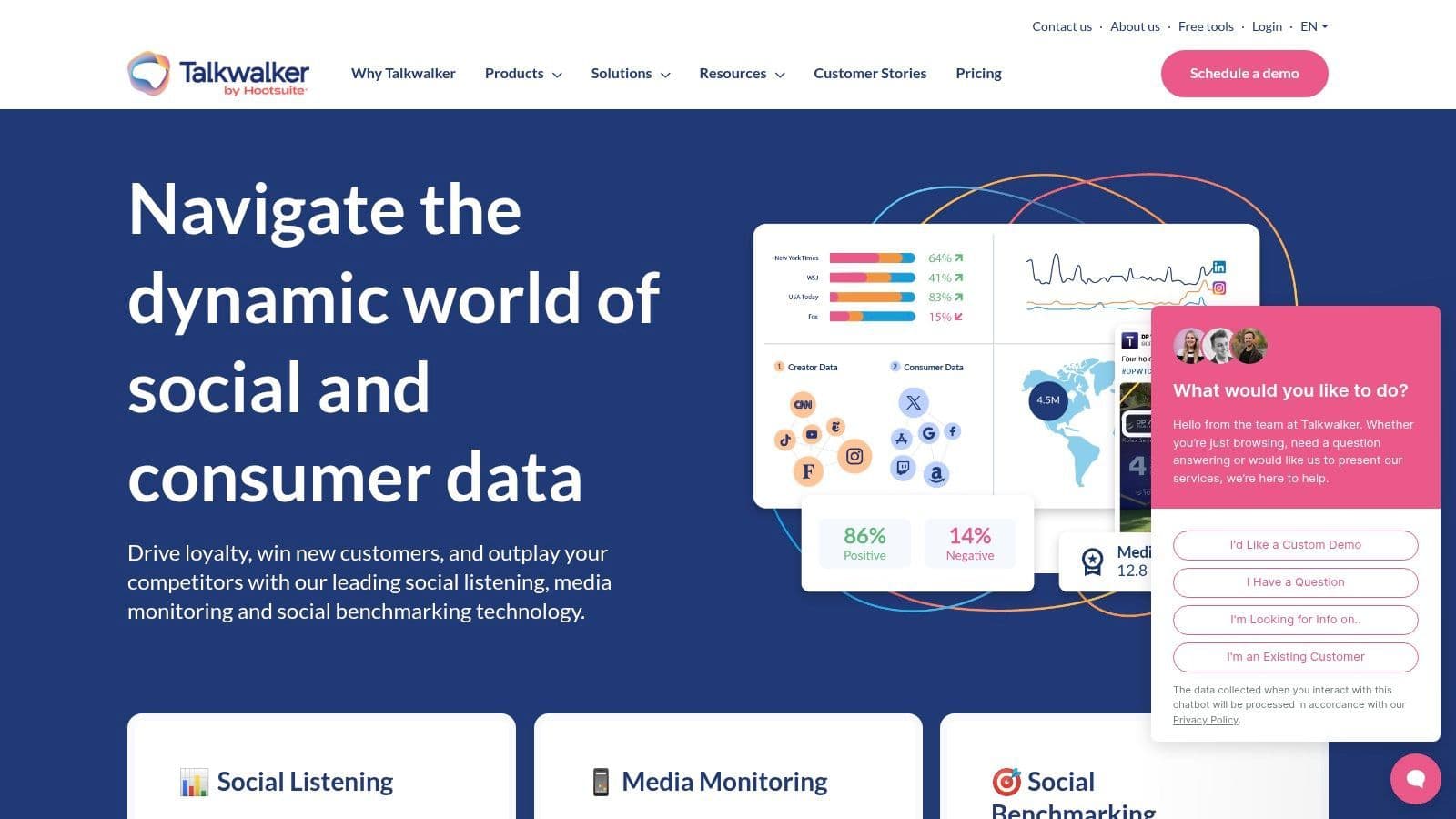
Unlimited user seats is a smart move that encourages company-wide adoption, and the pre-built "IQ Apps" dashboards can save weeks of setup time if your use case fits their templates.
Same warnings as Brandwatch apply: enterprise pricing, long implementation cycles, and a platform that's more than most SaaS companies need. There's now an extra consideration too — buying Talkwalker means buying into the Hootsuite ecosystem, so evaluate the combined roadmap, not the standalone product it used to be. If you're monitoring mentions in 30+ languages across consumer markets, it earns its price. If you're a Series A startup tracking Reddit threads, look elsewhere.
For more on the difference between passive monitoring and active listening, see our piece on social listening.
| Detail | Info |
|---|---|
| Pricing | Custom, enterprise-only (via Hootsuite sales) |
| Platforms | 150M sources, 187 languages |
| API | Enterprise tiers |
| Free trial | No — demo via sales |
Pros:
- Best-in-class multilingual coverage and image recognition
- Unlimited seats encourages org-wide use
- Pre-built dashboard templates shorten setup
Cons:
- Enterprise pricing and implementation cycles
- Future roadmap now tied to Hootsuite's priorities
- Overkill for single-market B2B teams
Website: https://www.talkwalker.com
Best for: PR and comms teams that need social + traditional media in one view | G2: 4.1/5 (~2,700 reviews, August 2026)
Meltwater's killer feature is access to premium, paywalled news content from Bloomberg, Dow Jones/Factiva, and similar outlets. If your PR team needs to track coverage across both social media and traditional media in one view, Meltwater does this better than anyone else.
The GenAI Lens feature is useful for synthesizing large volumes of coverage into narrative summaries. The integrated influencer outreach tools mean your PR team can go from "we spotted a journalist writing about our space" to "here's a pitch" without leaving the platform.
The flip side: this is a PR tool first and a brand monitoring tool second. If your primary concern is tracking developer community conversations or piping mention data into your own systems via API, Meltwater's strengths won't help you much. And the pricing deserves eyes-open evaluation: contracts are annual-only with auto-renewal, and the real-world range runs from about $10,000 to $130,000+ per year. We published the full contract data — indicative tiers, Vendr medians, and the renewal terms that catch teams off guard — in our Meltwater pricing guide.
| Detail | Info |
|---|---|
| Pricing | Custom. Indicative $10k–$130k+/yr, annual contracts only |
| Platforms | Social + 270k news sources incl. paywalled outlets |
| API | Enterprise tiers |
| Free trial | No — demo via sales |
Pros:
- Unmatched premium/paywalled news coverage
- PR workflow (journalist database, outreach) built in
- Solid multi-market reporting for comms leadership
Cons:
- Annual-only contracts with a 60-day cancellation window
- PR-first design — mention data access is secondary
- Sentiment and filtering trail the specialized tools
Website: https://www.meltwater.com
Best for: Marketing teams that want publishing, engagement, and monitoring in one tool | G2: 4.4/5 (~6,900 reviews, August 2026)
Sprout Social is primarily a social media management platform that added listening capabilities. It's a solid choice if your team already uses Sprout for scheduling and publishing and wants monitoring in the same tool rather than adding another vendor.
Not sold on the all-in-one bundle? Compare the best Sprout Social alternatives for listening and management, with pricing for each.
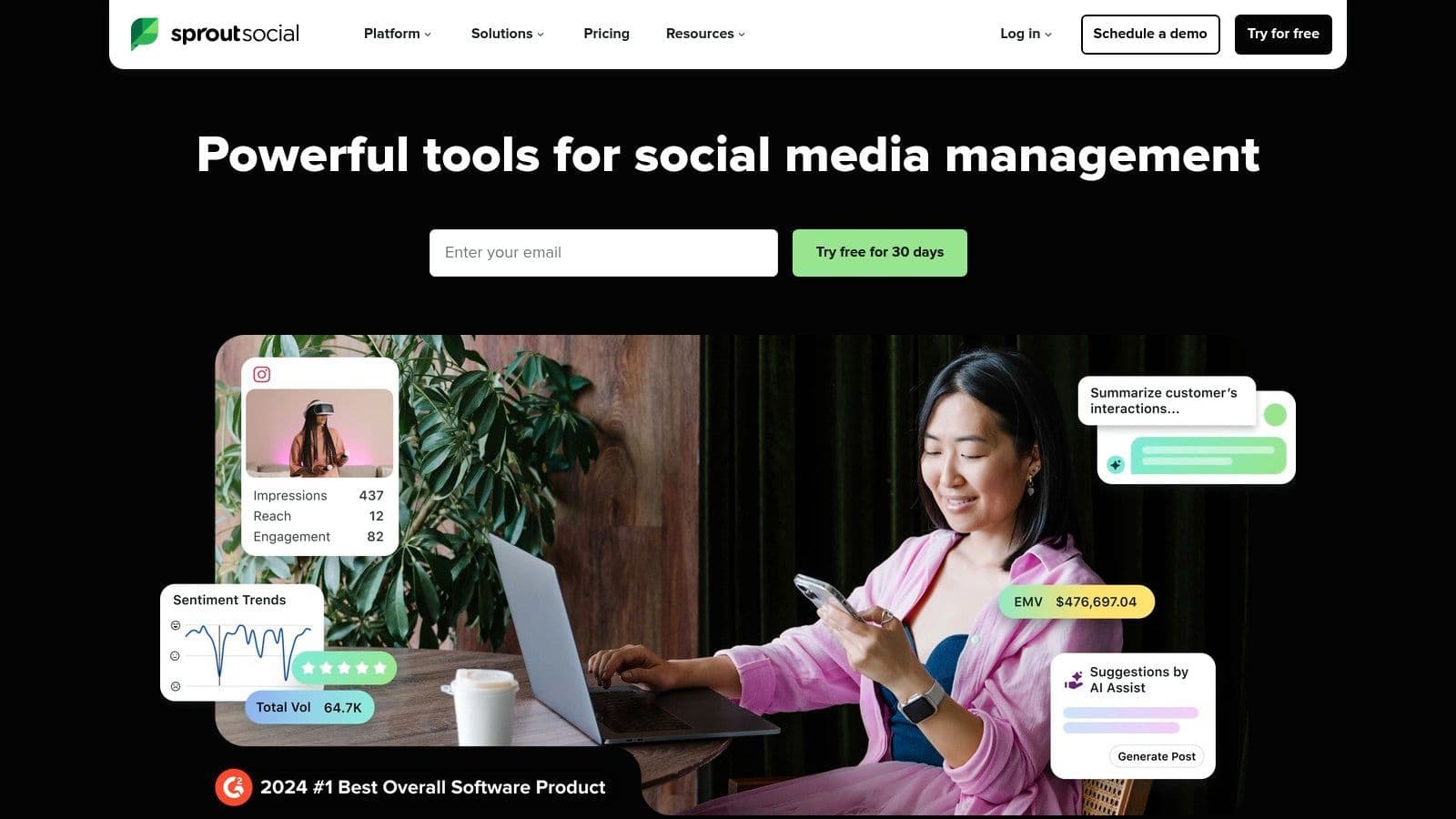
The Smart Inbox is well-designed for community managers who need to triage and respond to mentions across multiple social accounts. The listening templates for competitor analysis and brand health tracking get you started quickly.
Two things to know before buying it as a monitoring tool, though. First, the economics: listening is a separate paid add-on available from the Standard plan ($199/seat/month) up, so a small team's bill climbs fast — we've broken down the full seat math and real contract data in our Sprout Social pricing guide. Second, the depth — users who push the listening side hit its ceiling:
"Sprout's social listening feels like it's geared more for crisis or brand reputation monitoring rather than proactive social marketing. It's missing some of the more complex features like advanced contextual filtering, keyword-specific sentiment" — r/b2bmarketing
If you need Reddit, Hacker News, or podcast coverage, Sprout won't have it.
| Detail | Info |
|---|---|
| Pricing | Standard $199/seat/mo, Professional $299, Advanced $399; listening is a separate add-on (price via sales) |
| Platforms | Mainstream social networks |
| API | Higher tiers |
| Free trial | 30 days |
Pros:
- Excellent publishing + engagement workflow (the core product)
- Smart Inbox triage for community managers
- Listening templates make setup fast
Cons:
- Listening costs extra on top of per-seat pricing
- Contextual filtering and sentiment are basic vs. dedicated tools
- No Reddit, HN, forum, or podcast depth
Website: https://sproutsocial.com
Best for: Teams already publishing with Hootsuite that want basic mention tracking included | G2: 4.3/5 (~7,400 reviews, August 2026)
Similar story to Sprout Social, with a twist: since acquiring Talkwalker, Hootsuite's advanced listening genuinely is enterprise-grade — but it's sold as an Enterprise feature, effectively a separate product (see the Talkwalker entry above).
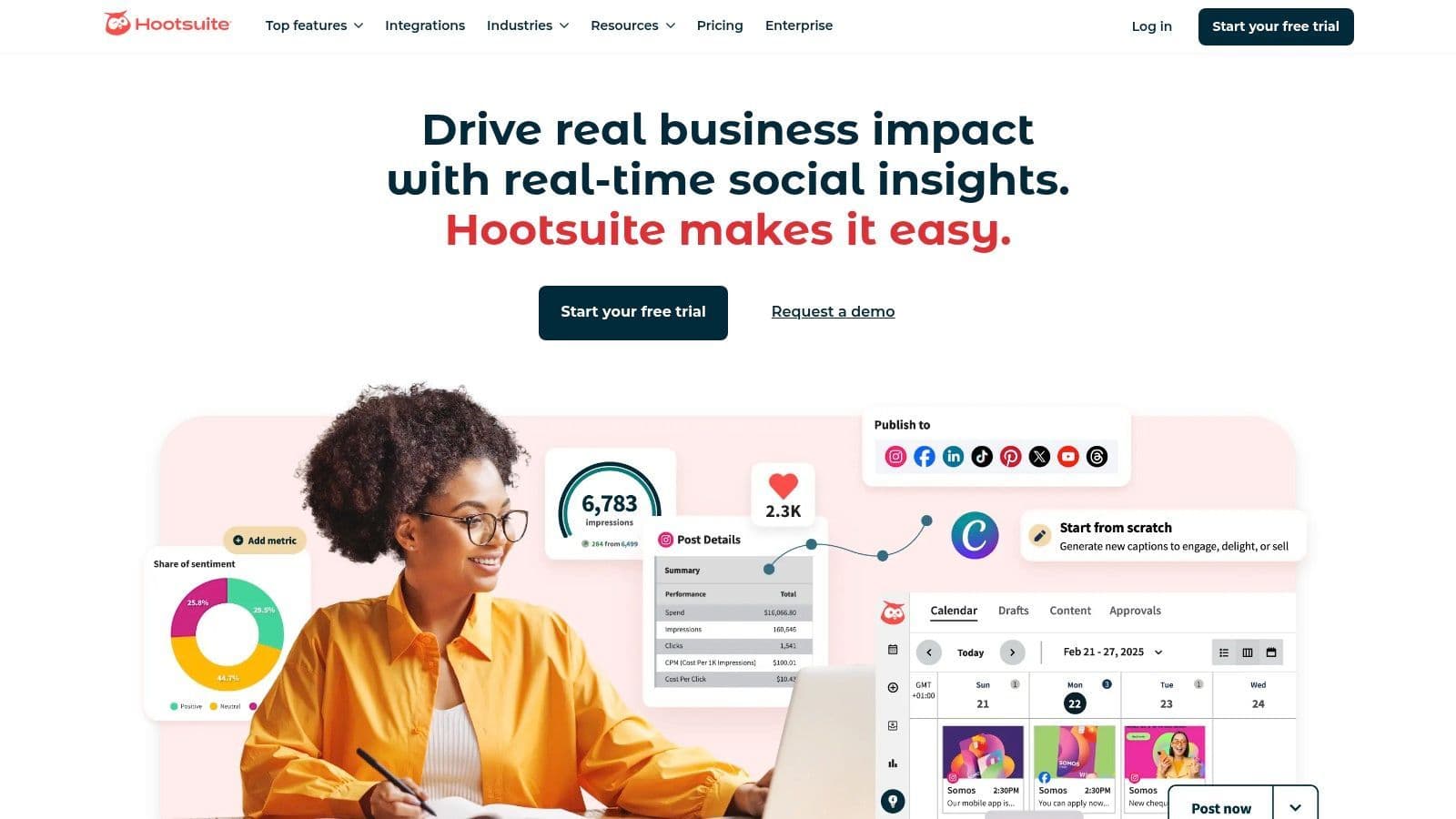
The "Streams" feature for real-time keyword and hashtag tracking is handy for social media managers who want persistent monitoring columns alongside their publishing queue. The AI-powered summaries help cut through volume.
Where Hootsuite falls short: the standard plans ($99–$399/user/month) offer only basic mention tracking. To get the Talkwalker-powered deep listening, you need Enterprise pricing, which requires a sales call. If you're already paying for Hootsuite for publishing and want basic brand mentions in the same dashboard, it works. As a dedicated monitoring solution, there are better options — we compared the best Hootsuite alternatives for exactly this situation.
| Detail | Info |
|---|---|
| Pricing | Standard $99/user/mo, Professional $199, Advanced $399; deep listening = Enterprise (custom) |
| Platforms | Mainstream social networks |
| API | Enterprise |
| Free trial | 30 days |
Pros:
- Streams give publishers always-on keyword columns for free (within plan)
- Talkwalker tech available if you go Enterprise
- Familiar tool many teams already pay for
Cons:
- Real listening is gated behind Enterprise sales
- Basic tiers only track the obvious mentions
- Weak beyond mainstream social platforms
Website: https://www.hootsuite.com
Best for: Small teams and agencies that want real-time alerts at a self-serve price | G2: 4.6/5 (355 reviews, August 2026)
Brand24 is the most approachable of the classic monitoring tools for small teams — transparent pricing, self-serve signup, and a 14-day free trial with no sales calls. One thing that's changed since we first wrote this guide: Brand24 was acquired by Semrush, and entry pricing has moved well past its old budget positioning — the Individual plan is now $249/month ($199/month on annual billing).
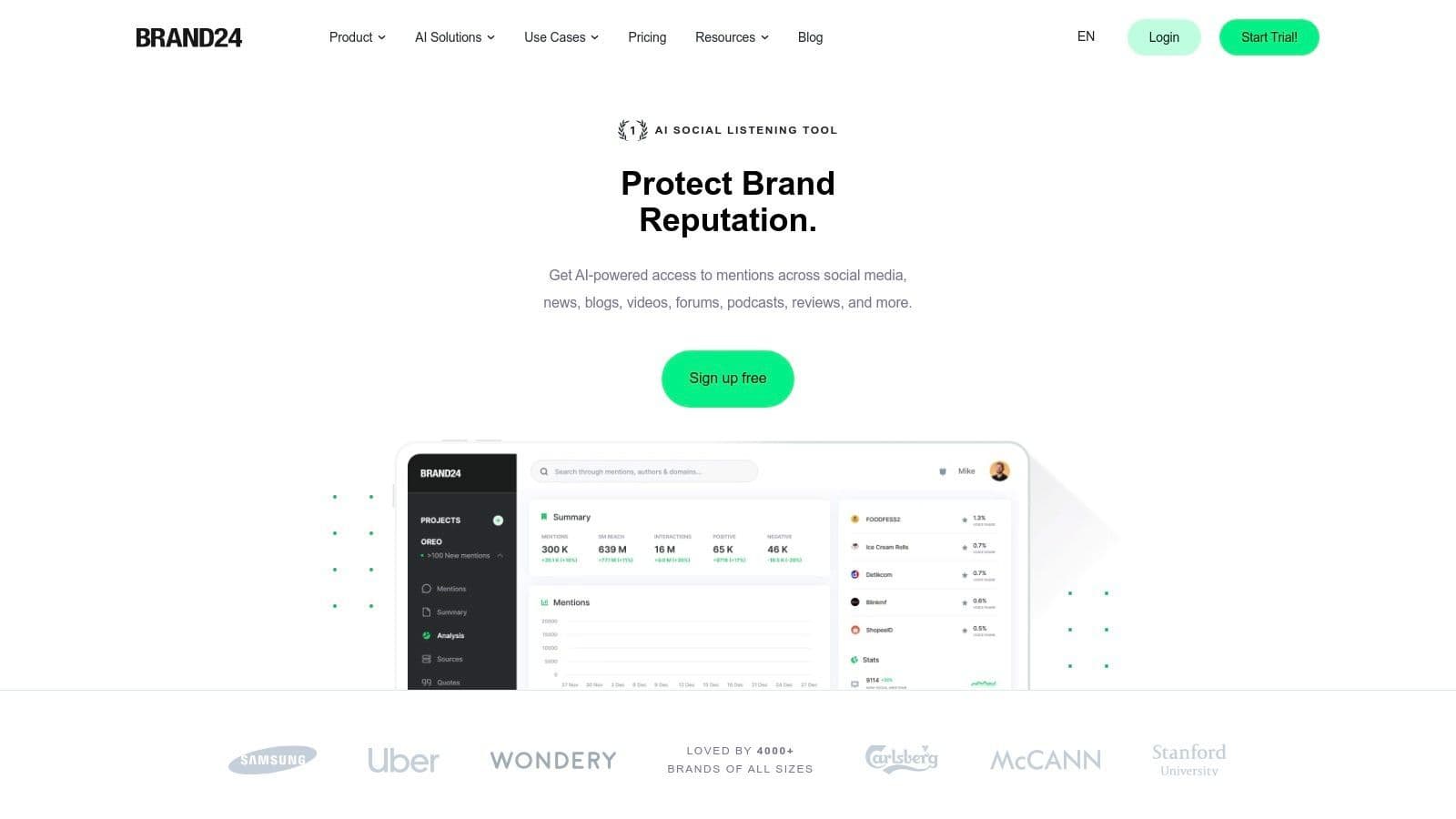
The interface is clean and the learning curve is minimal. You get sentiment analysis, reach estimates, and share of voice calculations out of the box. The mobile app with push notifications is useful for founders who want to know immediately when something is happening.
The trade-offs: the Individual plan updates every 12 hours (real-time costs more), includes 3 keywords and 2,000 mentions a month, and one user seat. Reddit coverage exists but is shallower than the platforms that specialize in it — a common pattern in this category:
"most brand monitoring tools are built for twitter/facebook and just slap reddit on as an afterthought … a lot of the big name tools miss comments that are nested deep in threads" — r/DigitalMarketing
For a more detailed comparison, see our 7 best Brand24 alternatives for B2B social listening — or read our full hands-on Brand24 review, based on a real trial run.
| Detail | Info |
|---|---|
| Pricing | Individual $249/mo ($199 annual): 3 keywords, 2k mentions, 12h updates. Team $349, Pro $499, Business $699, Enterprise from $1,499 |
| Platforms | Social, news, blogs, forums, podcasts |
| API | Higher tiers |
| Free trial | 14 days |
Pros:
- Self-serve with transparent pricing — no sales calls
- Clean interface, minimal learning curve
- Good mobile app with push alerts
Cons:
- 12-hour update cycle and 2k mentions on the entry plan
- Entry price has climbed to $249/mo — no longer the budget option
- Reddit and niche-community depth is limited
Website: https://brand24.com
Best for: Brands that need review-platform coverage alongside social monitoring | G2: 4.4/5 (~440 reviews, August 2026)
Mention tracks a very broad source set and has unusually strong coverage of review platforms (75+ sites including Google, Trustpilot, Amazon, and Glassdoor), which makes it a standout if reviews are where your reputation actually lives.
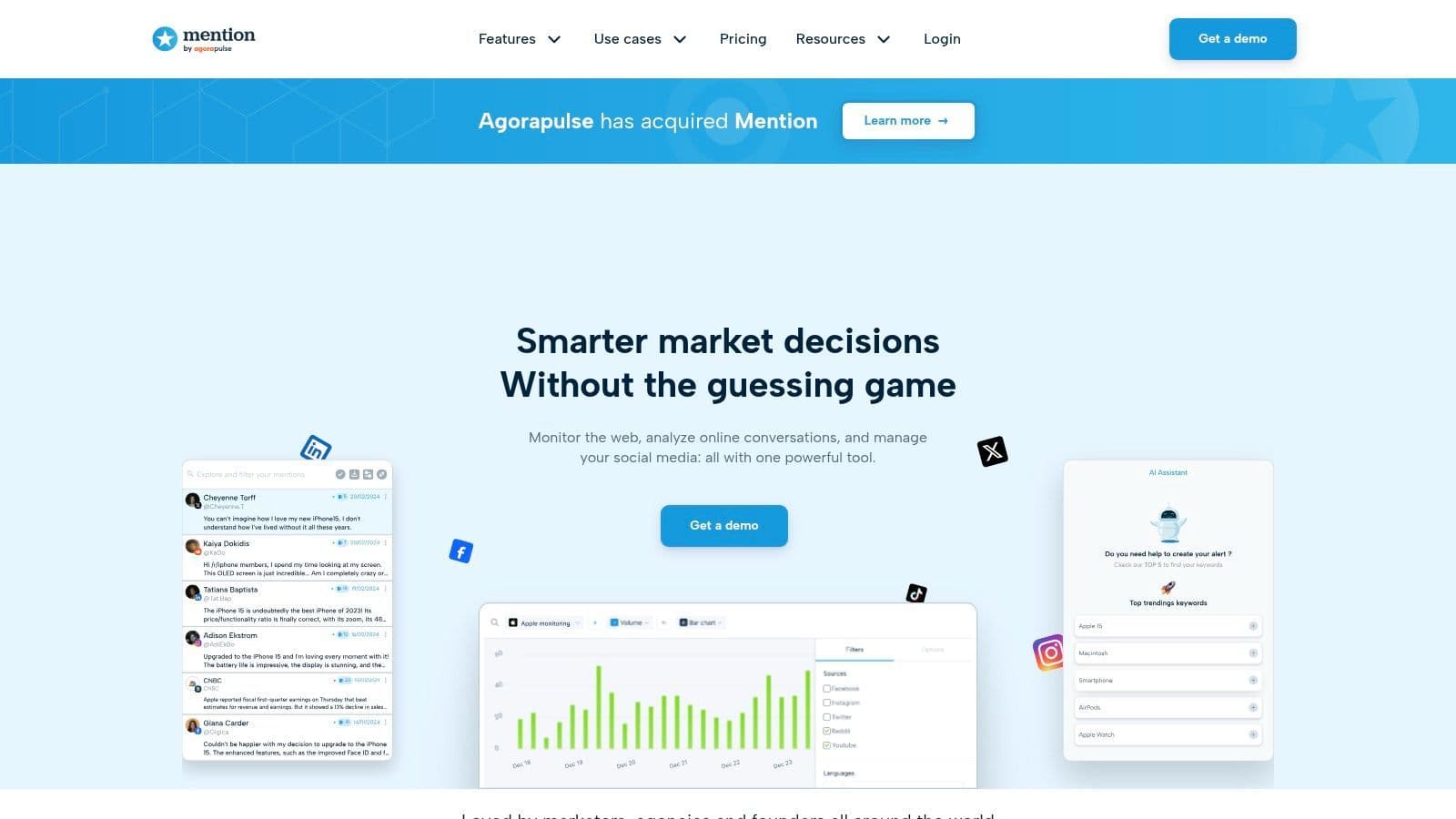
The alert system is fast and the Boolean search operators let you build precise queries (up to 2,000 characters on advanced alerts). The competitive analysis dashboards are helpful for benchmarking.
But Mention has repositioned significantly, and the old buying advice no longer applies. The self-serve tiers are gone from the pricing page — there's now a single demo-gated "Company" plan with custom pricing. API access and historical data are paid add-ons, not included. And Mention has deprecated its Publish and Respond features, directing users to Agorapulse (its sister product) for those. In short: it's become a pure enterprise monitoring product. If you saw "$41/month" in an older roundup (including an earlier version of this one), that plan no longer exists.
| Detail | Info |
|---|---|
| Pricing | Custom ("Company" plan, demo-gated); API and historical data are paid add-ons |
| Platforms | Social, web, news, forums + 75+ review sites |
| API | Paid add-on |
| Free trial | No — demo via sales |
Pros:
- Best review-platform coverage in this list
- Fast alerts with serious Boolean query support
- Dedicated account management on the Company plan
Cons:
- No more self-serve tiers or public pricing
- API and historical data cost extra
- Publishing/responding features deprecated (moved to Agorapulse)
Website: https://mention.com
Best for: SMBs that need multi-language monitoring at a low entry price | G2: 4.9/5 (~112 reviews, August 2026)
Mentionlytics comes up constantly in practitioner threads as the value pick — it covers the essentials (real-time alerts, sentiment, social listening) without enterprise bloat, and it holds one of the highest G2 ratings in the category. Agencies in particular seem to land on it for mid-sized clients after pricing out Meltwater.
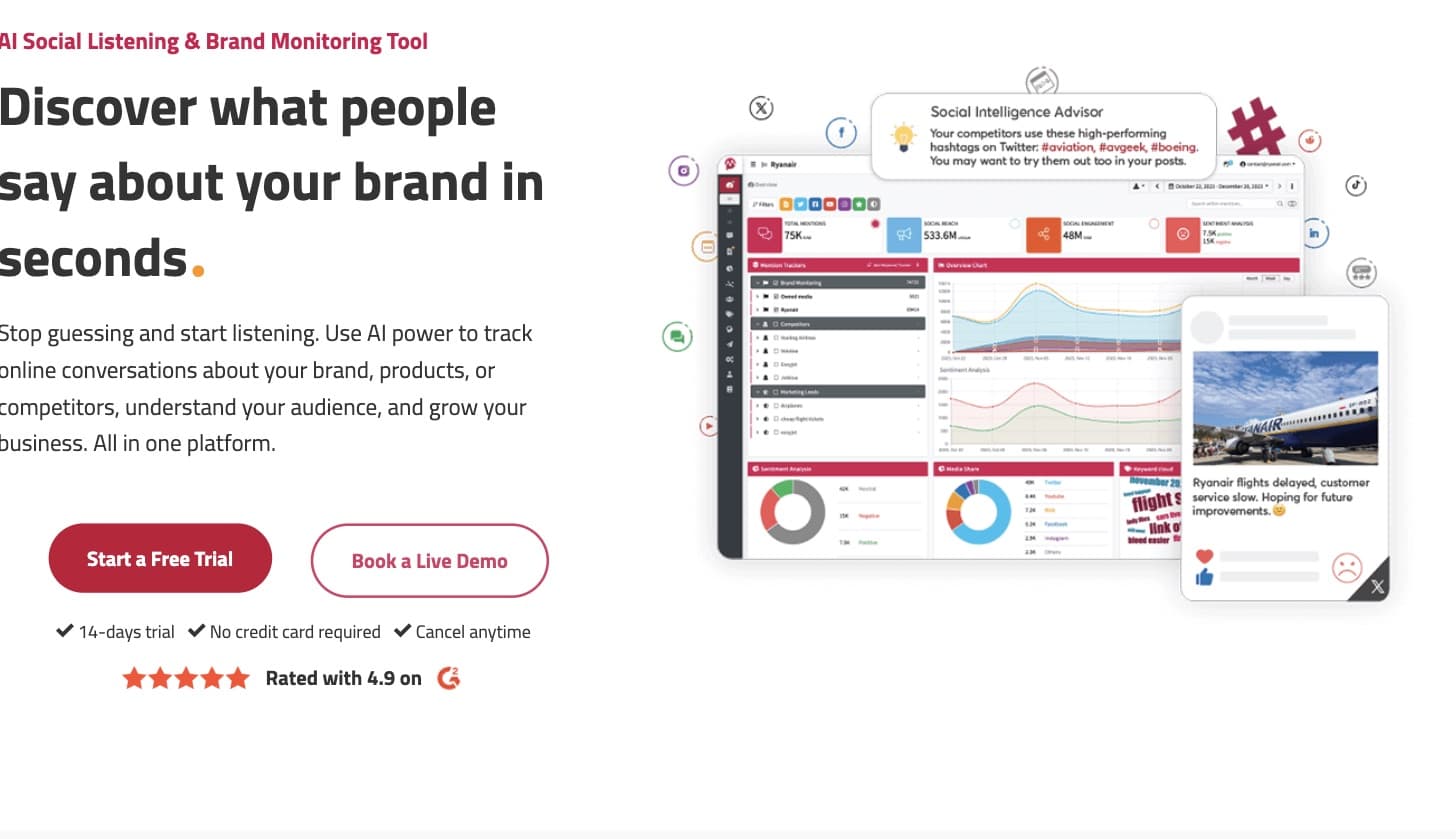
One user's reason for choosing it, from a thread about Reddit coverage specifically: "it picks up those specific comment threads that other platforms often ignore." (r/DigitalMarketing) I'd verify that claim against your own brand during the trial — Reddit depth varies widely by tool — but the sentiment accuracy (including sarcasm handling) gets consistent praise.
The trade-offs at the entry level mirror Brand24's: the Basic plan ($69/month) gives you 3 keyword rules, 5,000 mentions, and 12-hour updates; real-time monitoring starts on higher tiers. The interface is functional rather than beautiful, and there's no native podcast or newsletter coverage.
| Detail | Info |
|---|---|
| Pricing | Basic $69/mo: 3 keyword rules, 5k mentions, 12h updates. Essential $169, Advanced $299, Pro $499, Business $749 (annual billing) |
| Platforms | Social, news, blogs, web; multi-language |
| API | Higher tiers |
| Free trial | 14 days, no credit card |
Pros:
- Lowest entry price of the full-featured tools ($69/mo)
- 4.9/5 G2 rating — tied for highest in the category
- Sentiment accuracy praised across languages
Cons:
- 12-hour updates and 5k mentions on Basic
- Dated interface
- No podcast/newsletter coverage
Website: https://www.mentionlytics.com
Best for: Real-time web and social mention tracking with strong per-keyword control | G2: 4.9/5 (~240 reviews, August 2026)
BrandMentions shows up in nearly every "what do you use" thread — sometimes suspiciously enthusiastically, which is its own signal about the category — but the product underneath is legitimately solid, with one of the highest G2 ratings on this list. It tracks social media, news, blogs, forums, and review sites, and users praise its real-time accuracy:
"BrandMentions has worked really well for me for social listening. It finds mentions on Reddit, forums, and social media in real time, which is great." — r/DigitalMarketing
The pricing structure rewards annual commitment: Starter is $79/month billed annually ($99 billed quarterly) for 5 keywords and 5,000 mentions with daily updates. Hourly updates arrive on Pro ($249/month annual), real-time on Expert ($399/month annual). Note the update-frequency ladder — "real-time tracking" is an Expert-tier feature, not a Starter one.
There's no API at any tier, which rules it out if you want mentions flowing into your own systems, and the sentiment analysis is more basic than the AI-first tools.
| Detail | Info |
|---|---|
| Pricing | Starter $79/mo (annual): 5 keywords, 5k mentions, daily updates. Pro $249 (hourly), Expert $399 (real-time) |
| Platforms | Social, news, blogs, forums, review sites |
| API | No |
| Free trial | 7 days |
Pros:
- 4.9/5 G2 rating with consistent accuracy praise
- Broad source coverage including forums
- Fair entry price on annual billing
Cons:
- Real-time updates gated to the $399 Expert tier
- No API at any price
- Basic sentiment vs. AI-first competitors
Website: https://brandmentions.com
Best for: Budget monitoring with Boolean search precision | G2: 3.9/5 (~50 reviews, August 2026)
Awario is the budget pick. Generous mention quotas (30,000/month even on Starter), unlimited keywords per topic, and Boolean search on every plan. For a small team that needs wide coverage without worrying about hitting limits, it delivers solid fundamentals at a low price — Starter is €49/month, or €29/month on annual billing (Awario now prices in euros).
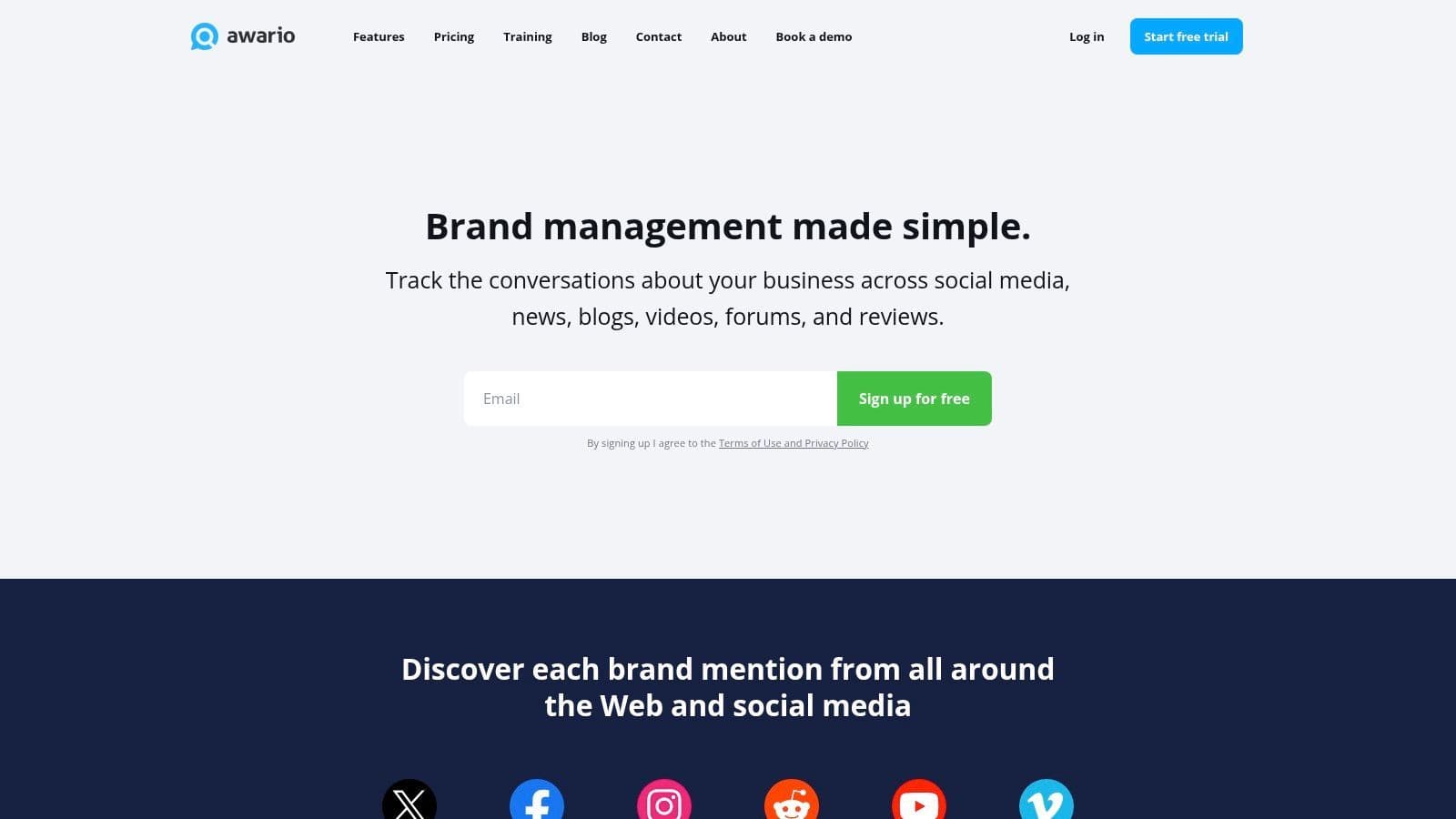
The white-label reporting on higher tiers makes it popular with agencies. API access is reserved for the Enterprise plan, so piping data elsewhere means paying for the top tier.
The downsides are what you'd expect from a budget tool: fewer data sources than the enterprise players, a simpler UI with fewer customization options, and limited historical data on lower tiers. The AI and filtering capabilities don't match the more specialized platforms — and the 3.9/5 G2 rating (lowest on this list) mostly reflects complaints about data quality and support responsiveness. But if you're price-sensitive and need the basics done well, Awario is worth a look.
| Detail | Info |
|---|---|
| Pricing | Starter €49/mo (€29/mo annual): 3 topics, 30k mentions. Pro €149/mo (€89 annual), Enterprise €399/mo (€249 annual) |
| Platforms | Social, news, blogs, forums |
| API | Enterprise plan only |
| Free trial | 7 days |
Pros:
- Cheapest full Boolean search on the market
- Generous mention quotas at every tier
- White-label reports for agencies
Cons:
- Lowest G2 rating on this list (3.9/5)
- Simpler filtering — noise is on you to manage
- Limited history on lower tiers
Website: https://awario.com
Best for: Content marketing and digital PR teams | G2: 4.5/5 (~107 reviews, August 2026)
BuzzSumo isn't really a brand monitoring tool in the traditional sense. It's a content intelligence platform that happens to have mention tracking. Where it shines is connecting brand mentions to content performance: which articles about your brand got the most shares, who wrote them, and what related topics are trending.
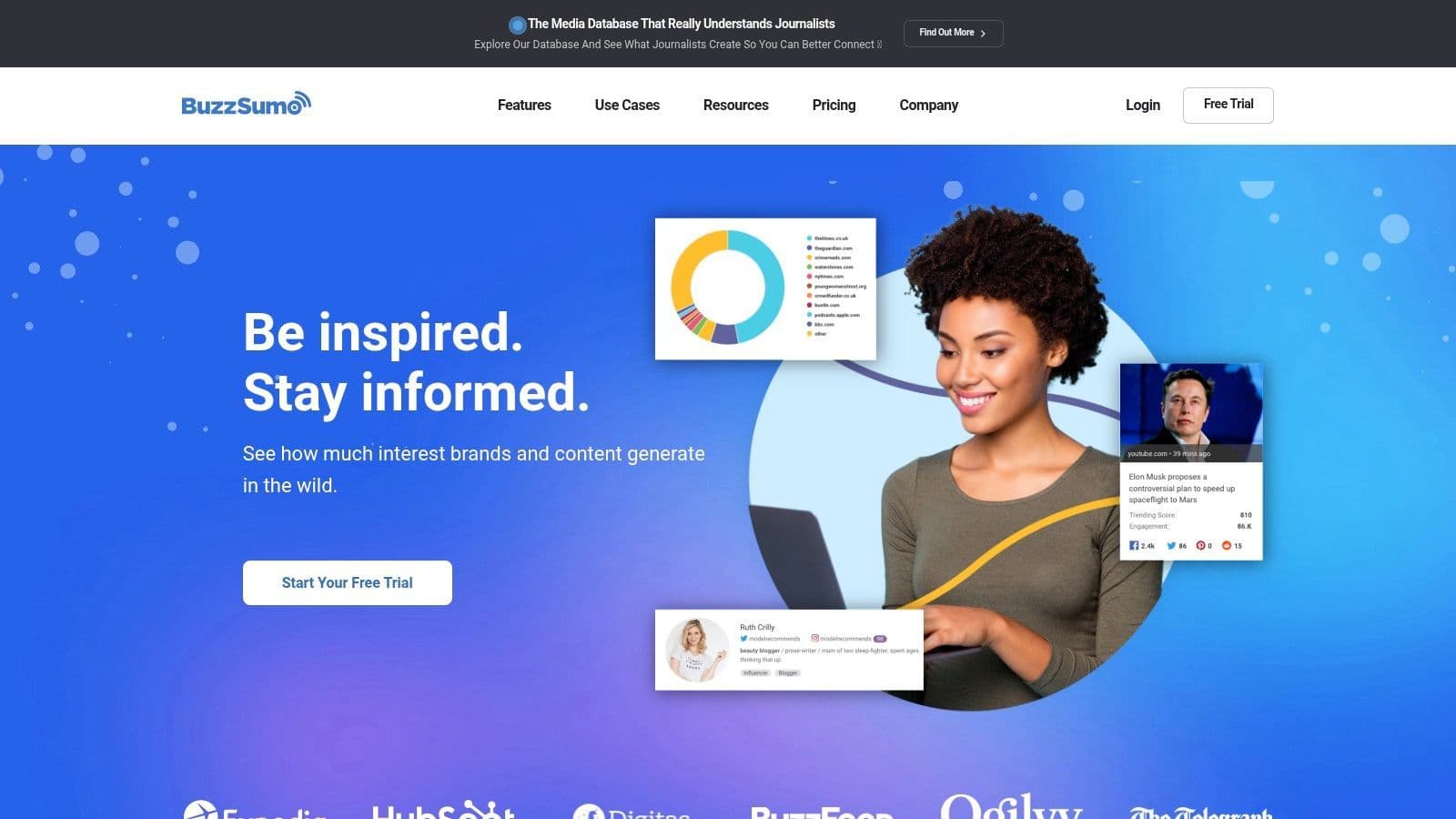
The journalist and influencer database is genuinely useful for PR outreach. The YouTube analyzer is a nice bonus for teams tracking video content.
If you're looking for real-time social listening or community monitoring, BuzzSumo isn't it. The social media coverage is thin compared to dedicated monitoring tools, and alert quotas are tight (2 alerts on the $199 Content Creation plan; 5 on PR & Comms at $299, which is also where Slack alerts arrive). No free plan, only a limited trial. But for content marketing and digital PR teams, it fills a specific niche well.
| Detail | Info |
|---|---|
| Pricing | Content Creation $199/mo (2 alerts), PR & Comms $299 (5 alerts + Slack), Suite $499, Enterprise $999 |
| Platforms | Web content, news, YouTube; light social |
| API | Suite and up |
| Free trial | Limited trial, no free plan |
Pros:
- Best-in-class content performance data
- Journalist/influencer database for PR outreach
- Alerts tie mentions to engagement metrics
Cons:
- Thin social and community coverage
- Alert quotas are small per tier
- Not built for real-time monitoring
Website: https://buzzsumo.com
Best for: SEO teams that already live in Semrush | G2: — (App Center add-on)
If your team already lives in Semrush for SEO, the Brand Monitoring app in the App Center adds mention tracking without leaving the ecosystem. You can track brand keywords alongside your SEO data, spot unlinked brand mentions for link building, and monitor sentiment in one familiar interface. The app costs $79/month for 3 queries, with add-on packs (+3 queries/20k mentions for $50, +9 queries/90k mentions for $120).
Worth knowing for context: Semrush also owns Brand24 now, so the company effectively has two monitoring products — the lightweight App Center app for SEO teams and Brand24 as the standalone tool.
It's a supplementary tool, not a replacement for dedicated monitoring. The coverage is lighter, the analytics are basic, there's no API, and you need a core Semrush subscription to get full value. But for SEO-focused teams that want brand awareness data alongside their keyword rankings, the convenience factor is real.
| Detail | Info |
|---|---|
| Pricing | $79/mo (3 queries) + add-on packs; requires Semrush account |
| Platforms | Web, news, social (lighter coverage) |
| API | No |
| Free trial | 7 days |
Pros:
- Lives inside the tool your SEO team already uses
- Unlinked-mention detection feeds link building
- Cheap way to add basic monitoring
Cons:
- Light coverage and basic analytics
- No API
- Only makes sense on top of a Semrush subscription
Website: https://www.semrush.com/apps/brand-monitoring/
If you have zero budget, you can still cover the basics with three free tools. This is genuinely what many founders run before their mention volume justifies paying for anything:
Google Alerts — free email alerts for new pages Google indexes with your keyword. No social media, no forums, and often days late, but it catches news coverage and blog posts reliably.
"It's pretty basic, but Google Alerts is at least one tool you should be using. And it costs nothing." — r/AskMarketing
F5Bot — free, real-time email alerts for keyword mentions on Reddit, Hacker News, and Lobsters. For developer-adjacent brands this covers the two platforms that matter most, and users genuinely love it: "The one I use for Reddit is F5Bot. It's awesome and free!" (r/digital_marketing)
ForumScout — has a free plan for forum monitoring, useful for niches where the real conversations happen on specialized boards rather than mainstream social.
What the free stack can't do: relevance filtering (every match hits your inbox, relevant or not), sentiment analysis, X/LinkedIn/YouTube/TikTok/podcast coverage, history, or any kind of team routing. When you find yourself manually forwarding F5Bot emails to teammates, that's usually the moment to graduate to a paid tool.
One naming confusion worth clearing up, because the tools get mixed together in search results: brand monitoring (everything on this page) tracks individual mentions so you can read and respond to them. Brand tracking measures aggregate awareness and perception over time, usually through recurring consumer surveys — think Tracksuit, Latana, or research panels asking "which of these brands have you heard of?"
They answer different questions. Monitoring tells you what happened this morning and where to respond; tracking tells you whether unaided awareness moved this quarter. Survey-based tracking makes sense for consumer brands spending heavily on top-of-funnel marketing — for that, look at survey platforms like quantilope, Kantar, Tracksuit, or Latana rather than anything on this page.
The two are converging, though. Mention volume, sentiment ratio, and share of voice from a monitoring tool are brand-tracking metrics, computed continuously from real conversations instead of quarterly survey waves — always-on brand tracking, essentially, at a fraction of a survey program's cost. If you're here because people are talking about your product online and you want to see it (and measure it over time), a monitoring tool gives you both.
By job, honestly:
- B2B SaaS or dev tool company → Octolens. Not just because we built it, but because no one else covers GitHub, Hacker News, Stack Overflow, podcasts, and newsletters alongside the mainstream platforms, with API access on every plan. Start a free trial and judge the relevance filtering on your own brand within a day.
- Global consumer brand, analyst team, six-figure budget → Brandwatch or Talkwalker. They're genuinely the deepest platforms; just go in knowing the contract sizes.
- PR/comms team tracking press + social together → Meltwater — read the pricing guide first so the contract terms don't surprise you.
- Review sites are your battleground → Mention (with the new enterprise pricing in mind) or a dedicated review-management platform.
- Smallest workable budget → Mentionlytics ($69) or Awario (€49, or €29 annual) to start; BrandMentions ($79 annual) if you want the higher-rated option and can live without an API.
- Already paying for Sprout or Hootsuite → try their listening add-ons first, but test them against a dedicated tool on your own mentions before committing — the depth difference shows up fast.
- No budget at all → the free stack above, until it hurts.
The one thing I'd push back on: don't default to the biggest, most expensive tool just because it looks impressive in a vendor evaluation. A monitoring tool that delivers 50 relevant mentions to your Slack channel is worth more than one that dumps 5,000 unfiltered alerts into a dashboard nobody checks.
And if your scope is specifically social platforms rather than the whole web, we've also compared the best social media monitoring tools side by side — or all 21 social listening tools if you're leaning toward market research. Tracking rivals instead of (or alongside) your own brand? That's a different tool landscape — see the best competitor monitoring tools.