Our Best Customers Never Open Our App
Our happiest customers consume mentions in Slack, webhooks, and their own tools — not our dashboard. So we rebuilt Octolens as a data layer for your team and your agents.
When we started building Octolens in 2024 we had the typical SaaS playbook in mind. Build a great dashboard. Get users to log in every day. Measure stickiness by DAUs (daily active users). Octolens was supposed to be the product they open in the morning and check before lunch.
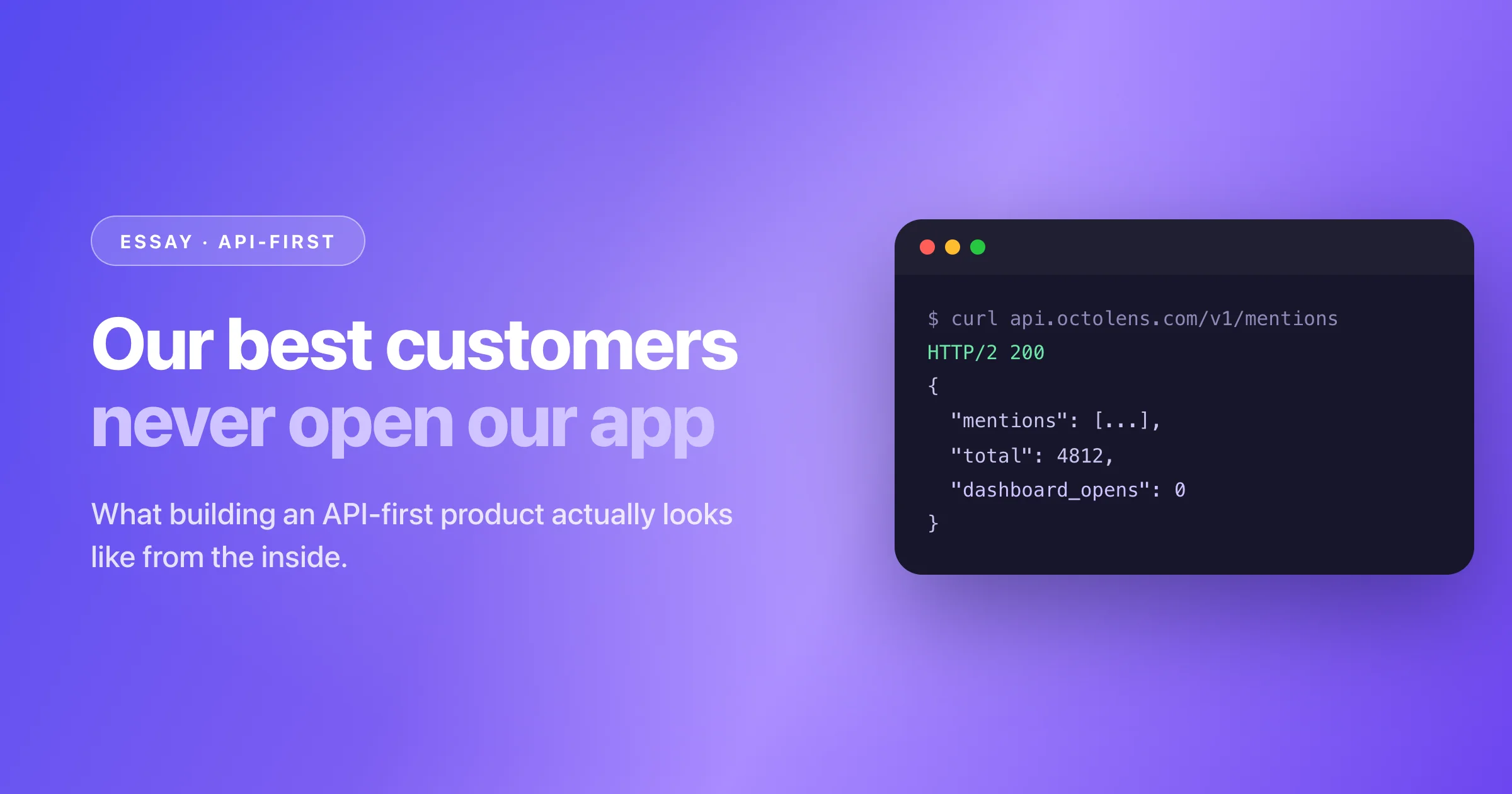
Two years in, we look at our most valuable customers and almost none of them open Octolens.
Vercel runs 20+ Slack channels piping mentions to product teams. PostHog forwards every mention into a custom Val Town dashboard as PostHog events. Tally reads them inside Missive, the inbox tool they use for everything else. Prisma's DevRel team gets pinged in Slack and responds in under five minutes. Most customers probably couldn't tell you the last time they opened our app.
These are our happiest customers. They quote us in product pitches. They renew without thinking. They send us referrals. The dashboard we spent two years building is somewhere between optional and invisible to the customers who get the most out of us.
Our app’s DAUs decreased while our revenue grew over 5x year-over-year.
We spent the last six months rebuilding Octolens around the idea that our product is a data layer that enables workflows, not a dashboard.
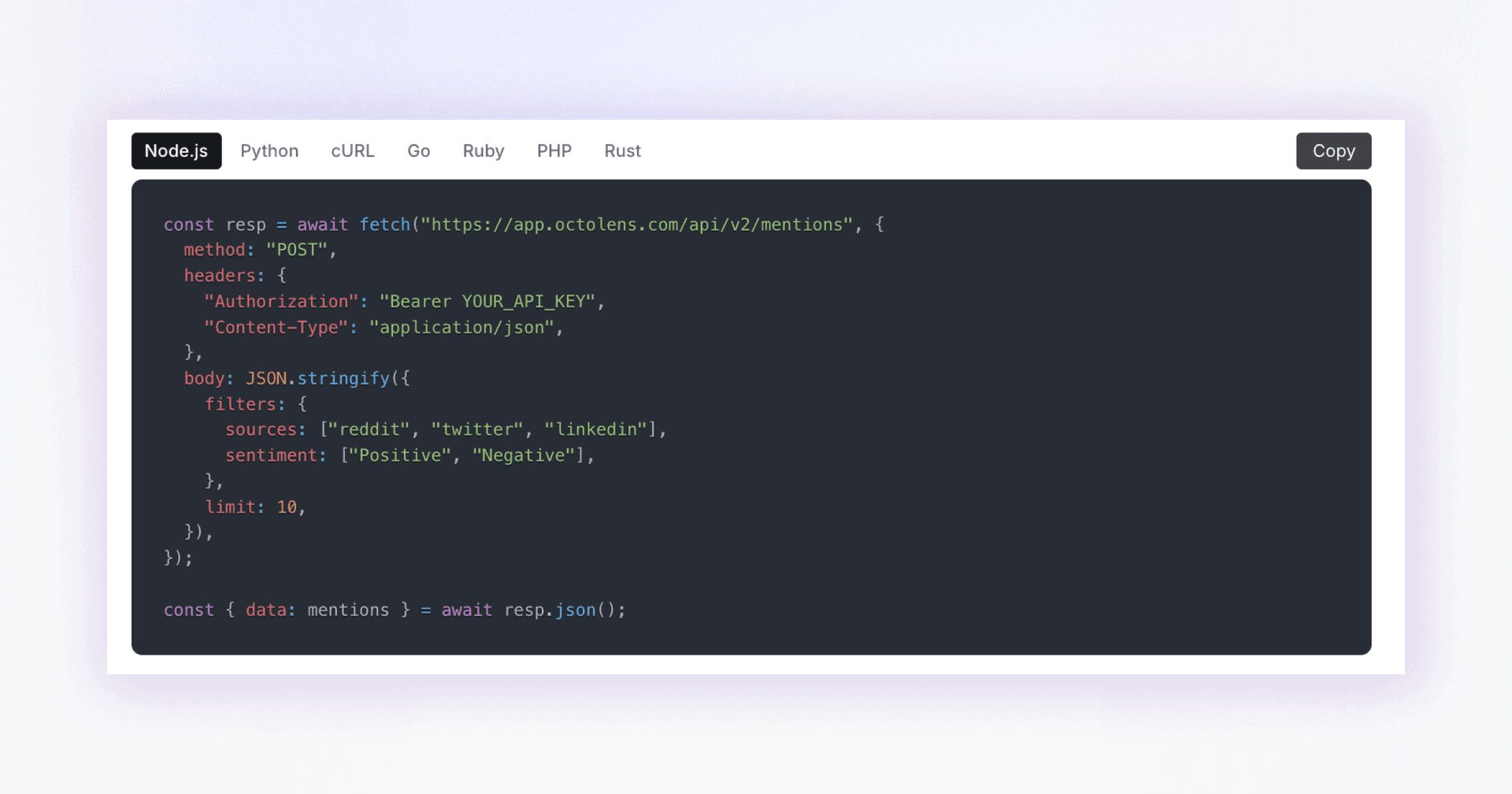
We make data access as easy as possible. It's standard in our category to lock APIs behind an enterprise tier, or not offer one at all. We think that's backwards. If you're paying us anything, you own your data and can pipe it wherever you want, day one. API, webhooks, and our MCP server are now available on every plan.
With our API and MCP v2, you’re now able to use Octolens fully programmatically: create keywords, setup feeds and automations, or run analysis on all your mention data.
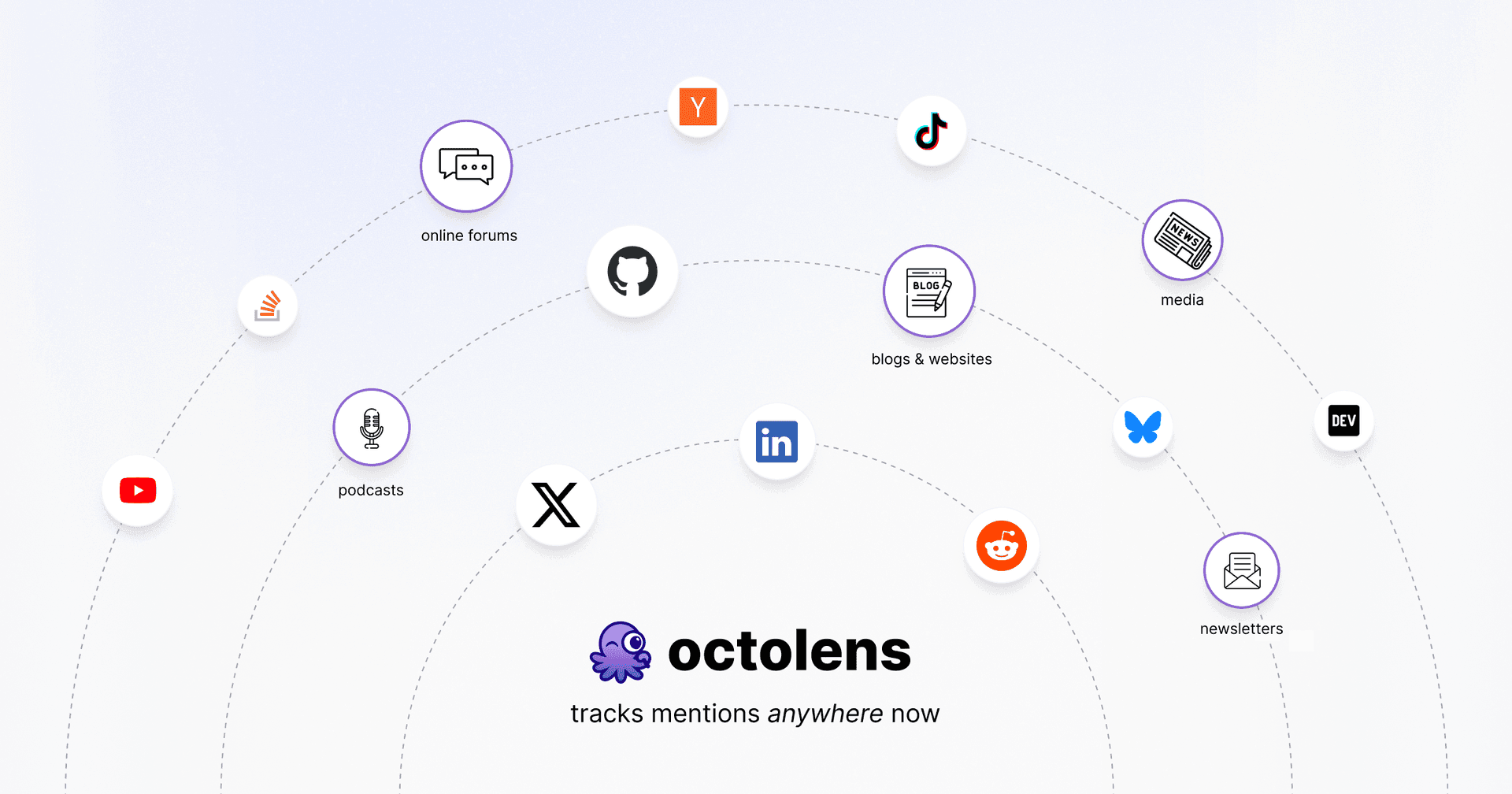
We cover every relevant source on the web. We started with Reddit, X, LinkedIn, YouTube, and the platforms technical audiences live on like Hacker News, GitHub, Stack Overflow, or DEV. But people also talk about products in podcasts, newsletters, traditional news, blogs, forums, and even other companies' landing page copy. So we extended coverage to all of it. All relevant sources, one schema, one auth, one endpoint. No other tool covers this breadth.
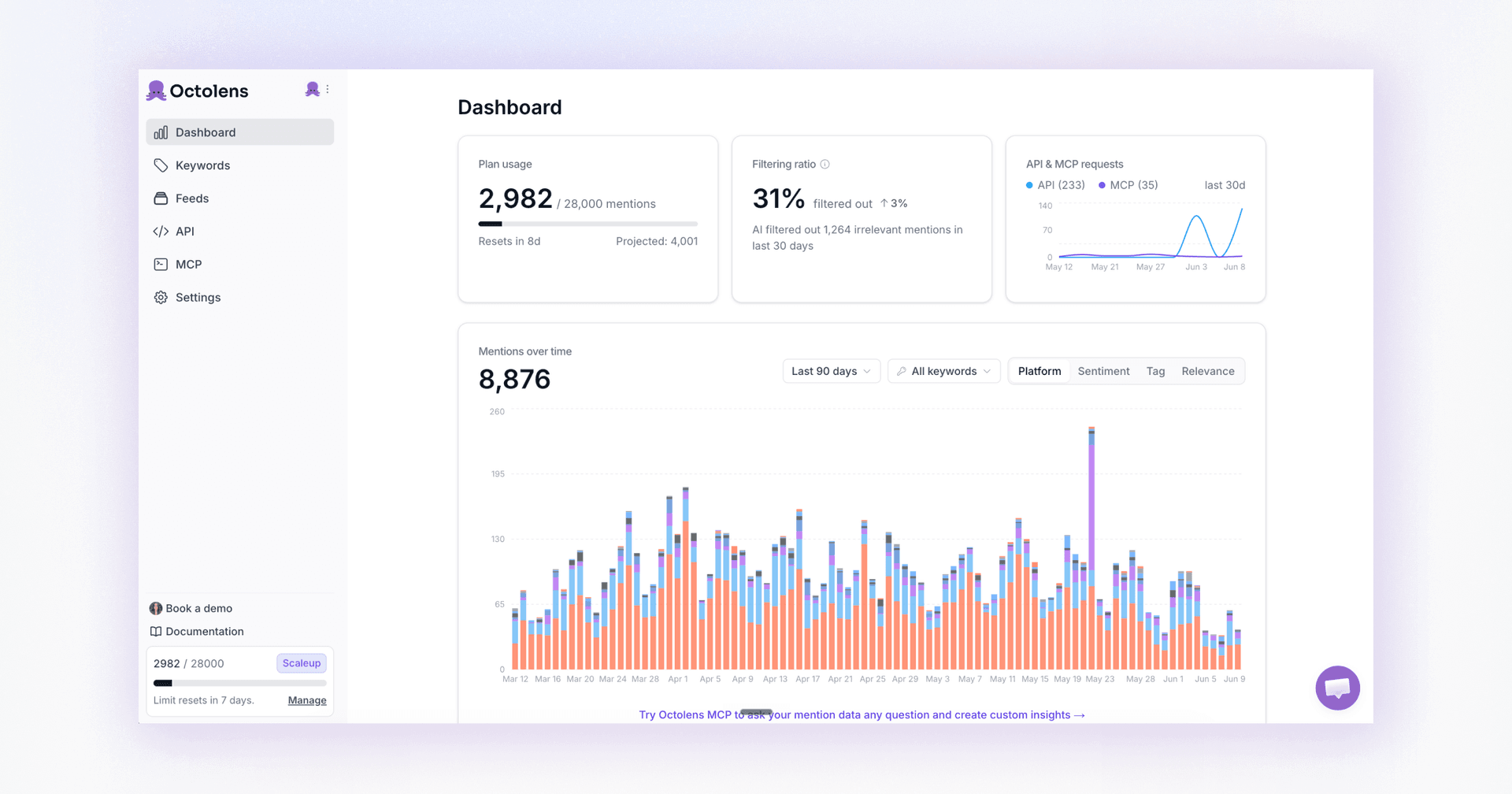
We treat our app as an entry point to our product. The Octolens app didn't go away. It's still where you can explore mentions, configure feeds, triage, and onboard team members. We rebuilt it around that job: less monitoring console, more workspace for the moments you do need to look at something directly.
The inspiration for all of this comes from our customers. They already worked this way before we even realized it ourselves.
"The Octolens team built one of the most impactful products I've used in the last 10 years. It fundamentally changed how we run every product team at Vercel."
Zeb Hermann
GM, v0 at Vercel
So why does all of this matter? You probably guessed it: AI agents.
Your AI agents probably already know a lot about your business. They can read your code, your ticket system, your docs, your CRM, your analytics. They can answer many questions about what's happening inside your company.
What they can't see is the world outside. They don't know people are arguing about your latest pricing change on Reddit right now. They don't know that a competitor shipped a feature that's getting roasted in podcast episodes this week. They don't know that someone just wrote a 1,200-word blog post about why your product is the best in its category.
That's the gap Octolens can fill. Connect Octolens via API or MCP and your agents get ears for what your customers are saying outside your support inbox and sales calls.
In 2026, if an agent can’t reach the data, it’s not a data source.
A few of the workflows our customers are running in production right now:
- Write copy that uses real customer language: Your agent reads how prospects describe your product, your competitors, and the problem you solve, and turns that language directly into copy. Hero rewrites that match the phrases real people use this week. Real customer quotes pulled into SEO blog drafts. Ad variants tested against the words your prospects actually search and post, not the ones marketing remembers from last year.
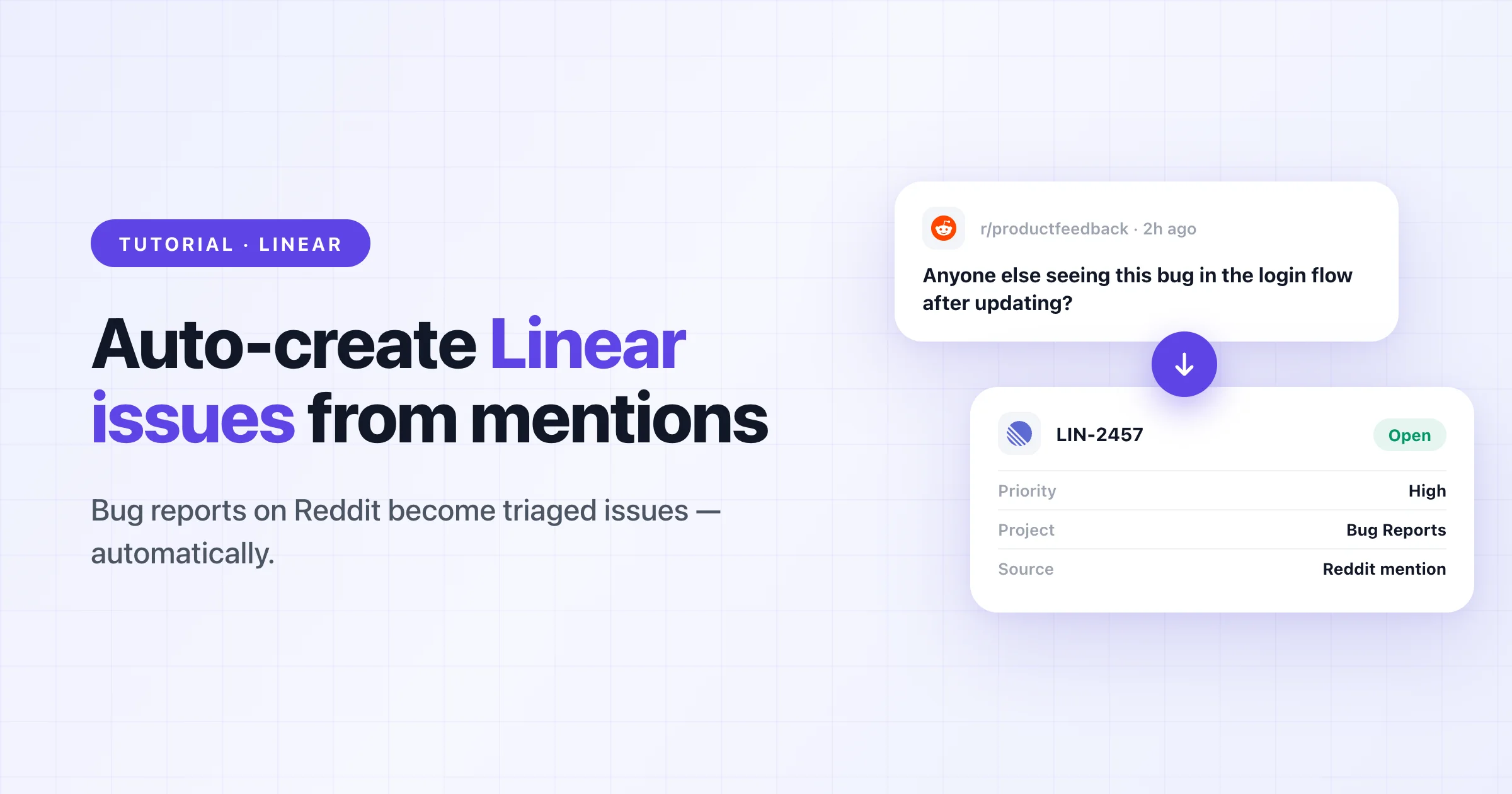
- Turn mentions into Linear issues: Webhook the mention to your agent. It reads the post, classifies it (bug, feature request, general feedback), creates a Linear ticket with the original thread linked and the right team assigned. You could even let the agent open a PR. That's where this gets interesting.
- Catch churn signals early: A negative tweet, a Reddit post praising a competitor, a customer asking for a workaround on HN. All flagged in real time with a ticket for your customer success team and a draft for outreach.
- Generate pipeline from public conversations: Someone posts "looking for an alternative to [your competitor]" on Reddit, Hacker News, or X. Your agent surfaces them, enriches the profile via Clay, drops them into your CRM, and drafts the outreach. Pipeline from public conversations, not cold lists. We just launched a partnership with Attio. More CRM integrations are coming soon.
Rule of thumb: if your workflow would benefit from knowing what real people are saying, it probably belongs on top of Octolens data.
We don't fully know yet what people will build on top of this, that's part of why we're publishing this now.
If you ship a workflow on top of the Octolens API or MCP, share it on X or LinkedIn and tag @octolens. We'll add 10,000 mentions per month to your account for the next 12 months. Real workflows from real customers help everyone figure out what's possible with this.
—
Octolens is building the data layer that gets what real people are saying into the systems where your team and your agents actually work. If that's what you expect from social listening, start a free trial.
If you're already a customer, log in and see what’s possible if you connect Octolens to your agents.