12 Best Social Media Search Engines in 2026 (Compared)
Find posts, people, and conversations across every social platform — without scrolling through each one manually.
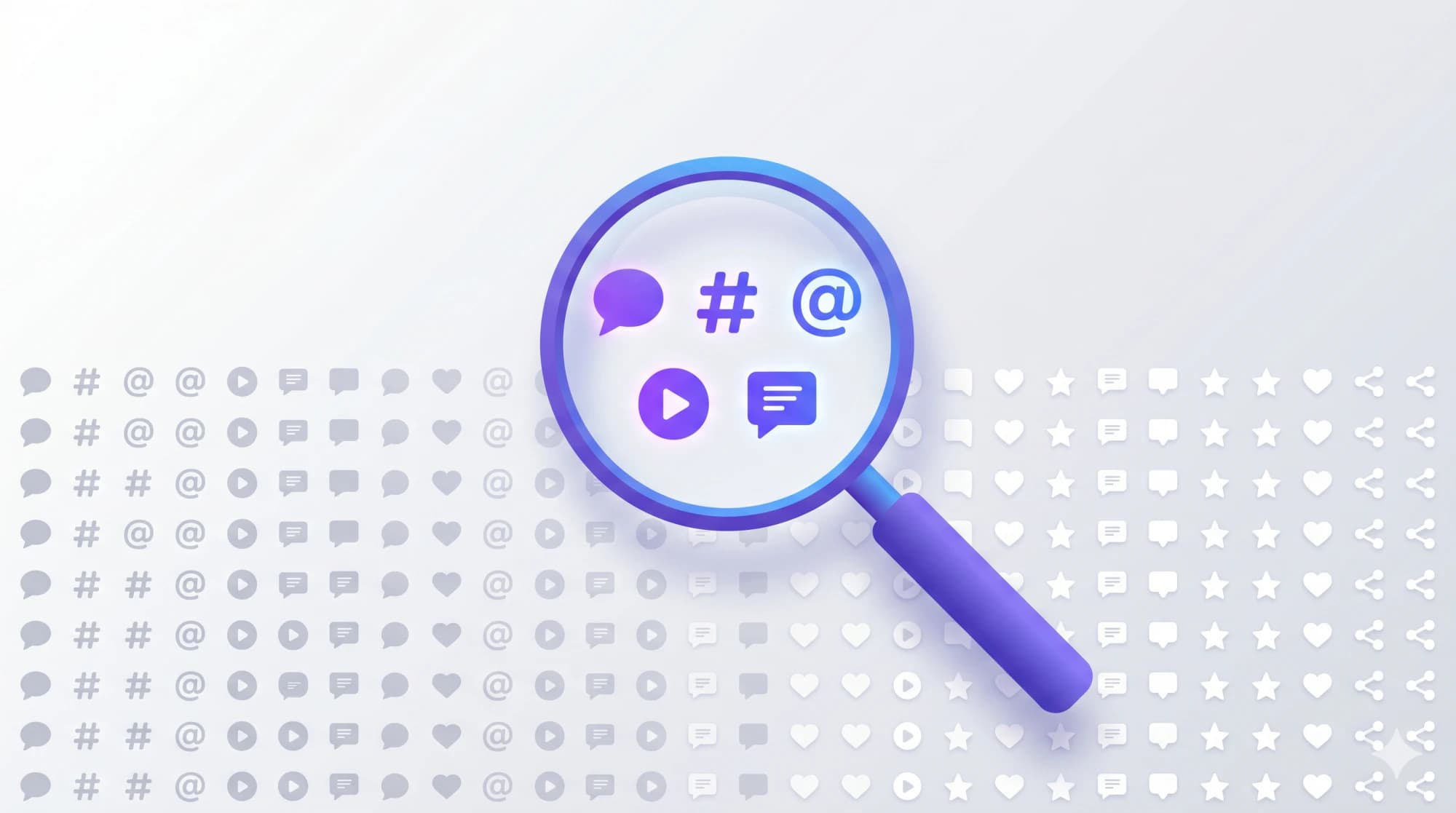
A social media search engine lets you find posts, conversations, and mentions across platforms like Reddit, Twitter/X, LinkedIn, and Hacker News — all from one place. Google doesn't index most social content. A conversation happening right now on Reddit, a thread blowing up on Twitter/X, someone asking for tool recommendations on LinkedIn — none of that shows up reliably in a Google search until hours or days later, if ever.
If you've tried searching for conversations about your brand, competitors, or industry across social platforms, you already know the pain. You open Twitter, search, scroll. Open Reddit, search, scroll. LinkedIn. Hacker News. Rinse and repeat across a dozen platforms.
This guide compares the 12 best social media search engines in 2026 — from free tools for quick lookups to API-first platforms for developers who need programmatic access. This is not a social listening tools roundup (we have one of those). The difference: listening is about ongoing monitoring and alerts. Social media search tools are about finding what's already out there right now.
A social media search engine is a tool that indexes and searches content across social platforms — tweets, Reddit threads, LinkedIn posts, YouTube comments, forum discussions — and returns results in one unified interface. Unlike Google, which crawls static web pages, these tools tap into platform APIs and real-time feeds to surface conversations as they happen.
There are roughly three categories:
- Free search aggregators (Social Searcher, SearchAll.net) — quick lookups, no account needed, limited depth
- Paid search + monitoring platforms (Octolens, Brand24, Mention) — ongoing keyword tracking with alerts, analytics, and historical data
- Native platform search (Twitter Advanced Search, Reddit search) — powerful within a single platform, useless outside it
The best social media search engine for you depends on whether you need a one-off search or ongoing monitoring, how many platforms you need to cover, and whether you need API access to build search into your own workflows.
Social media search engines solve problems that Google can't:
- Real-time social signal tracking — Find mentions of your brand, product, or competitors within minutes, not days. 78% of internet users research brands on social platforms before making decisions.
- Competitive intelligence — Track what people say about competitors. Find feature requests, complaints, and switching signals in real conversations.
- Social proof discovery — Find positive mentions and testimonials you didn't know existed. Turn organic praise into marketing assets.
- Market research — Understand how your target audience talks about problems your product solves. Find the exact language they use.
- Developer and API access — Pipe social search results into your own tools, dashboards, or AI agents. This is where API-first platforms like Octolens differentiate — you get structured data, not just a dashboard.
- Lead generation — Find people actively asking for recommendations or complaining about a competitor. That's warm outreach, not cold.
The shift toward social-first search is accelerating. Over 40% of Gen Z now start product research on social platforms instead of Google. For B2B teams, the conversations that matter most — honest reviews, tool recommendations, pain point discussions — overwhelmingly happen on Reddit, Twitter/X, and niche communities.
We track the keyword "social listening" across Reddit, Twitter, and 12 other platforms through Octolens. Here's what practitioners are telling each other in April 2026:
"Social Listening Tools: I've seen SaaS products gain traction by tracking X, Reddit, and LinkedIn to find people discussing the problems their product solves. These tools send notifications so you can jump into the conversation." — r/smallbusiness
"The thing that actually moved the needle for me was monitoring buyer intent signals — local businesses posting about struggling with social, asking for recommendations, or complaining about their current agency. That's warm outreach, not cold." — r/b2bmarketing
"Don't just set keyword alerts like 'patreon alternative.' Also track intent phrases — stuff like 'I wish there was a way to' or 'does anyone know a tool that' in your niche. Those people aren't just chatting; they're ready to make a move." — r/EntrepreneurRideAlong
The pattern is clear: people need to find conversations across social platforms, not just set up alerts and wait. Here are the 12 best tools for that in 2026.
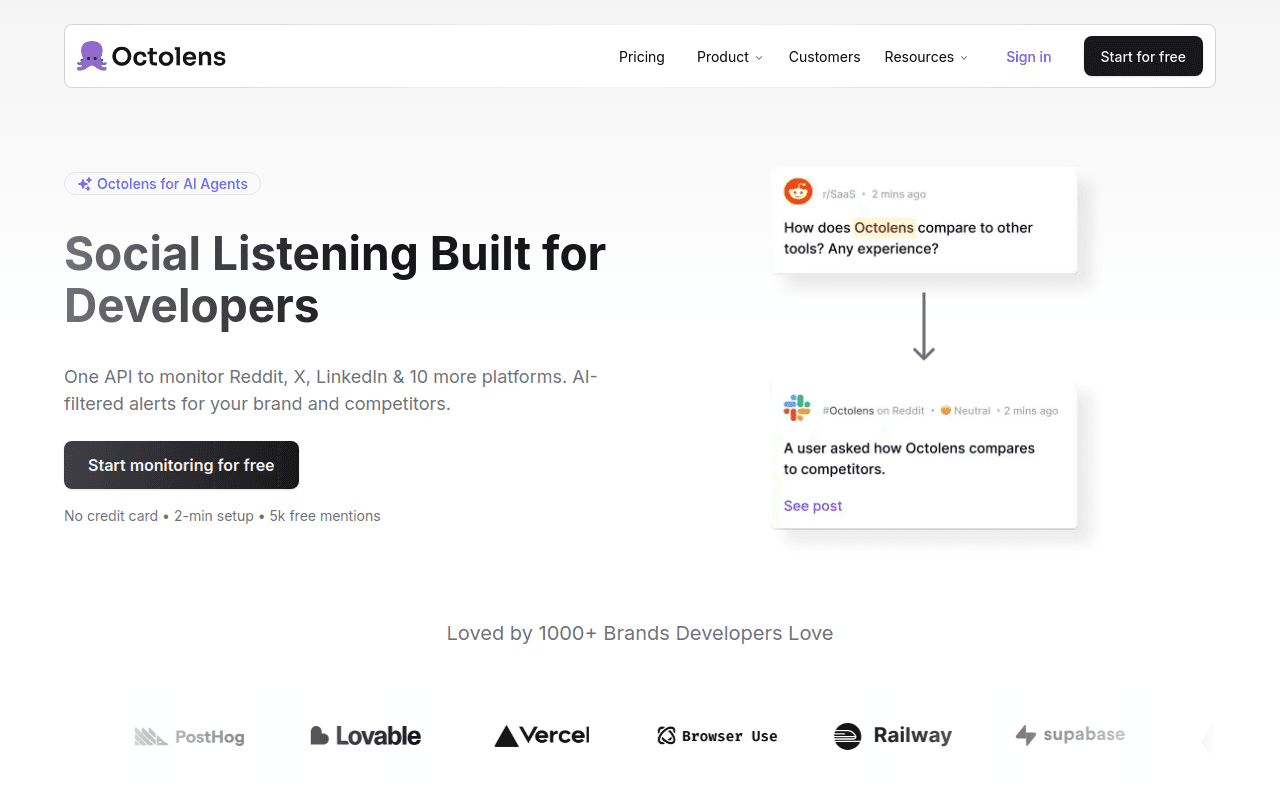
Full disclosure: this is ours. I'll be straightforward about what it does well for search and where it doesn't fit.
Octolens was built as a social listening platform, but the API-first architecture makes it work as a social media search engine too. Set up a keyword, and you get backfilled results from the last 7 days across 15 platforms — Twitter/X, LinkedIn, Reddit, Bluesky, GitHub, YouTube, DEV.to, Hacker News, Stack Overflow, newsletters, podcasts, Product Hunt, Medium, TikTok, and 150k+ news outlets. That backfill essentially functions as a search query across all those sources at once.
The API returns structured data — author, platform, sentiment, relevance score, timestamp — so you can filter, sort, and pipe results into your own tools. Every plan includes API access, webhooks, and MCP server access. No enterprise-only gates.
| Plan | Price | Mentions/mo | Keywords |
|---|---|---|---|
| Pro | $159/mo (annual) / $199/mo | 15,000 | 10 |
| Scale | $499/mo (annual) / $599/mo | 50,000 | 40 |
| Enterprise | Custom | Unlimited | Unlimited |
All plans include API, webhooks, MCP, Slack, email alerts, and unlimited seats. 7-day free trial on Pro.
Honest downsides: This is not a free ad-hoc search engine. You need a subscription and keywords set up first. If you want to do a quick one-off search without committing to a plan, the free tools below are a better fit. But if you need structured, ongoing search across 15 platforms with an API, nothing else on this list comes close.
Customers include Vercel, Supabase, Lovable, Prisma, and 1000+ more.
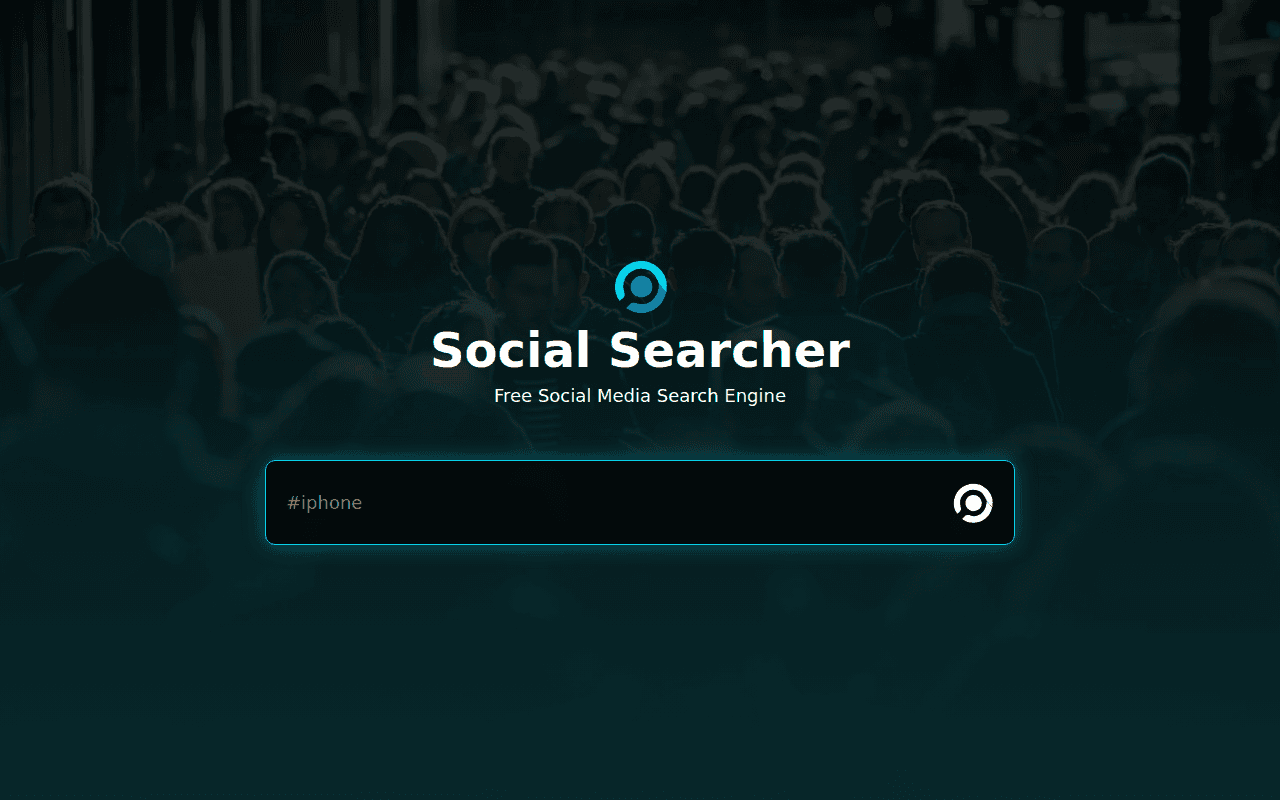
Social Searcher is the most popular free social media search engine, and for good reason — it actually works for quick lookups without requiring an account.
Type a keyword, hit search, and you get real-time results from Twitter/X, Facebook, Instagram, YouTube, Reddit, Pinterest, TikTok, and a few more. The free tier gives you a limited number of searches per day with basic sentiment analysis. Paid plans ($49-$199/mo) unlock historical data, email alerts, and more searches.
The interface feels dated compared to newer tools, and the results quality can be inconsistent — particularly for platforms like LinkedIn where access is limited. But for a quick "is anyone talking about this right now?" check, it's hard to beat the price (free).
Best for: Quick, one-off social media searches without signing up for anything.
Skip if: You need reliable API access, developer community coverage, or consistent data quality.
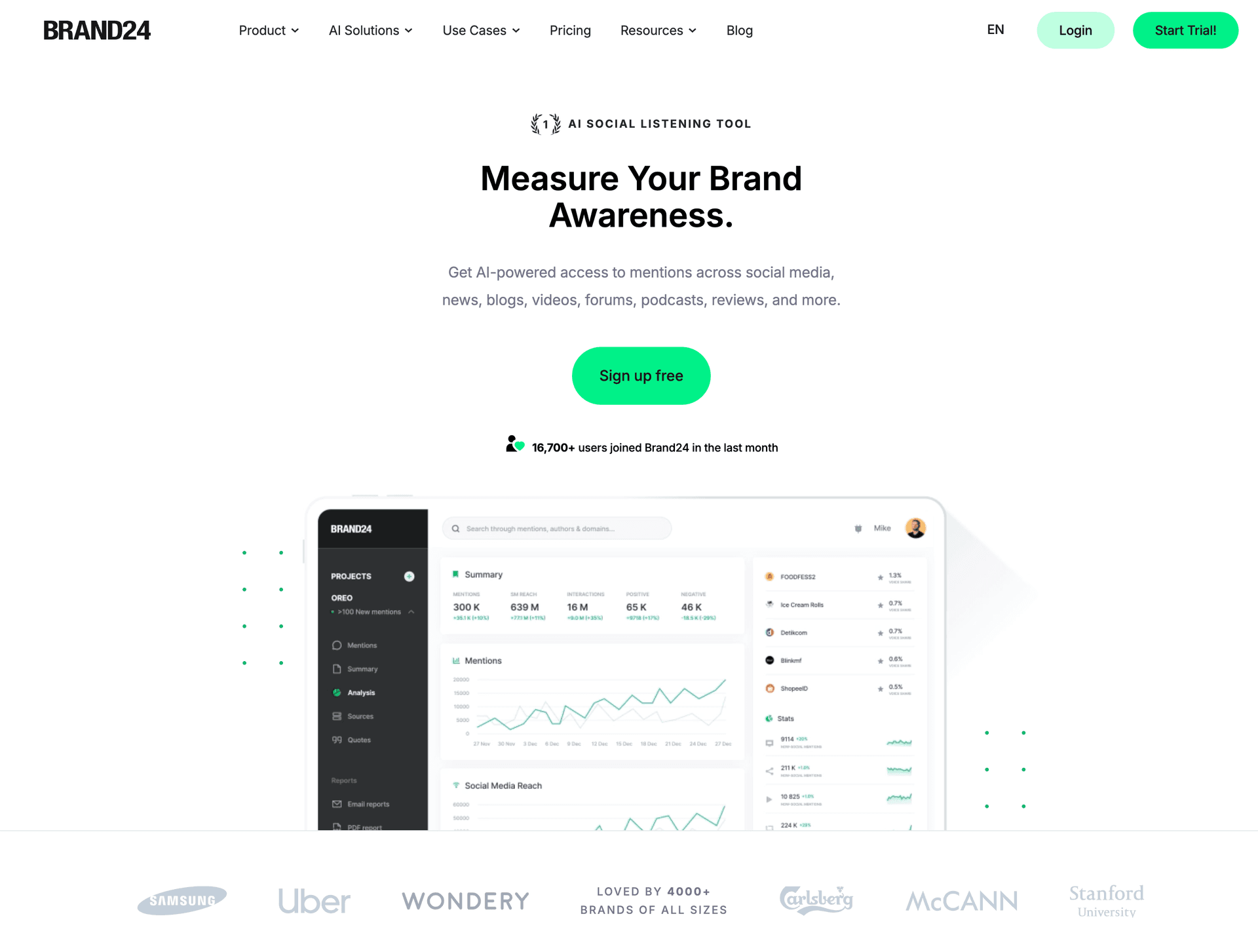
Brand24 is the most approachable paid tool on this list for teams that want both search and monitoring. Plans start at $49/month with transparent pricing and a 14-day free trial. No sales calls.
The interface is clean and the learning curve is minimal. You get real-time mention tracking, sentiment analysis with emotion detection, reach estimates, and share of voice calculations. The mobile app with push notifications is a nice touch for founders who want instant alerts.
The search functionality works well for finding conversations about specific keywords across Twitter, Instagram, Facebook, YouTube, blogs, and news sites. The AI filtering helps separate signal from noise on high-volume keywords.
Trade-offs at this price point: The entry plan only updates every 12 hours. Reddit and TikTok coverage is limited to higher tiers. Monthly mention limits can feel restrictive. And for developer communities like GitHub, Hacker News, or Stack Overflow — Brand24 doesn't cover them.
For a deeper comparison, see our 7 best Brand24 alternatives or our guide on the best brand monitoring tools.
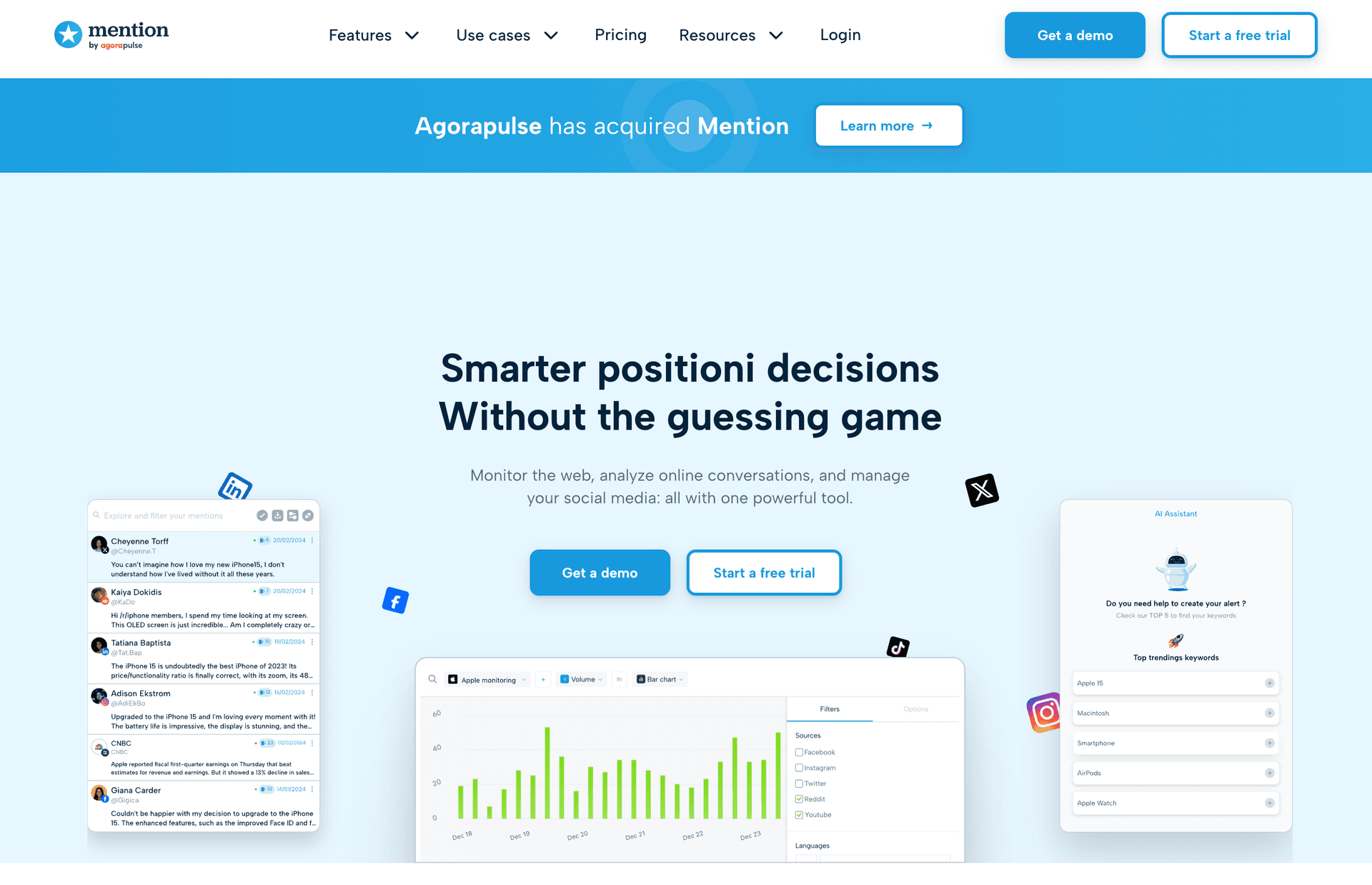
Mention tracks over 1 billion sources and has unusually strong coverage of review platforms — 75+ including Yelp, G2, Capterra, and Trustpilot. If you're a B2C brand that needs to search across review sites alongside social media, this is where Mention stands out.
The search is precise thanks to Boolean operators. You can build complex queries to find exactly the conversations you're looking for. The competitive analysis dashboards are helpful for tracking share of voice across your keyword set.
The pricing jump is steep. The Company plan starts at $599/month, and that's where you get API access and historical data. Lower tiers feel restrictive for anything beyond basic monitoring.
For a detailed comparison, see our Mention alternative breakdown.
Best for: B2C brands that need review site coverage alongside social search.
Skip if: Developer community coverage matters, or you need API access without a $599/mo commitment.
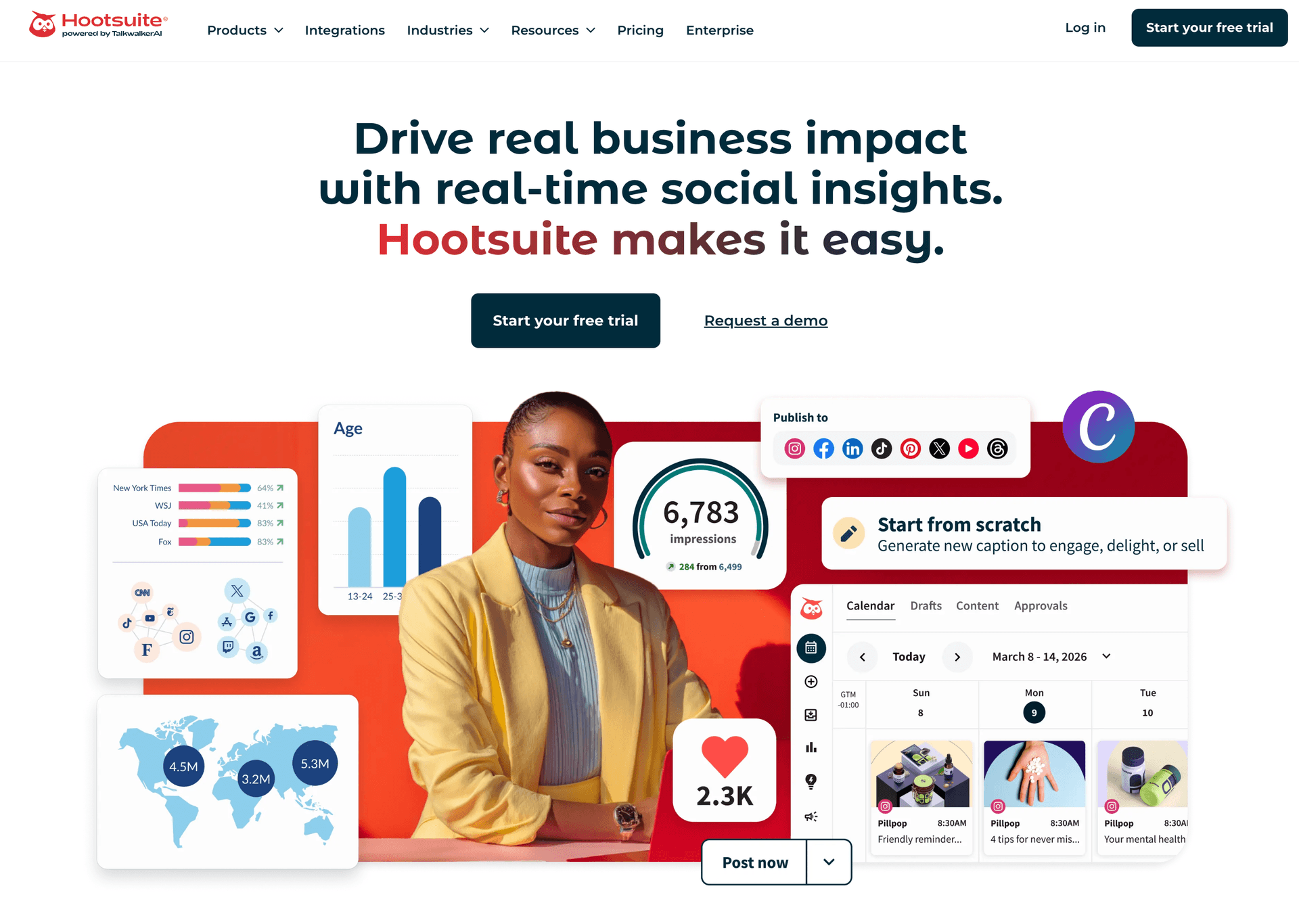
Hootsuite is primarily a social media management platform, but the "Streams" feature provides persistent keyword search columns that update in real time. If your team already uses Hootsuite for scheduling and publishing, adding search and monitoring keeps everything in one place.
The enterprise-tier listening is powered by Talkwalker under the hood, which means the deep search capabilities are actually quite good — at the right price point. The AI-powered summaries help cut through volume when tracking high-frequency keywords.
Where Hootsuite falls short as a social media search engine: the lower-tier plans offer only basic mention tracking. To get Talkwalker-powered deep search, you need Enterprise pricing (sales call required). And developer communities — Reddit, Hacker News, GitHub, Stack Overflow — are largely absent from the coverage.
For a full analysis of Hootsuite's listening features, see our brand monitoring tools comparison.
Best for: Existing Hootsuite users who want search alongside their publishing workflow.
Skip if: You'd be signing up for Hootsuite just for the search features.
Talkwalker is the enterprise option. 150 million+ sources, 187 languages, Blue Silk AI for image and logo recognition. If you need to search for brand mentions in Japanese, Portuguese, and German simultaneously — including mentions where your logo appears in photos but nobody tagged you — Talkwalker is one of the few tools that does this.
The "IQ Apps" pre-built dashboards can save weeks of setup time. Unlimited user seats across all plans encourage company-wide adoption. The crisis management features are battle-tested by Fortune 500 companies.
This is not a tool for B2B SaaS startups. Pricing is custom and enterprise-only — expect $200k+/year. Implementation cycles are long. The platform is powerful but dense, and you'll likely need a dedicated analyst to extract value from it.
Best for: Global brands with multilingual monitoring needs and six-figure budgets.
Skip if: You're a startup, your budget is under $1,000/month, or you primarily care about English-language developer communities.
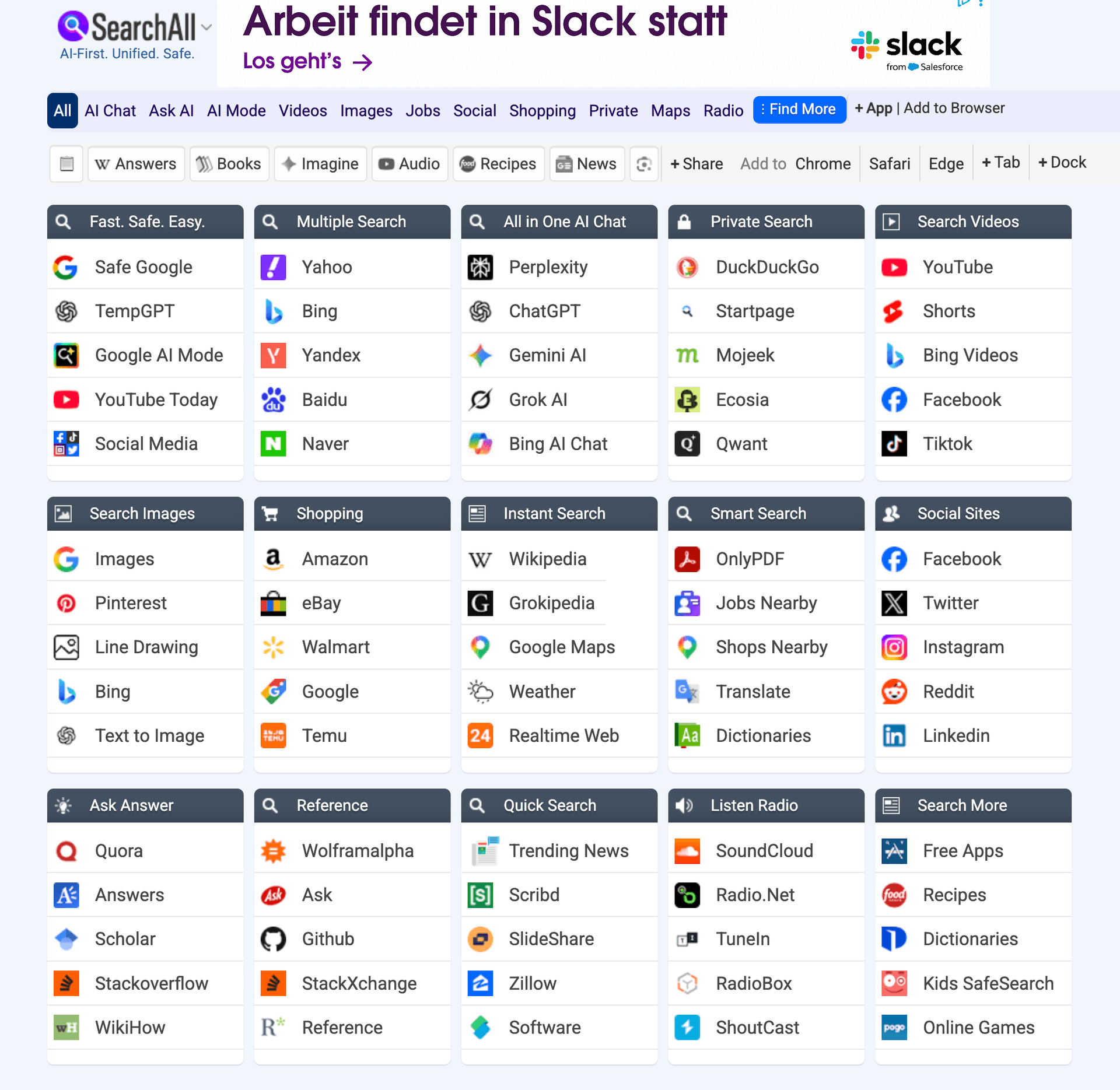
SearchAll is a free aggregated search interface that lets you search across multiple social platforms from a single search box. Twitter/X, Instagram, YouTube, TikTok, Reddit, Mastodon, Medium, DEV.to, LinkedIn — type your query and pick a platform.
Here's the thing most people don't realize until they try it: SearchAll doesn't actually aggregate results. It redirects you to each platform's native search interface. So searching for "project management tool" on SearchAll just opens Twitter's search, Reddit's search, etc. in separate tabs.
That's still useful — it saves you the step of navigating to each platform individually — but it's not a unified search engine that returns combined results.
No account required, no API, no monitoring or alerting. It's ad-supported and free.
Best for: Quickly jumping to native search across multiple platforms without bookmarking each one.
Skip if: You want unified results, API access, or any kind of analytics.
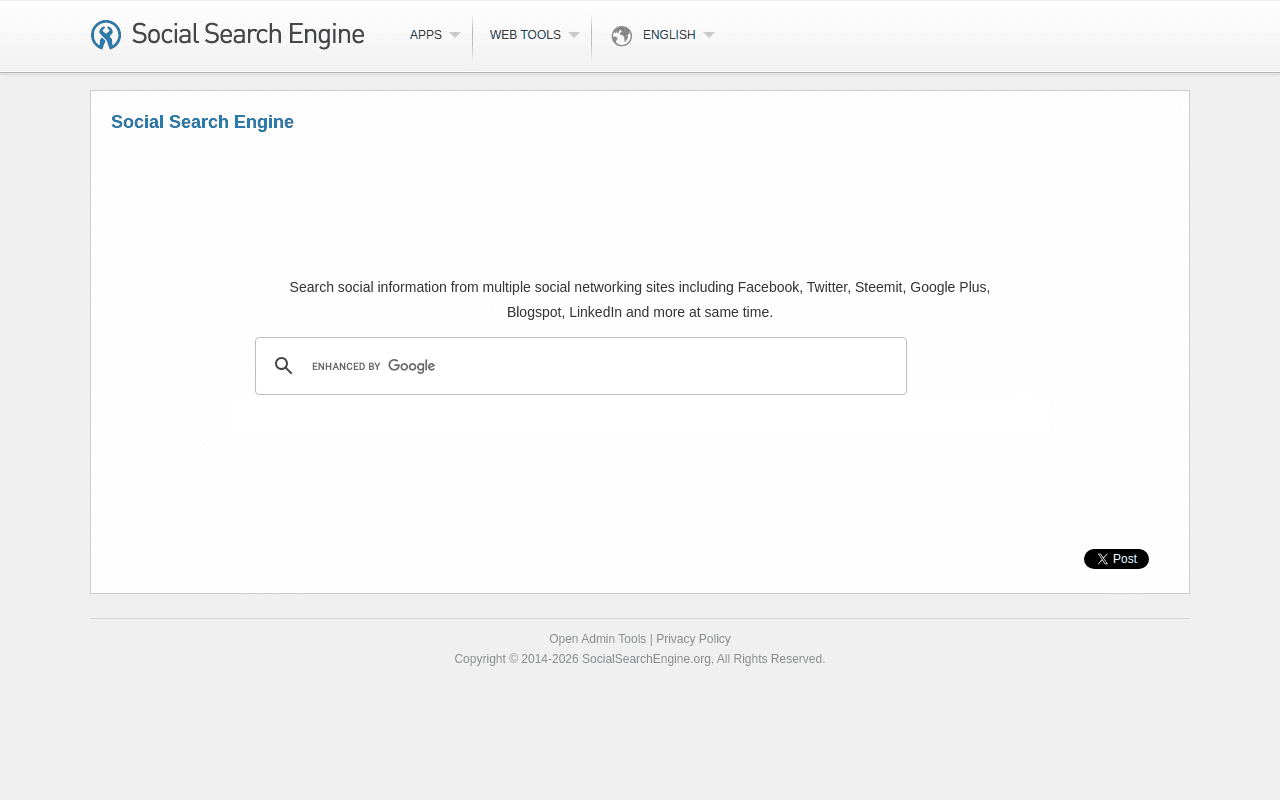
Social Search Engine (socialsearchengine.org) is a bare-bones social media search tool that lets you search across a handful of platforms — primarily Twitter/X, Instagram, TikTok, Reddit, and YouTube.
The interface is simple: pick a platform, type a keyword, get results. No account required. Basic filtering and sorting options. It does what it says on the tin.
The limitations are significant. Platform coverage is narrow compared to other options on this list. No advanced filters, no Boolean operators, no historical data archive. No API or webhook support. Results can be sparse for niche queries.
Best for: A quick, no-frills check when you want to see if a keyword is active on a specific platform.
Skip if: You need anything beyond basic search — analytics, API access, or broad platform coverage.
Boardreader is a specialized search engine for forums and message boards. While most tools on this list focus on mainstream social networks, Boardreader indexes Reddit, various forums, discussion boards, and community sites.
For B2B teams, this is actually valuable. Many product conversations — especially in technical niches — happen on forums rather than Twitter or LinkedIn. Boardreader lets you search across these communities from one interface, with basic filtering by date range and source.
The interface is bare-bones. The coverage of modern platforms (TikTok, Bluesky, Mastodon) is nonexistent. And the data can feel stale compared to real-time tools. But for finding conversations in niche communities and forums that other search engines miss, it fills a gap.
Best for: Searching forums, message boards, and Reddit for niche community conversations.
Skip if: You need modern platform coverage or a polished interface.
Twitter's Advanced Search is arguably the most powerful native social media search tool available. Boolean operators (AND, OR, NOT), exact phrase matching, date ranges, from/to specific accounts, minimum engagement thresholds, language filters — it's genuinely sophisticated for a free tool.
Some queries you can run that most people don't know about:
"project management" min_replies:5— find conversations with real engagement"tool recommendation" until:2026-04-14 since:2026-04-01— search within a date rangefrom:username "keyword"— search a specific person's tweets
The obvious limitation: it only searches Twitter/X. If the conversation you're looking for is happening on Reddit, LinkedIn, or Hacker News, you won't find it here. And the API — which you'd need for any programmatic access — starts at $100/month for the Basic tier and goes up steeply from there.
Best for: Deep searching within Twitter/X specifically. Free, powerful, and immediate.
Skip if: You need to search across multiple platforms, or you need API access without paying $100+/mo.
Reddit's native search is notoriously bad. Even Reddit users will tell you to use Google instead. The results are poorly ranked, the filtering is basic, and it misses a lot of relevant content.
That's where third-party tools like Redditle come in. Redditle uses Google's index of Reddit, which is significantly better than Reddit's own search. The query site:reddit.com "your keyword" executed through Google returns more relevant results than Reddit's search bar in almost every case.
A few search tips for Reddit specifically:
- Use Google:
site:reddit.com/r/SaaS "social listening"to search a specific subreddit - Filter by time: add
after:2026-01-01to find recent conversations - Use Reddit's own filters: sort by "New" rather than "Relevance" for the latest discussions
- Try
site:reddit.com inurl:comments "keyword"to find comment threads
Reddit is often the most valuable platform for B2B conversations — it's where people give honest opinions about tools, complain about pain points, and ask for recommendations. But searching it effectively requires working around the native search, not with it.
Best for: Finding honest product discussions, recommendations, and complaints in specific communities.
The free option that everyone forgets about. Google's site: operator lets you use Google as a social media search engine:
site:reddit.com "brand monitoring tools"— search Reddit via Googlesite:twitter.com "keyword"— search Twitter via Google's indexsite:linkedin.com/posts "keyword"— search LinkedIn postssite:news.ycombinator.com "keyword"— search Hacker News
You can combine these with Google Alerts to get email notifications when Google indexes new content matching your query. It's free, requires no tools, and works surprisingly well for content Google has indexed.
The major limitation: Google doesn't index most social content in real time. Tweets, Reddit comments, and LinkedIn posts can take hours to days to appear in Google's index — and many never get indexed at all. For anything time-sensitive, this approach is too slow.
For more on why Google Alerts has reliability issues, see our guide on why Google Alerts stops working.
Best for: Free, zero-setup social search when real-time isn't critical.
Skip if: You need real-time results or comprehensive coverage of social platforms.
| Tool | Type | Price | Platforms | API | Webhooks |
|---|---|---|---|---|---|
| Octolens | Search + Monitor | $159-599/mo | 15 platforms | Yes (all plans) | Yes |
| Social Searcher | Search + Monitor | Free-$199/mo | 12+ | Paid only | No |
| Brand24 | Search + Monitor | $199-699/mo | 10+ | Higher tiers | No |
| Mention | Search + Monitor | Custom (Company plan) | 10+ | Paid add-on | Yes |
| Hootsuite | Mgmt + Search | $99-739/mo | 8+ | Enterprise | No |
| Talkwalker | Enterprise Search | Custom | 150M+ sources | Enterprise | Yes |
| SearchAll.net | Pure Search | Free | 10+ | No | No |
| Social Search Engine | Pure Search | Free | 5+ | No | No |
| Boardreader | Forum Search | Free | Forums/Reddit | No | No |
| Twitter/X Advanced | Native Search | Free | Twitter only | $100+/mo | No |
| Reddit + Redditle | Native Search | Free | Reddit only | No | No |
| Google site: search | Web Search | Free | Indexed only | No | No |
You need a quick, free search right now. Use Social Searcher for a multi-platform scan, or SearchAll.net to quickly hop between platform-native searches. No signup, no commitment.
You're searching one specific platform. Use that platform's native search. Twitter/X Advanced Search is the best of the bunch. For Reddit, skip native search and use Redditle or Google's site:reddit.com operator instead.
You want to search forums and niche communities. Boardreader covers ground that mainstream tools miss. Combine it with Reddit-specific search techniques for the best coverage.
You need to search AND monitor ongoing. This is where Octolens fits. Set up your keywords once, get backfilled search results across 15 platforms, then keep monitoring with alerts on Slack or email. The API means you can build search into your own workflows.
You're a global enterprise brand. Talkwalker, if you have the budget and the team to operate it.
The one thing I'd push back on: don't assume free tools are good enough just because they're free. Social Searcher and Google site: search will find you some conversations, but they'll miss the majority of what's happening on platforms that don't cooperate well with external indexing. If finding these conversations matters to your business, the paid tools pay for themselves fast.
It depends on your use case. For free, quick searches, Social Searcher is the most capable option. For ongoing monitoring with API access, Octolens covers 15 platforms and includes API, webhooks, and MCP on all plans. For enterprise-scale multilingual search, Talkwalker is the most powerful (and most expensive). For single-platform deep search, Twitter/X Advanced Search is hard to beat within its own platform.
Yes — that's exactly what social media search engines do. Tools like Octolens, Social Searcher, and Brand24 search across multiple platforms simultaneously and return unified results. Free aggregators like SearchAll.net let you search multiple platforms too, but redirect you to each platform's native search rather than combining results.
Several. Social Searcher offers free real-time search with limited daily queries. SearchAll.net and Social Search Engine are free with no account required. Google's site: operator works as a free social media search engine for any platform Google has indexed. The trade-offs: limited platform coverage, no API access, no alerts, and slower results compared to paid tools.
You have two approaches. Manual: Use each platform's native search (Twitter Advanced Search, Reddit search via Google's site:reddit.com operator, etc.) and check each one individually. Automated: Use a social media search engine like Octolens, Brand24, or Mention to set up keyword monitoring across all platforms at once, with alerts delivered to Slack, email, or via webhook.
Social listening is ongoing and automated — you set up keywords, and the tool continuously monitors platforms and sends you alerts when new mentions appear. Social media search is on-demand — you type a query and get results right now. Most paid tools (Octolens, Brand24, Mention) do both. Free tools (Social Searcher, SearchAll.net) are search-only.
Yes, but options are limited. Octolens includes API access on all plans ($159/mo+) with structured data across 15 platforms. Twitter/X's API starts at $100/mo for Basic access (Twitter only). Mention's API is a paid add-on on its custom-priced Company plan. Most free social media search engines don't offer API access. If you need to build social search into your own tools, dashboards, or AI agents, an API-first platform is the way to go.