
What Is Voice of the Customer for B2B SaaS Teams
Learn what is voice of the customer and how B2B SaaS teams can capture, analyze, and use feedback to drive product growth and reduce churn.
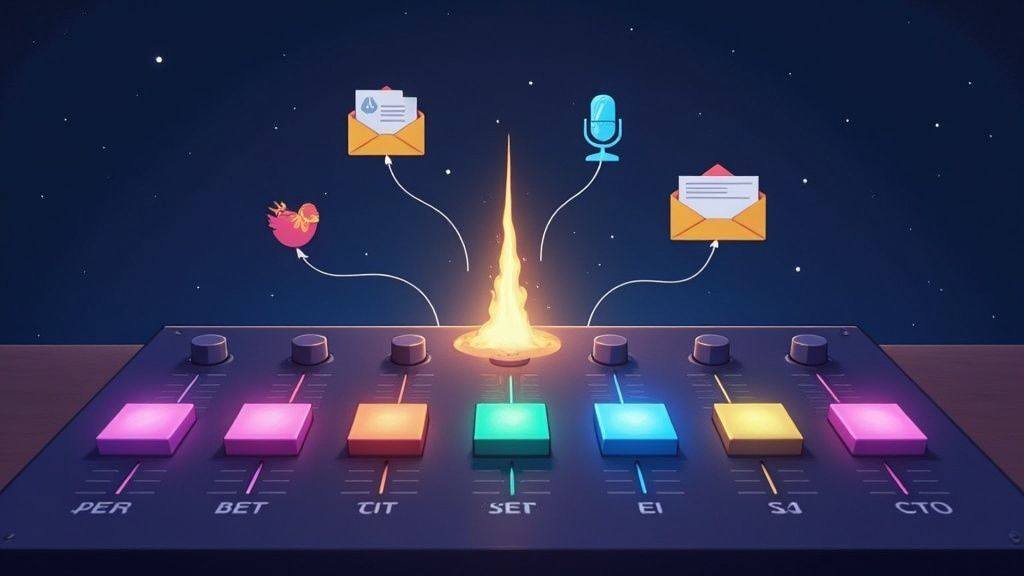
So, what exactly is Voice of the Customer? It’s tuning into what your customers really say about your product, your company, and their entire experience—and then doing something useful with it. You listen to everything they tell you directly and everything they say when you’re not in the room. Those insights? They become fuel for improving your business.
Let’s cut through the jargon. At its core, VoC swaps guesswork for data. Instead of assuming what customers want, a VoC program gives you a direct line to their unfiltered thoughts, needs, and frustrations.
Think of it like mixing a live concert. The engineer isolates each sound—guitars, drums, vocals, crowd—and balances them into a clear, powerful mix. A VoC system does the same for customer feedback, filtering out the noise so you hear the signal that guides your team.
Simply sending an NPS survey or hosting a feature request board isn’t enough. A real VoC program is a continuous, closed-loop system:
- Systematic Listening: Tune into every channel—support tickets, sales calls, public forums, even off-the-record chatter on Reddit and X.
- Deep Analysis: Go beyond counts and scores to understand the why. What trends, sentiments, and root causes are emerging?
- Actionable Insights: Turn raw data into clear recommendations your product, marketing, and success teams can act on right away.
- Closing the Loop: Let customers know you heard them and showcase the changes their feedback inspired.
A strong VoC program is an active, strategic commitment to making customers the centerpiece of your universe. Often, it starts with crafting a B2B customer journey map so you see the world through their eyes.
Investing in VoC pays off. Companies with formal VoC programs spend 25% less on retention than those without. You stop wasting cycles on features nobody wants and instead focus on improvements that drive adoption and expansion revenue.
By truly understanding the customer’s perspective, you stop wasting development cycles on features nobody asked for and start investing in improvements that drive adoption and expansion revenue.
Product teams validate ideas faster. Marketing crafts messages that resonate. Support teams get ahead of problems. And it all starts with listening.
The global VoC market hit USD 1,696.0 million in 2024 and is set to reach USD 4,681.5 million by 2030. This isn’t a fad; it’s a fundamental shift in how businesses operate.
Social listening focuses on brand mentions for marketing or reputation management. VoC digs deeper and wider, pulling feedback from all sources—solicited and unsolicited, public and private—to build a 360-degree view of the customer experience. For more on this, see our guide on the key differences between social listening vs. monitoring.
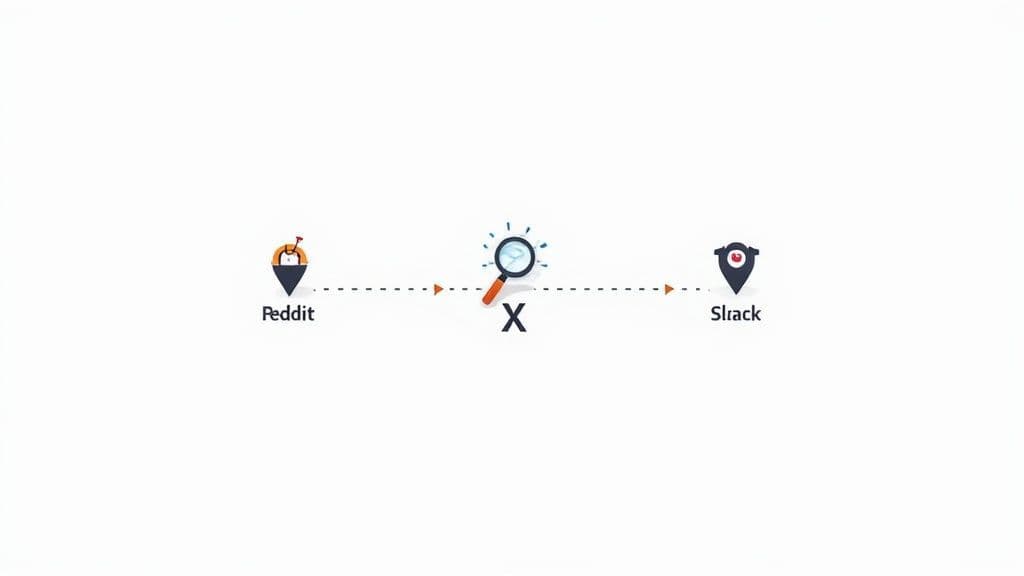
Your customers are talking about your product every day. The trick is tuning into the right places—not just blasting out another survey.
Public channels help you spot broad trends and gauge market sentiment:
- Reddit: Subreddits for your industry deliver honest, deep-dive debates.
- X (formerly Twitter): Quick pulse checks via hashtags and mentions.
- Hacker News: Must for technical audiences—developers and founders discuss tools and frustrations.
- LinkedIn Groups: B2B pros share practices and vendor feedback.
Internal channels give you context-rich, urgent insights:
- Help Desk Tickets: Bug reports and critical feature gaps.
- Sales Call Transcripts: Listen for “why” behind hesitations.
- Customer Chats: In-app or Slack chats capture immediate pain points.
- Emails to Account Managers: Strategic feedback from top customers.
Channel Type Best For Capturing Potential Pitfalls Reddit Deep technical debates and honest user gripes Off-topic chatter or meme-heavy content X Quick brand sentiment and breaking news Short posts lack context; requires fast monitoring Slack / Discord Niche feedback and expert opinions Private; needs invites to access Support Tickets Specific product issues and urgent user needs Data often sits in silos across tools
Don’t try to monitor everything at once. Pick 2–3 core channels based on feedback volume, insight richness, and relevance to your ideal customer:
- Identify where your buyer personas hang out.
- Set up listening posts on those channels.
- Use real-time alerts to catch important mentions.
- Review weekly: Are you getting signal or noise?
Listening where your customers already talk cuts through the noise faster than blindly scanning every platform.
You can also build an online community to foster natural feedback loops.
- Use keyword filters (product names, competitor mentions, pain points).
- Add negative keywords to reduce false positives.
- Automate alerts to Slack or email for urgent pings.
- Rotate channel focus periodically to avoid blind spots.
See our guide on search engines for social media for multi-platform scanning tools.
- Categorize mentions by topic (e.g., “Bug Report,” “Feature Request”) or sentiment.
- Set thresholds so minor chatter doesn’t flood your alerts.
- Refine keyword lists as new trends emerge.
- Archive resolved threads to keep dashboards focused.
Collecting feedback is step one. Turning scattered data into clear, actionable insights is where the magic happens.
Qualitative analysis digs into the “why.” Use thematic analysis (coding) to tag comments:
- “The new dashboard is confusing…” → UX/UI, Dashboard, Feature Confusion
- “Your pricing is too high for a small team…” → Pricing, Negative Sentiment, SMB Concern
When themes pop up—like 20% of feedback on the dashboard—you’ve identified a real problem your team can fix.
Automated techniques spot trends across huge datasets:
- Sentiment Analysis: Scores text as positive, negative, or neutral. Watch sentiment around product launches.
- Topic Clustering: Groups similar conversations without predefined tags—great for uncovering “unknown unknowns.”
Combining deep qualitative insights with broad quantitative trends gives you a complete, actionable view.
By 2025, 60% of VoC programs will analyze voice and text interactions beyond traditional surveys. You can discover more about this trend on Sprinklr. AI handles scale; humans catch nuance like sarcasm and cultural context.
Hoards of insights are useless if they sit in a dashboard. The real test is linking feedback to business outcomes.
Focus on a few KPIs that align with your goals:
- Customer Satisfaction (CSAT): Measures happiness after specific interactions.
- Net Promoter Score (NPS): Gauges long-term loyalty.
- Customer Effort Score (CES): Assesses ease of completing tasks.
- Churn Rate: The percentage of customers leaving your service.
Tie metrics to concrete goals:
- A 10-point jump in NPS can correlate with lower churn.
- Monitoring competitor sentiment on Reddit helps you highlight your strengths in marketing campaigns.
The goal is to create a direct line from a customer comment to a business action—like fixing a bug or updating onboarding.
You can discover more insights about consumer trends on pwc.com.
A simple dashboard can be your single source of truth. Pull in CSAT, NPS, CES, and churn rates so everyone sees how feedback impacts the business.
KPI What It Measures Why It Matters CSAT Satisfaction with specific interactions Uncovers friction points in support and product experiences NPS Overall loyalty and advocacy Predicts growth, referrals, and churn risk Churn Rate Percentage of customers leaving Ultimate indicator of whether you deliver sustained value
Turn scattered comments into immediate action:
- Combine streams from Slack, Teams, support tickets, and social media.
- Measure context and sentiment to filter out noise.
- Route high-priority alerts into daily sprint standups.
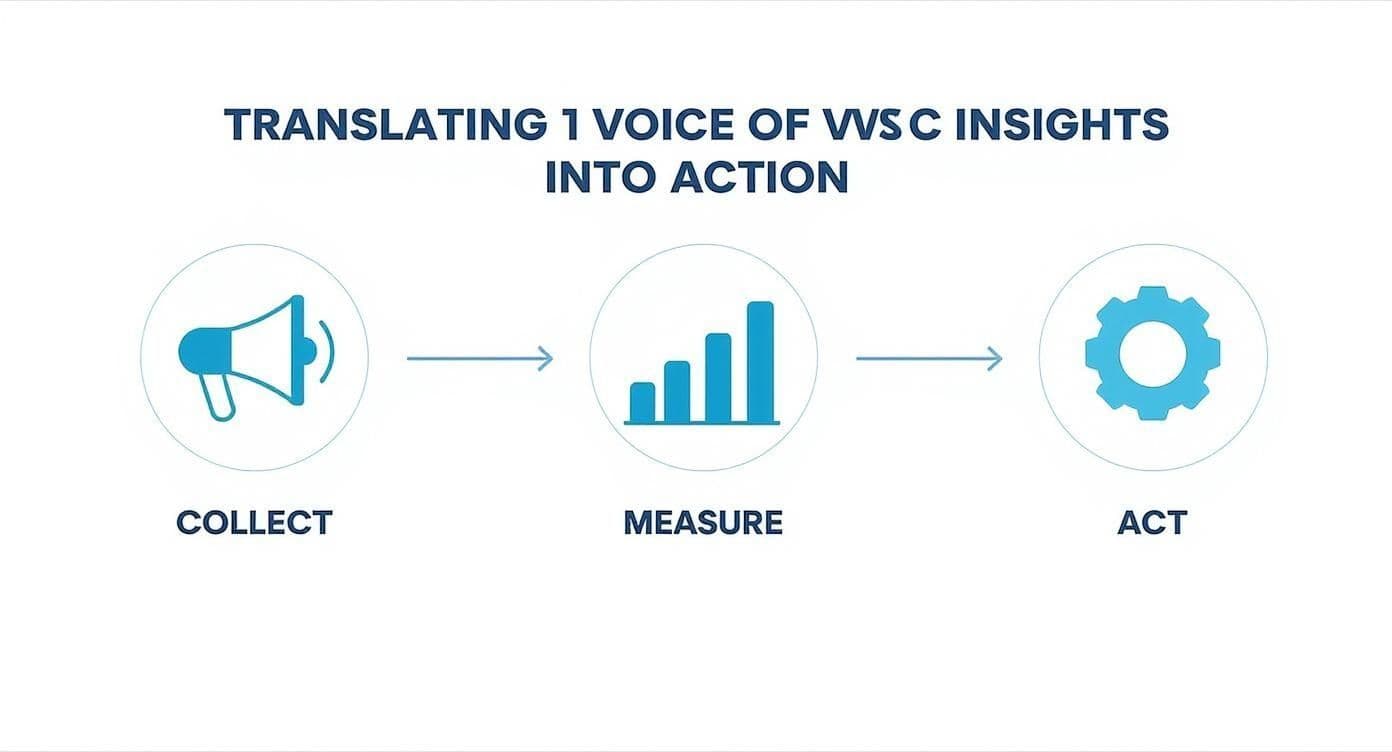
This Collect, Measure, Act flow creates fast, smart feedback loops.
- Start each planning meeting by reviewing urgent VoC tickets.
- Turn feedback into clear user stories.
- Discuss trends in retrospectives and assign ownership for fixes.
Feedback is only valuable if you act on it before it goes stale.
Scan industry forums, Slack communities, and newsletters daily. Use specific keywords to catch early signals from your power users.
Tools like Octolens can surface high-signal conversations from Reddit, X, and Hacker News without the noise. Set thresholds to notify you only when sentiment or keyword combinations meet your criteria.
- Integrate with Slack or Teams for instant pings.
- Filter out duplicates automatically.
- Tag and archive resolved alerts to keep channels clear.
- Review and update keyword lists monthly.
Every alert can feed your roadmap:
- Review closed-loop feedback weekly and rank by impact.
- Align top items with your quarterly OKRs.
- Communicate updates back to customers so they see their voices matter.
You can learn more about real-time feedback workflows in our article on real-time customer feedback.
Outliers often flag serious issues. If 5–10 users mention a weird UX hiccup, flag it for review. Schedule a weekly 15-minute huddle to discuss single-occurrence but urgent feedback.
The smallest data point can spark the biggest insight.
Don’t drown in data. Prioritize the top three themes that affect your highest-value customers, timebox your deep dives, and act on “good enough” patterns rather than chasing perfection.
Centralize feedback so everyone sees the same reality:
- Pipe urgent mentions into a shared Slack or Teams channel.
- Assign cross-functional champions to own experiments.
- Celebrate customer-driven wins company-wide.
Collaboration beats isolation every time.
How fast will we see a payoff?If you focus on high-signal channels, you can spot actionable insights in as little as two sprints.
Which sources give the richest feedback?Blend public conversations (Reddit, Hacker News) with private data (support tickets, interviews) to get both breadth and depth.
Signal trumps noise when every mention has the potential to fuel your roadmap.
How do we analyze scattered feedback?Use a hybrid approach: automate sentiment analysis for speed, then apply manual theme tagging for nuance.
What derails most VoC programs?Ignoring outliers, analysis paralysis, and feedback silos are the top three pitfalls. Flag single-occurrence reports, timebox your research, and centralize all insights.
How do we prove ROI to leadership?Draw a direct line from VoC-driven fixes to improvements in CSAT, NPS, or churn reduction. Connect the dots on your dashboard.
Is there a tool to help cut through the noise?Tools like Octolens surface high-signal feedback straight to your team’s Slack or via webhooks—so you spend your time acting, not sifting.
How many channels should we start with?Begin with 2–3 core channels where your customers hang out. Refine your process, then expand.
How do we keep this from fizzling out?Automate alerts, pick a new focus topic each quarter, and share every win. Seeing real impact keeps teams motivated.