
7 Workflow Automation Benefits for B2B SaaS in 2025
Discover the top workflow automation benefits for B2B SaaS teams. Boost efficiency, cut costs, and improve customer experience with these actionable tips.
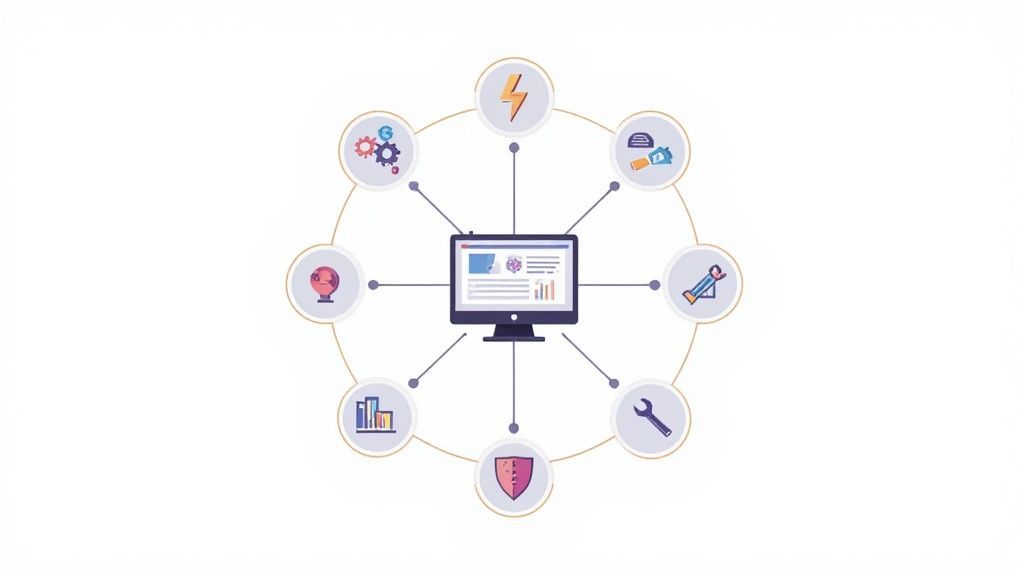
Let's be real, the term 'workflow automation' gets thrown around so much it’s almost lost its meaning. It’s not about replacing your team with robots; it’s about freeing them from the soul-crushing, repetitive tasks that kill creativity and slow you down. For B2B SaaS teams, the pressure is always on to move faster, stay closer to users, and outmaneuver competitors. This is where smart automation becomes your secret weapon.
Instead of manually tracking every brand mention or painstakingly compiling user feedback, you can build systems that do the heavy lifting. The workflow automation benefits go way beyond just saving time. They touch every corner of the business, from finance to customer support. For a detailed breakdown of how these advantages play out in finance, check out these 7 key benefits of automated invoice processing and see the direct impact on the bottom line.
This guide isn't just another list of generic perks. We're diving into seven specific, actionable ways automation can transform how your SaaS team operates. You’ll learn how to implement these changes to reclaim valuable time, reduce errors, and focus on what actually matters: building a better product and delighting your customers.
One of the biggest workflow automation benefits is a huge boost in operational efficiency. In simple terms, this means getting rid of time-sucking, repetitive tasks and making your core processes run faster and more accurately. Automation acts like a digital assistant, taking over the rule-based chores that would otherwise eat up your team's day.
This lets your team shift its focus from manual data entry and report generating to bigger-picture work that actually drives growth. A core reason your SaaS team needs automation is its ability to keep critical processes, like sales or support, running 24/7 without someone always having to watch over them. For example, JPMorgan Chase famously automated contract analysis, saving an estimated 360,000 hours of legal work annually—a powerful example of the scale of this efficiency gain.
This infographic highlights the measurable impact automation can have on key performance indicators.
As the data shows, the ROI isn't just theoretical; it's a real return you see in saved time and the ability to operate around the clock.
To get this level of efficiency, start by figuring out the right processes to automate. Look for tasks that are high-volume, repetitive, and prone to human error.
- Map Your Current Workflow: Before you automate anything, draw out your current process from start to finish. This simple exercise often uncovers hidden bottlenecks and chances to optimize things you hadn't noticed before.
- Start Small: Don't try to automate your entire business overnight. Pick one high-impact process, like customer onboarding or lead qualification, and start there. Build it, test it, and get feedback before moving on to the next one.
- Measure Everything: Before you begin, know your baseline numbers. Track things like how long a task takes, how often errors occur, and how many hours your team spends on it. Compare these numbers after you implement automation to clearly show the ROI and make the case for doing more.
Another one of the core workflow automation benefits is a direct and measurable drop in your expenses. By automating manual, resource-heavy tasks, you can cut operational costs tied to labor, fixing mistakes, and inefficient use of your team's time. Automation essentially lowers the cost of each transaction or process, allowing your SaaS company to scale without hiring more people at the same rate.
This goes beyond just salaries. It also prevents the financial fallout from human error, like data entry mistakes that lead to wrong bills or compliance fines. For instance, General Electric cut its invoice processing costs by 70% by implementing automation, showing how targeting a single high-volume process can lead to huge financial wins. This frees up cash that you can reinvest into growth areas like product development or marketing.

As research from firms like McKinsey & Company consistently shows, the financial case for automation is strong. The savings aren't just a one-time thing; they're compounding advantages that improve your profitability over the long haul.
To unlock these savings, you need a smart approach that focuses on high-cost processes and delivers a clear return on investment.
- Figure Out the Total Cost: Before you buy any software, look beyond the price tag. Factor in the costs of implementation, training, and ongoing maintenance to get a true picture of the investment. This helps you make a financially sound decision.
- Target High-Cost, Frequent Tasks: Identify the business functions that eat up the most resources and happen the most often. Areas like accounts payable, expense reporting, or IT support tickets are often great places to start for a fast and significant ROI.
- Track Cost-Saving Metrics: Define clear metrics to measure the financial impact from day one. Track things like cost-per-invoice, employee hours saved, or a reduction in expenses from errors. This data is vital for proving the value of automation.
A huge workflow automation benefit is the major improvement in accuracy and quality. Manual processes are naturally open to human error, from simple typos to misinterpreting complex rules. Automation gets rid of these issues by executing tasks based on predefined logic, ensuring you get the same high-quality, error-free result every single time.
This reliability is critical for B2B SaaS teams dealing with tons of data, strict compliance rules, or important customer communications where one mistake can damage trust or create expensive rework. Automation acts as a safeguard, building precision right into your core processes. For example, by automating its loan processing, Wells Fargo cut approval errors by 80%, showing the direct link between automation and better quality control.
The impact isn't just about avoiding mistakes; it's about building a foundation of operational excellence that grows with your company.
To use automation for better accuracy, focus on creating solid, well-tested workflows that can handle both normal and unexpected situations.
- Test Thoroughly: Before you launch any new automation, put it through its paces. Use a variety of test data, including weird edge cases and common error scenarios, to make sure it works as expected under pressure.
- Plan for Exceptions: No process is perfect. Design your automated workflows with clear "exception paths" that flag unusual situations for a human to review. This stops the automation from failing or giving a wrong result when it runs into something unexpected.
- Keep a Human in the Loop: For really critical decisions, especially those with big financial or legal consequences, use a "human-in-the-loop" model. The automation can handle the data collection and prep work, but the final sign-off comes from a team member, combining machine accuracy with human judgment.
A critical, yet often overlooked, workflow automation benefit is its huge impact on employee satisfaction and productivity. Automation systematically removes the mind-numbing, repetitive tasks that cause burnout, freeing your team to do more creative, strategic, and fulfilling work. When employees are no longer bogged down by manual data entry or endless copy-pasting, they can focus on what they were hired for: solving complex problems and driving innovation.
This shift directly boosts morale. Instead of measuring their day in tedious tasks, team members can contribute to high-value projects that have a real impact on the business. For instance, IBM's HR department automated routine administrative tasks, which cut their workload by 60% and allowed them to focus on strategic employee development. This not only makes their jobs more meaningful but also makes the entire company stronger.

Ultimately, happy and engaged employees are more productive, innovative, and likely to stick around. This creates a positive cycle where automation improves the work environment, which in turn improves business outcomes.
To boost satisfaction through automation, focus on empowering your team, not just replacing their tasks. The goal is to enhance their abilities, not make them obsolete.
- Involve Your Team: Don't just hand down automation from on high. Ask your team which tasks are the most boring or frustrating. Getting them involved in the design process gives them a sense of ownership and ensures you're solving real pain points.
- Explain the "Why": Be upfront about fears of job replacement. Frame automation as a tool to get rid of the grunt work and create opportunities for them to grow. Explain how their roles will shift to focus on more strategic work.
- Invest in Upskilling: As you automate lower-level tasks, offer your team training for new, higher-value skills. This could include data analysis, strategic planning, or customer relationship management, showing you're invested in their careers.
Beyond speed and efficiency, one of the most crucial workflow automation benefits is the ability to enforce better compliance and manage risk. It helps you create standardized, repeatable processes that automatically follow regulatory requirements and internal policies, which dramatically reduces the chance of human error and creates a clear audit trail of every action.
Automation acts like a built-in compliance officer, making sure mandatory steps are never skipped and approvals are always documented. For B2B SaaS teams handling sensitive customer data or working in regulated industries, this isn't just a perk; it's a must-have. For example, financial giants like HSBC have implemented automated anti-money laundering workflows, improving their detection rates by as much as 60%. This shows how automation can turn compliance from a manual checklist into a proactive, built-in function.
This structured approach hardwires compliance into your daily operations, providing a full audit trail and letting you monitor critical processes in real time. The result is a major reduction in compliance risks and the peace of mind that your business is consistently operating by the rules.
To use automation for compliance, your goal is to create systems that are strict enough to enforce rules but flexible enough to adapt to new regulations.
- Talk to the Experts: Before you build anything, work closely with your legal and compliance teams. They need to be involved in the design phase to ensure the automated workflow correctly follows all necessary rules and reporting requirements.
- Design for Change: Regulations are always changing. Build your automated workflows with flexibility in mind, allowing for easy updates as compliance rules evolve. Avoid hard-coding rules that will be a pain to change later.
- Test for Compliance: Run tests that specifically target compliance scenarios. Simulate audits, check for edge cases where rules might be bypassed, and make sure the automated audit trail captures all the necessary data correctly.
A huge workflow automation benefit that directly impacts your revenue and retention is the ability to deliver a better customer experience. Automation ensures that every customer interaction is fast, consistent, and accurate—moving it from a "nice-to-have" to a key competitive advantage. It empowers SaaS teams to provide 24/7 support, instant responses, and personalized service at scale.
This approach allows you to manage customer needs proactively, from onboarding to support. Instead of making customers wait for a manual reply, automated systems can instantly acknowledge requests, provide status updates, or solve common issues without human help. For instance, American Express uses automation to detect and flag fraudulent transactions in milliseconds, protecting customers while providing a seamless experience. This level of immediate, reliable service builds trust and loyalty.
By automating key touchpoints in the customer journey, you create a more responsive and dependable service environment. Collecting and analyzing real-time customer feedback is also essential for refining these touchpoints and making data-driven improvements.
To improve your customer experience with automation, focus on workflows that have the most direct impact on speed and satisfaction.
- Map the Customer Journey: Before you do anything, map out every stage of your customer lifecycle. Identify key interaction points and friction areas where automation can provide instant value, like a welcome email sequence or a support ticket confirmation.
- Always Have a Human Escape Hatch: Automation is powerful, but it can't replace human empathy for complex issues. Always design your workflows with a clear, easy way for customers to connect with a person when they need to. This ensures no one feels trapped in an "automation loop."
- Personalize Your Messages: Use customer data from your CRM to tailor automated communications. Simple touches, like using a customer's name or referencing their recent activity, make interactions feel more human and relevant.
One of the best workflow automation benefits is that it provides a solid foundation for sustainable growth. It allows your company to handle a massive increase in work, customer demand, and data without having to hire more people at the same rate. Automation creates systems that adapt to business expansion seamlessly, ensuring consistent performance as you scale.
This allows your SaaS company to grow without its core processes breaking. Instead of hiring more people for repetitive tasks, automation builds an operational backbone that can support a larger customer base and higher transaction volumes. For instance, Shopify's order processing automation is built to support merchants from their first sale to enterprise-level volume, handling millions of transactions without manual oversight. This level of built-in scalability is essential for any high-growth B2B SaaS business.
The ability to scale efficiently means your processes don't become a bottleneck to your growth; they become a catalyst for it.
To build workflows that support growth instead of holding it back, you need to design for scale from day one.
- Design with Growth in Mind: When you're mapping your first workflows, think about how they will work with 10x or 100x the volume. Build modular, flexible processes that can be easily adapted as your needs change.
- Use Cloud-Native Tools: Choose automation platforms built on cloud infrastructure, like those from AWS or Google Cloud. These solutions are inherently scalable, allowing you to automatically use more resources during busy times and scale back down to control costs.
- Monitor Performance: As your business grows, keep a close eye on performance metrics like processing times, API limits, and error rates. Set up alerts to catch potential scaling issues before they affect customers. This proactive monitoring is just as crucial as the initial setup and can be supplemented by a strong B2B social listening strategy to gauge customer sentiment during periods of rapid growth.
Aspect Increased Efficiency Significant Cost Reduction Enhanced Accuracy Key Advantage Eliminates bottlenecks and enables continuous operations. Frees up capital by reducing labor and overhead costs. Ensures consistent, high-quality output with minimal errors. Ideal For High-volume, repetitive operational tasks. High-cost, frequent manual processes like invoicing. Data-intensive or compliance-critical workflows. Actionable Tip Start by mapping one frustrating workflow to find quick wins. Calculate the total cost of a manual process to justify investment. Implement rigorous testing and have a "human-in-the-loop" for final checks.
As we've explored, bringing in workflow automation is much more than a simple tech upgrade; it's a strategic shift in how your B2B SaaS company operates. The conversation moves beyond just doing tasks faster. It’s about creating a smarter, more resilient, and more human-centric way of working. The goal isn't to replace people, but to augment their abilities—freeing them from monotonous work so they can focus on what truly matters: innovation, strategy, and genuine customer connection.
We've covered the full range of workflow automation benefits, from the clear wins in operational efficiency and cost reduction to the critical improvements in data accuracy and compliance. But the real magic happens when these advantages start to stack up. When your team is no longer bogged down by manual data entry, they have the mental space to solve complex problems. When customer support tickets are automatically routed, your team can deliver empathetic, high-value solutions instead of just managing a queue. This shift from reactive task-juggling to proactive value creation is the ultimate competitive advantage.
Turning these ideas into reality can feel like a lot, but the path forward is a series of small, manageable steps. Don't try to automate everything at once. Instead, take it one step at a time to build momentum and show value quickly.
- Identify the Friction: Start by pinpointing your biggest operational headache. Is it the sales-to-onboarding handoff? The process for gathering user feedback from social media? Find that one process that everyone on the team hates and that eats up way too much time.
- Start Small, Win Big: Pick a single, high-impact workflow to automate first. This "quick win" will not only solve a real problem but will also serve as a powerful case study to get everyone else on board for more automation. A great starting point for many SaaS teams is automating the monitoring of community conversations to capture product feedback.
- Measure and Iterate: Define what success looks like before you start. This could be hours saved per week, fewer manual errors, or faster customer response times. Track these metrics, get feedback from your team, and keep refining your automated workflows to make them even better.
Ultimately, the most powerful of all workflow automation benefits is the creation of capacity. It gives your lean B2B SaaS team the leverage to compete with larger companies. It transforms your operations from a collection of manual tasks into a streamlined, intelligent system that grows with you. By systematically eliminating low-value work, you empower your team to focus on the high-level thinking, creative problem-solving, and meaningful customer engagement that will define your success.
Ready to stop missing high-signal conversations happening in communities like Reddit and X? Octolens provides focused workflow automation that funnels critical user feedback and sales opportunities directly into your Slack, so your team can engage instantly. Start your journey toward smarter, more responsive operations by visiting Octolens to see how it works.