
Copywriting for Social Media: Engage & Convert
Boost your impact with copywriting for social media.
Social media copywriting isn't simply about assembling words. It's about understanding your audience's psychology and creating messages that resonate in a crowded digital space. With dwindling attention spans, this means understanding what makes people engage and take action.
Effective social media copy begins with knowing your audience. Consider their pain points, aspirations, and the language they use. A Gen Z audience on TikTok will react differently than professionals on LinkedIn.
Tailor your copy to each platform and its users. Understanding the interplay between platforms is critical. An article on social media and SEO explores this connection and emphasizes how social media copy contributes to your overall brand presence.
Understanding your audience allows you to leverage emotional triggers. These are psychological cues that evoke feelings and encourage engagement.
- Fear of Missing Out (FOMO): Limited-time offers or exclusive content create urgency.
- Social Proof: Testimonials, reviews, and user-generated content build trust.
- Relatability: Humor, storytelling, and shared experiences connect with your audience.
Social media copywriting has become vital for businesses trying to connect with their audiences. A striking 85% of marketers believe social media boosts brand visibility, underscoring the importance of engaging copy.
YouTube, Facebook, and Instagram remain dominant platforms, with usage statistics showing 81%, 68%, and 40% respectively. This highlights the need for platform-specific copywriting approaches. More detailed statistics can be found here. Remember, each platform has its own distinct culture and communication style.
Authenticity is paramount. Audiences easily detect inauthenticity on social media. Focus on genuine copy reflecting your brand's values.
This involves telling compelling stories that resonate with your audience and foster lasting connections. By combining psychological understanding with authentic storytelling, you can create impactful social media copy that truly connects and achieves your marketing objectives.

The world of social media copywriting is diverse. What works on one platform may not translate to another. Therefore, adapting your copywriting strategy for each platform is essential for maximizing engagement. Imagine using the same formal tone from LinkedIn on a playful platform like Instagram – it just wouldn't fit.
Each social media platform attracts a unique audience and fosters a distinct culture. This impacts everything from language choices to preferred content formats. Analyzing these differences is the first step in crafting effective, platform-specific copy. The way people communicate on Twitter differs significantly from how they interact on Facebook, for example. For more insight into choosing the right networks, check out our article on How to master social listening and choose the right networks.
Maintaining a consistent brand voice is important, but adjusting your tone for each platform is equally crucial. This means adapting your language and style to resonate with the platform's audience. Using technical jargon on LinkedIn might be acceptable, but it could alienate a younger audience on TikTok. Similarly, humor, while effective on some platforms, could be inappropriate on others.
Platform limitations and content preferences vary widely. Twitter's 280-character limit necessitates concise copy, while Instagram allows for longer captions and in-depth storytelling. Video content dominates platforms like TikTok and YouTube, requiring copy that complements the visuals and audio. This emphasizes the importance of writing engaging scripts and captivating captions.
To better illustrate optimal content approaches, let's look at the following comparison:
Platform-Specific Copywriting Guidelines: A comparison of optimal content approaches across major social media platforms
This table highlights the key differences in copywriting approaches for each platform. Understanding these nuances is key to creating resonant content.
Observe how major brands tailor their messaging across various platforms. A company like Nike uses aspirational language and impactful visuals on Instagram, while on LinkedIn, their focus shifts to professional networking and industry insights. These brands successfully adapt their copywriting for social media while maintaining a unified brand identity.
LinkedIn: Focus on professional expertise and career advancement. Maintain a formal tone and support claims with data.
Twitter: Prioritize brevity and wit. Engage in conversations and utilize relevant hashtags.
Instagram: Create visually engaging content that tells a story. Use a personal tone and incorporate emojis and hashtags.
TikTok: Develop short, captivating videos with trending sounds and effects. Keep copy concise and playful.
These are just a few examples of how platform-specific copywriting can yield positive results. By understanding the specific dynamics of each platform, you can craft copy that connects with your audience, enhances brand awareness, and ultimately, drives conversions. This allows for targeted social media campaigns that reach the right audience with the right message, strengthening your brand's online presence.
Creating compelling social media copy goes beyond simply accumulating likes and shares. It's about cultivating a thriving community and encouraging authentic interactions. Think of your social media presence as a digital gathering place where you want people to connect, converse, and contribute meaningfully.
One effective strategy is to pose questions that prompt thoughtful responses. Instead of generic inquiries like "What do you think?", try crafting questions that spark discussions, invite personal anecdotes, or solicit specific advice.
For example, instead of asking "Do you like this product?", try "What's your favorite feature of this product and why?". This nuanced approach encourages more substantial engagement.
You can also create content that organically inspires sharing. Consider what type of content your audience finds valuable and readily shareable. This might include motivational quotes, practical tips, or intriguing statistics.
Furthermore, design copy that promotes genuine user-to-user interaction. Encourage followers to tag friends who might appreciate the content or respond to each other's comments. This fosters a sense of community and belonging.
Effective social media managers understand the power of emotional connection. They use language strategically to evoke FOMO (Fear Of Missing Out), build relatability, and elicit emotional responses that drive engagement. This is especially crucial for video content, where studies show that 43% of respondents prefer branded video over other formats. The projected global social media ad spending of $207 billion in 2023 further underscores the importance of strong copy in these campaigns. Find more detailed statistics here: Copywriting Statistics
Even minor tweaks in phrasing can significantly influence engagement. Consider these two examples:
- Before: "Check out our new blog post!"
- After: "Struggling with [problem]? Our new blog post reveals how to [solution]!"
The second example is more targeted and directly addresses a pain point, making it more likely to resonate with the intended audience. This focused approach is key to converting casual scrollers into dedicated fans. For more insights, consider reading: 5 Reasons Why You Are Losing LinkedIn Followers
By implementing these techniques, you can transform your social media presence from a static display into a dynamic hub of conversation and connection. This cultivates a stronger community and deeper relationships with your audience.
In the fast-paced world of social media, headlines and captions are the key to unlocking engagement with your content. They determine whether your carefully crafted posts grab attention or fade into the background noise. This section explores crafting compelling headlines and captions that not only stop users mid-scroll but also turn passive scrollers into active followers.
Your headline is your first impression – make it count. It should spark curiosity without resorting to clickbait. An effective technique is to pose a question relevant to your target audience's challenges. For example, a headline like "Is Your Social Media Strategy Generating Leads?" resonates more with B2B SaaS companies than a generic statement about social media marketing. This approach directly addresses a pain point and draws the reader in.
Captions should complement your visuals, adding context and depth. Imagine a stunning product photo accompanied by a caption that simply says "New product!" It's a missed opportunity. Instead, tell a story, highlight key features, or ask a question to ignite conversation. This transforms passive viewing into active engagement.
Most social media users are on mobile devices. Copywriting for social media must prioritize mobile readability. Keep captions concise, use line breaks to separate text blocks, and incorporate bullet points or emojis for easy scanning. This ensures your message remains digestible on smaller screens. For instance, using bullet points to list benefits allows readers to quickly grasp key information.
Specific words can significantly boost engagement. Power words like "exclusive," "limited-time," or "discover" create a sense of urgency. Use them strategically, however, to avoid sounding overly promotional. Include clear calls to action. Instead of a generic "Click here," guide users toward a specific action, such as "Download our free guide" or "Join our community." This provides a direct path to conversion.
Repurposing content is crucial for social media. A significant 82% of marketers repurpose content on social media, demonstrating the value of adapting messaging across channels. Furthermore, 68% of marketers collaborate with influencers, highlighting the growing importance of influencer marketing. Learn more about these statistics. Effective social media copywriting involves both creating original content and strategically repurposing existing material.
Compare these two captions:
Before: "Check out our new software."
After: "Tired of tedious data entry? Our new software automates the process, saving you hours each week. Learn more and request a demo!"
The improved version addresses a pain point, highlights a benefit, and includes a clear call to action. Small changes in wording can significantly impact engagement. Mastering these techniques can transform your social media presence and help you achieve your marketing objectives.
Influencer marketing relies heavily on authentic voices. However, maintaining brand consistency within these partnerships requires a strategic approach to copywriting for social media. It's similar to conducting an orchestra: each musician contributes their unique sound, yet the conductor ensures they create a harmonious symphony.
Many brands stifle influencer creativity with overly prescriptive briefs. Instead, provide clear objectives and key messages while leaving room for the influencer's individual style. Think of the brief as a springboard, not a cage. This approach empowers influencers to connect authentically with their followers while effectively promoting your brand. For example, instead of dictating every word, offer a selection of keywords and themes to guide their content. This approach balances brand consistency with authentic expression.
Creating flexible templates can help maintain brand messaging without compromising authenticity. For example, provide starting sentences or closing calls to action that incorporate key brand messaging. This provides structure while giving the influencer freedom to adapt the content to their audience. You might find this interesting: How Can Social Media Listening Increase Customer Advocacy? This method ensures a consistent brand narrative throughout the campaign.
The copy surrounding influencer content is just as crucial as the influencer's message itself. Craft supporting captions and social media posts that amplify the influencer's voice and reiterate key takeaways. This creates a unified narrative and reinforces your brand’s message. For example, if an influencer creates a video featuring your product, your accompanying caption can offer additional details and a direct link to purchase.
Measuring the success of your social media copywriting within influencer campaigns requires a multifaceted approach. Track metrics like engagement, reach, and website traffic stemming from influencer posts. Also, collect data from the influencer's perspective, including audience feedback and sentiment. This comprehensive view provides valuable insights for optimization. Effective social media copywriting demands adaptability, conciseness, and engagement. Using the word "guide" in headings can attract three times more traffic, and 40% of B2B marketers prefer Linkedin as their primary platform. Find more detailed statistics here: 50 Copywriting Statistics
Analyzing performance data lets you refine your copywriting strategy. Identify the messaging that resonates most effectively with the influencer’s audience and adapt future campaigns accordingly. For example, if certain calls to action generate significantly higher click-through rates, integrate those elements into future briefs and templates. This iterative process ensures your influencer marketing efforts continuously improve. By combining creative freedom with strategic guidance, you can maximize the impact of your influencer partnerships and achieve lasting results.
While organic social media copywriting focuses on community building and engagement, paid social media advertising requires a different approach. Paid social is laser-focused on converting attention into tangible action. This means efficiently guiding users through the sales funnel, from the initial awareness stage to the final purchase. Think of your copy as a guided tour, leading prospects through each step of the customer journey.
The headline is your first, and often only, impression. It needs to be compelling enough to stop users mid-scroll, yet concise enough to fit within platform character limits. A good headline works like a movie trailer, creating intrigue in a short timeframe and making people want to learn more.
A vague headline like "Learn More" simply won't cut it. Instead, try a targeted headline like "Discover the Secret to Effortless Social Media Management." This specificity is what piques interest and encourages clicks.
Once you've captured attention, the primary ad text needs to qualify prospects without overwhelming them. This is your chance to expand on the headline's promise and explain how your product or service solves their problem. Think of it like a movie synopsis: it gives just enough detail to hook the audience without revealing the entire plot.
Your call to action (CTA) should be a natural next step, not a pushy sales pitch. It needs to clearly communicate the desired action and create a sense of urgency. Phrases like "Learn More," "Get Started," or "Shop Now" are effective because they tell the user exactly what to do.
A seamless user experience depends on maintaining message consistency from your ad copy to your landing page. Imagine clicking an ad for "Social Media Analytics Software" and landing on a generic homepage with no mention of analytics. This disconnect leads to frustration and lost conversions. Consistent messaging builds trust and reinforces the value proposition presented in your ad.
Tailoring your copy to different audience segments dramatically increases your chances of conversion. Different users have different needs and motivations. Creating copy variations that address those specific needs will improve resonance and overall effectiveness. For example, copy for a Head of Marketing might emphasize ROI and efficiency, while copy for a social media manager could highlight ease of use and time-saving features.
A/B testing is essential for maximizing ad campaign performance. This method involves creating two versions of your ad with a slight variation, such as a different headline or CTA. By analyzing which version performs better, you gather actionable data to refine your copy and improve your ROI.
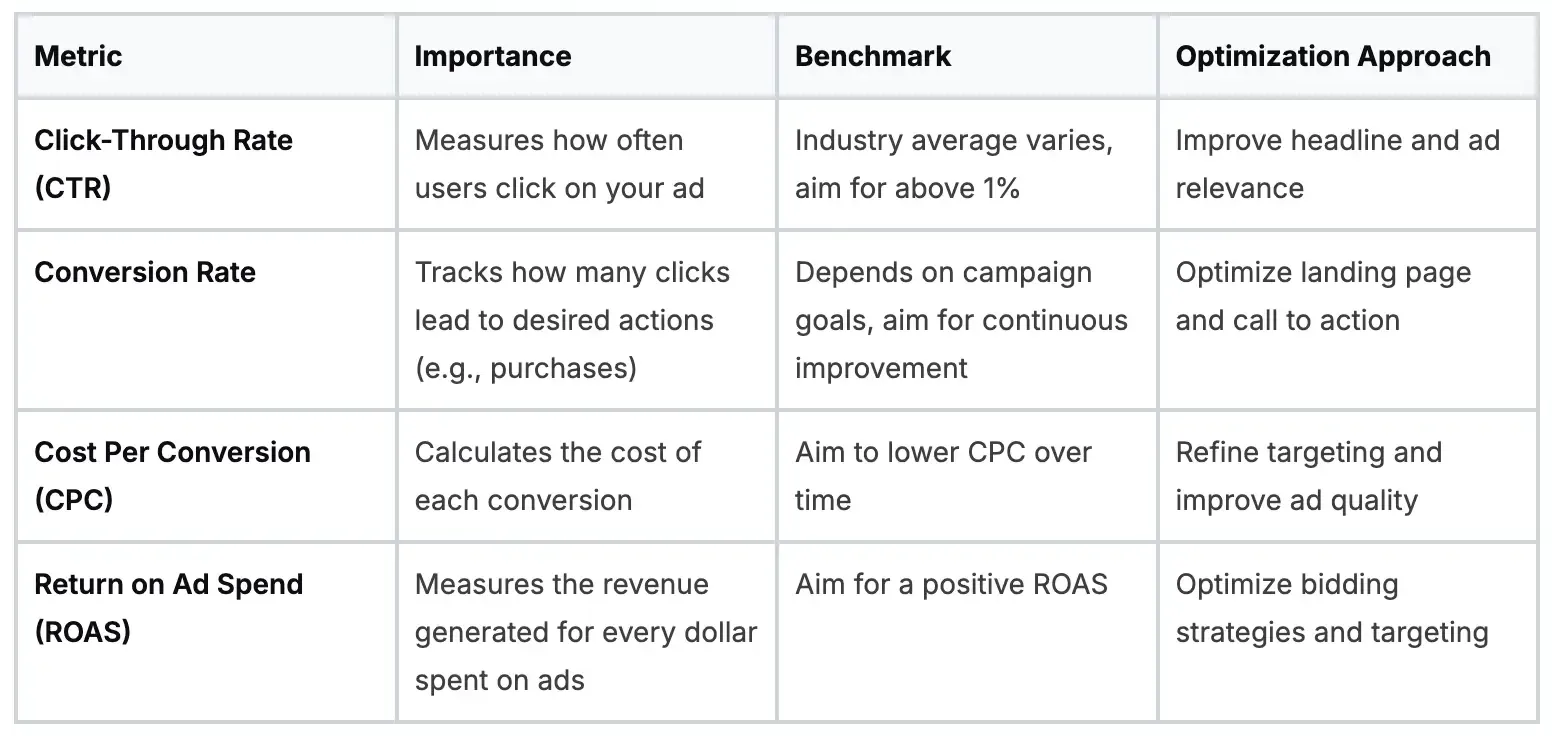
Tracking the right metrics is essential for measuring the effectiveness of your copywriting for social media ad campaigns. The following table highlights key performance indicators to evaluate and optimize your ad copywriting:
Social Media Ad Copy Performance Metrics: Key performance indicators to evaluate and optimize your ad copywriting effectiveness
Analyzing these metrics provides valuable insights for continuously optimizing your campaigns.
Ready to transform your paid social media strategy? Discover how Octolens, the AI-powered social listening tool, can help you identify trending topics, analyze competitor strategies to help you craft high-converting ad copy.