5 Fresh Ideas To Grow Your Developer Tool
Stuck on how to grow your developer tool, here are some fresh ideas for what to try next.
If you’re reading this, you probably already know the cornerstones of growing a developer tool business: write technical blogs, invest in documentation, build community—check, check, check.
But what about fresh ideas to get developer eyeballs on your product?
Here are five creative, battle-tested strategies to help you break through the noise and grow your developer tool startup.
Monitoring discussions across platforms where developers hang out can be a game-changer. You can track mentions of your brand, competitors, or niche-specific keywords on GitHub, Reddit, X (formerly Twitter), Linkedin, DEV, Hacker News, and more. Watch for posts where developers are actively asking for alternatives to your competitors or venting about problems your tool solves.
Octolens is built for this. It uses AI-powered filtering to cut through irrelevant noise and highlight high-intent conversations—so you can respond fast and turn problems into conversions.
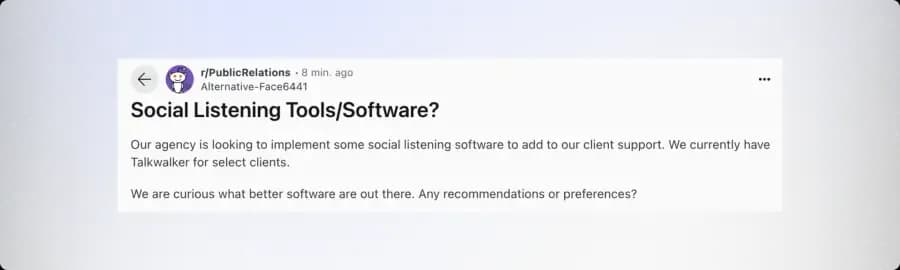
Here's an example of a high-buy intent post of someone looking for a tool, ideal to jump in!
💡 Want to see this in action? Here’s a quick guide on how Octolens helps you catch high-intent mentions before your competitors do.
Awesome Lists are curated collections of valuable tools, resources, and frameworks. By creating one relevant to your space—say, "Awesome LLM Tooling" or "Awesome DevOps Utilities"—you gain exposure while helping the community.
GitHub has great domain authority, so these lists tend to rank well on Google. Plus, developers love them. Just make sure to keep your list genuinely helpful and avoid being overly self-promotional.
🔗 Want inspiration? Check out the Awesome AI Tools list.
Podcasts are an underrated content channel for dev tools. Even if you're starting from zero, you'd be surprised how many open-source maintainers, indie hackers, or DevRel leads are willing to chat.
The benefit? You're not just creating content—you’re tapping into your guests’ networks. Many will reshare the episode on X, LinkedIn, or their newsletters. It’s a viral loop disguised as content.
Plus, podcast episodes are evergreen. They’ll continue driving traffic and engagement long after they’re released.
Need a lightweight setup? Try Riverside or Zencastr to record remotely and cleanly.
One of the most overlooked growth channels? Niche internet communities. These are your early adopters—people who genuinely care about the problem you're solving and are often excited to try new tools.
Where to look:
Reddit (e.g. r/selfhosted, r/webdev, r/devops)
LinkedIn groups
Facebook developer groups
Meetup.com communities
Topic-specific forums (e.g. old-school PHP or game dev boards)
Posting your product directly? Risky. Redditors will roast anything that smells like a plug. Instead, comment on existing threads or share valuable content—like a blog post, benchmark, or case study—without forcing your product into the spotlight.
These are better suited for a post + DM combo. After sharing in a channel or group, DM engaged members to start a genuine conversation. Don’t pitch—ask for feedback.
Instead of spamming 100 groups once, contribute weekly in 2-3 truly relevant communities. Comment. Ask questions. Share your learnings. If a group is niche but active, and your tool fits—it’s worth the effort.
💡 Tip: Look for "ugly but active" forums—the Craigslist rule applies. Old-school UI often means high engagement.
🔗 Want to automate some of this discovery? Use Octolens to surface where your audience is already talking.
Live events are great—but tough to scale. Async conferences solve that. Instead of cramming content into a 2-day window, you create pre-recorded keynotes, lightning talks, or workshops and release them over a few weeks.
Think of it like a mini “Netflix for your niche.”
You’ll attract a global audience, grow your email list, and establish thought leadership—without worrying about time zones or AV logistics.
Bonus: Once the content is produced, it becomes a long-term content asset you can redistribute across YouTube, your blog, and social media.
Great tools for async conferences:
The landscape for developer tools is noisy—but there’s still massive opportunity if you approach growth creatively. Social monitoring, content repurposing, deep community engagement, and async education can give you the edge.
And if you're serious about catching every relevant mention and engaging in real-time, Octolens can help you do it in hours, not weeks.
I hope this blog has given you some food for thought. I'm going to try out some of these strategies myself in 2025. I’m sharing my B2B SaaS founder journey very openly on LinkedIn, so please make sure to add me on LinkedIn and let me know if you've used any of these ideas yourself.