
Effective Crisis Management in Social Media: Proven Strategies
Why Social Media Crises Are Your New Reality
Let’s be honest: a social media crisis is likely in your brand's future. It's not being negative, it’s just the reality of today's online world. Social media is the new town square, newsroom, and customer service center all in one. A single post can spark a worldwide discussion within hours, and what was once private can become public knowledge incredibly fast. This is simply the nature of a highly connected world.
Traditional PR strategies, designed for a slower, more manageable media landscape, often fail on social media. Remember when a carefully written press release could handle a PR slip-up? Those days are long gone. Now, audiences expect authenticity and immediate responses. A generic corporate statement won't work when people want real answers in real time. This requires a fresh approach to crisis management on social media.
What’s the difference between brands that survive social media storms and those that sink? Preparedness. I’ve talked to crisis management experts who’ve witnessed it all—brands collapsing under pressure, others coming out stronger. The successful ones all had one thing in common: a plan. They anticipated potential problems, set up clear communication procedures, and gave their teams the power to act quickly. They understood that social media crises aren't just PR issues; they're business challenges with real-world consequences.
Think about this: The social media crisis management market is predicted to be worth $3.5 billion by 2025, showing how crucial it is for brands globally. This significant market value reflects the urgent need for companies to protect their online reputations, particularly as social media activism and quickly spreading false information can harm a brand's image in just a few hours. Discover more insights. This emphasizes just how important crisis management is on social media.
The risks are higher than ever, not just for huge corporations but for businesses of all sizes. A local bakery facing a wave of bad reviews or a tech startup dealing with a security breach—both need a social media crisis management plan. Ignoring this new reality is like sailing into a hurricane without a lifeboat. The storm is coming; will you be prepared?
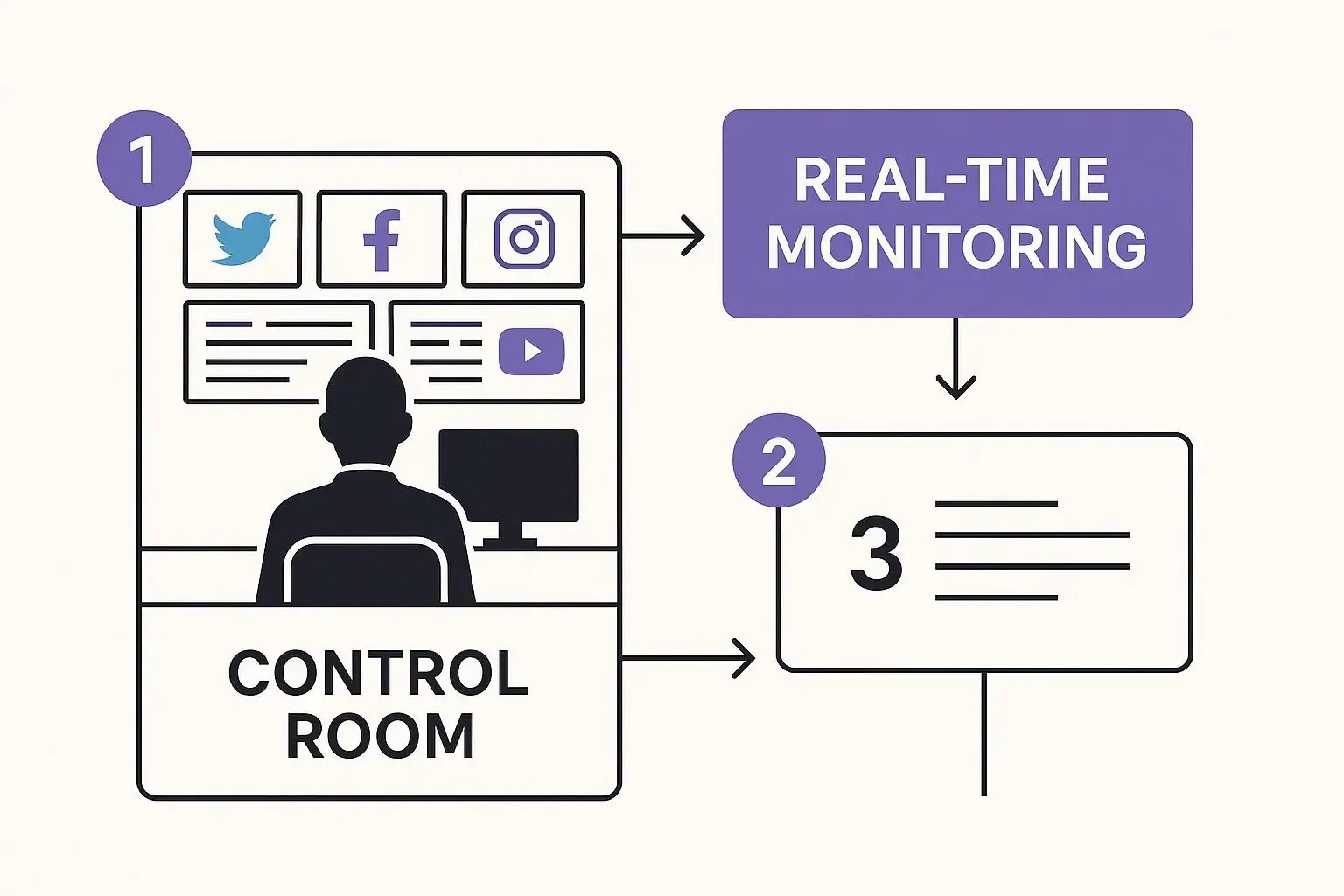
Think of crisis detection as having a super-attentive friend constantly giving you the inside scoop on what people are saying – except this friend is an insomniac monitoring millions of conversations at once. This isn't about fancy presentations, it's about real-world monitoring that actually works. I've seen firsthand how quickly things can go south if you're not paying attention. Some brands catch potential disasters early, while others… well, let's just say they learn the hard way.
The image above shows a social media control room, visualizing the constant flow of information. This constant vigilance is key. Think about how fast negative sentiment can spread on Twitter, for example. Check out our article about Twitter monitoring for more on that.
So, how do you filter the signal from the noise? It's all about knowing what really matters. Training your team to spot trouble brewing is essential, even with the best monitoring tools. I've seen companies with expensive software completely miss the warning signs because they weren't using the data effectively. Understanding the importance of your online image is crucial. You can learn more about effective social media reputation management if you're interested.
This screenshot shows the Octolens platform, a powerful tool for social listening and crisis management. Platforms like this give brands a heads-up by identifying early warning signs and providing actionable insights. Real-time data analysis empowers brands to respond proactively, minimizing reputational damage and keeping customer trust intact during critical moments.
Before you jump into any platform though, it’s worth comparing a few options. The table below gives you a quick rundown of some popular tools, their key features, pricing, and who they’re best suited for.
Essential Crisis Detection Tools Comparison: A comprehensive comparison of monitoring tools, their key features, pricing, and effectiveness for different business sizes.
Tool Key Features Best For Price Range Response Time Octolens Real-time monitoring, sentiment analysis, AI assessments, brand monitoring Small to Medium sized businesses $-$$ Real-Time Brand24 Social listening, reputation management Medium to Large businesses $$ Near real-time Mention Media monitoring, social listening, competitive analysis Individuals and businesses $$ Near real-time Talkwater Social media analytics, consumer intelligence, crisis management Corporates $$$ Real-time SproutSocial Social media management, engagement, reporting Large Businesses $$$ Near real-time
As you can see, there's a range of tools available, each with its own strengths. Choosing the right one depends on your specific needs and budget.
Setting up smart alerts is key – the kind that inform, not overwhelm. You need a system that scales with your brand. Think long-term: how will your monitoring strategy adapt as you grow? Don’t just set it and forget it. Regularly review and refine your approach as your brand evolves and the social media landscape changes.

Let's be honest, a social media crisis is every brand's worst nightmare. But like any nightmare, it's a lot less scary when you're prepared. Having a solid crisis management plan is like having an insurance policy for your online reputation. It's not about preventing every little mishap, but about having the tools to navigate the storm when it hits.
The first step is assembling your A-Team. Think of it as your social media SWAT unit. You need a clear command structure with defined roles. Who's your communications lead, the voice of reason in the chaos? Who's signing off on messages, ensuring everything aligns with your brand and legal guidelines? Who's the tech guru who can fix things if your website crashes or a product malfunctions? Having these roles pre-assigned prevents confusion and finger-pointing when the pressure is on. It’s like a well-rehearsed play – everyone knows their lines and cues before the curtain rises.
Having pre-written templates is a lifesaver, but they can’t sound like they were written by a robot. Prepare templates for acknowledging the issue, providing updates, and pointing people to more info. The key is to personalize these templates. A generic, "We're aware of the issue and are working to resolve it" just won't cut it. Instead, tailor your message to the specific situation. Empathy and authenticity are crucial. Imagine talking to a friend who's having a tough time – you wouldn't give them a canned response, would you?
In a crisis, every second counts. Streamlined decision-making processes are essential. Who has the authority to pull the trigger on key decisions? What's the escalation path for really big problems? Clear decision paths prevent analysis paralysis and ensure a swift, coordinated response. This is particularly important in the first hour – the “golden hour” of crisis management. It’s often the first hour that determines how the entire situation plays out. Having a designated spokesperson is also key. This avoids mixed messages and maintains a consistent brand voice.
Recent research shows just how fast things can escalate – and resolve – on social media. A prepared team can shrink response times from hours to just 30 minutes or less in those crucial early stages. For some smart strategies, check out this resource on crisis communication strategies.
Transparency is paramount in a crisis. People appreciate honesty. But you also need to be smart. Work closely with your legal team to ensure your messaging is accurate and doesn’t put you in a worse position. Overpromising or saying something you can't back up can add fuel to the fire. It's a tightrope walk, but it’s one you need to master. And if you're looking for insights on choosing the right platforms for your brand, this article on choosing the right social networks might be helpful.
Finally, remember that social media is constantly changing. What works today might not work tomorrow. Your crisis plan needs to be a living document. Regularly review and update it based on what you learn and the latest best practices. Preparation isn't a one-time thing; it's an ongoing commitment to protecting your brand in the dynamic world of social media.
.jpg&w=3840&q=75)
This is where the real action happens. You’ve crafted your crisis management plan, but suddenly, your notifications are exploding, the phone’s ringing off the hook, and social media is a full-blown warzone. This is where many brands stumble. Having been in the trenches myself, let me tell you, it’s intense.
Even when it feels like the world is ending, keeping a consistent brand voice is paramount. This doesn’t mean being rigidly formal when the situation calls for empathy. Instead, adapt. Think of it like this: you wouldn't tell jokes at a funeral, but you also wouldn't be stiff and formal with a friend in need. Finding that balance is the heart of effective social media crisis management.
It’s about being authentic and human, even under pressure. Your audience can spot a robotic response a mile away.
Not every comment warrants a public reply. For specific complaints or sensitive matters, taking the conversation private (DMs or email) shows you care without amplifying negativity. It allows for personalized support and helps contain misinformation. But for general questions or widespread concerns, a public response is essential for transparency.
For example, if one customer tweets about a faulty product, a direct message asking for more information is perfect. But if dozens of users report the same problem, a public statement acknowledging the issue and outlining the steps you're taking to resolve it builds trust and manages the narrative.
In a crisis, speed matters. But accuracy reigns supreme. A rushed, inaccurate response can backfire spectacularly. Verify everything before you hit "send." Double-check facts. Get a second opinion on your messaging. This is especially important when public trust is already fragile.
A 2024 Gallup poll revealed that 36% of Americans have “no trust” in the media, outnumbering those with “a great deal” or “a fair amount” of trust. This underscores the vital role of authentic brand communication. Interestingly, brands that respond quickly and authentically on social media during crises often see up to 30% less reputational damage. Discover more insights. But delaying your response while aiming for absolute perfection can also erode trust. The key is balance: be swift without sacrificing accuracy.
During a crisis, internal communication is your lifeline. Regular updates, shared dashboards (tools like Octolens are invaluable here), and quick check-ins keep everyone on the same page and prevent conflicting messages. This is especially critical when you’re managing responses across multiple social media platforms. A unified team projects an image of control and competence, reassuring your audience that you're handling the situation.
The news cycle moves on, but the real heavy lifting of social media crisis management begins now. Rebuilding trust isn't about slapping on a band-aid; it's about long-term reputation repair. Think of it like tending a garden after a major storm. You can't just sweep up the broken branches and expect everything to magically bounce back. You need to nurture the soil, replant what was lost, and give it time to heal.
Forget those generic crisis checklists. A truly useful post-crisis analysis requires going deeper. It's about asking the hard questions: What really went sideways? Did our response actually connect with our audience? Where did we miss the mark? I've seen brands successfully turn crises into opportunities for deeper customer connection by genuinely listening to feedback and implementing meaningful changes. On the flip side, I've also witnessed brands clinging to outdated playbooks, struggling to regain lost trust.
After any crisis, navigating the fallout is crucial. Handling negative reviews effectively is a big part of this. Here’s a helpful resource: How to Respond to Negative Reviews. While negative feedback can sting, it offers incredibly valuable insights. See it as a chance to understand where you fell short and how to improve.
Measuring the impact of a social media crisis goes way beyond vanity metrics like follower count. It's about assessing the real, tangible damage: customer churn, lost sales, and overall brand sentiment. A structured framework helps track these metrics across different timeframes. I find this incredibly useful for getting a clear picture of the situation.
To help illustrate this, I've put together a framework you can adapt to your own needs:
A structured approach to measuring crisis impact across different metrics and timeframes
Impact Area Immediate (0-7 days) Short-term (1-3 months) Long-term (3+ months) Recovery Actions Brand Sentiment Track social media mentions, analyze emotional tone Conduct surveys, monitor review sites Analyze long-term brand perception studies Address negative sentiment, engage with concerned customers Sales Monitor sales data for immediate impact Analyze sales trends to assess recovery Evaluate long-term impact on market share Offer discounts, highlight product value Customer Churn Track cancellations, analyze reasons for leaving Measure customer retention rates Analyze long-term customer loyalty Implement customer retention programs, personalize communication
This framework allows you to visualize the ripple effect of a crisis and prioritize your recovery efforts. For example, a dip in short-term sales might necessitate targeted promotions, while sustained negative brand sentiment requires a longer-term strategy focused on rebuilding trust.
Rebuilding relationships with key stakeholders – customers, employees, partners – requires proactive, transparent communication. Share updates on your recovery efforts, highlight lessons learned, and show a genuine commitment to change. This isn't about spinning a PR narrative; it's about accountability. It’s about showing, not just telling, that you've taken the experience to heart.
Consistent communication is essential throughout the recovery phase. Keep your audience informed about the steps you’re taking, the progress you're making, and the changes you're implementing. This shows you're committed to addressing the root causes of the crisis. Knowing when you’ve truly moved past a crisis isn’t about hitting a specific date on the calendar. It’s about measurable improvements in brand sentiment, restored customer trust, and a demonstrably stronger crisis preparedness plan. Ultimately, it’s about transforming a negative experience into a catalyst for positive change and building a more resilient brand for the future.
Social media crisis management isn't just about having a plan scribbled down somewhere; it's about having the right tools at your fingertips to actually put that plan into action. When things hit the fan online, technology can be your saving grace or your downfall. I've seen it all – brands gracefully navigating a crisis with smart tech, and others completely imploding because they were relying on the wrong tools.
Imagine trying to figure out public reaction to a breaking situation by scrolling through thousands of tweets. It's impossible. That's where AI-powered sentiment analysis steps in. Tools like Octolens can analyze mountains of social media data in real-time, picking up on subtle shifts in public opinion. This gives you insight not just into what people are saying, but the emotions driving those words. This is invaluable for tailoring your response and addressing the real heart of the crisis. Are people genuinely angry with your brand, or are they just venting about a larger issue that you happen to be caught up in? Sentiment analysis helps you figure that out.
Keeping an eye on the overall social media landscape is critical. Platforms like Hootsuite offer dashboards where you can track brand mentions, relevant keywords, and hashtags across different platforms. This helps you spot potential problems early, track the spread of misinformation, and understand the general narrative building around the crisis. While these platforms provide a great overview, dedicated social listening tools like Octolens dig deeper into conversation trends and what key influencers are saying.
This Hootsuite dashboard gives you a snapshot of the information available at a glance. Tracking these metrics across different platforms in a single view empowers brands to monitor how information is spreading and tailor their responses accordingly. If you want to dig a little deeper into this, check out this post: Why Keyword Monitoring is Important.
Automation can be a game-changer during a crisis. Think automated alerts that ping you when negative mentions suddenly spike or pre-written templates for acknowledging a problem. These can save precious time and ensure a consistent brand voice. However, leaning too heavily on automation is dangerous. A generic, automated response to a delicate situation can feel robotic and impersonal, making things worse. Human judgment is still key. Knowing when to step in and personalize the response is crucial for showing empathy and rebuilding trust.
Investing in fancy technology is pointless if your team doesn't know how to use it. Regular training on your crisis management tools, especially practice runs that simulate a real crisis, is absolutely essential. This ensures everyone is comfortable and confident using the technology under pressure. Just as important, regularly evaluate your tools. Do they still meet your needs? Are there newer, better tools that could improve your crisis response? Social media is constantly changing, and your technology needs to keep pace. By combining the right tools with a well-trained team, you’ll be much better prepared to weather any social media storm that comes your way.
Social media crisis management. It's not just a buzzword, it's a lifeline. In my experience, the difference between a minor blip and a brand-tarnishing disaster often boils down to one thing: preparation.
Think of it like a fire alarm. You don't wait for the flames to install it, right? Same goes for social media. An early warning system, like using Octolens to track conversations, is key. Catching negative sentiment early lets you address it before it explodes. Sometimes, after making platform changes, you might need to train your bot to adapt. This proactive approach minimizes damage and keeps small issues from snowballing.
When a crisis hits (and it will), speed is important, but accuracy is king. A pre-determined communication plan with assigned roles and pre-approved messages ensures a swift, consistent response. But don't sound like a robot! Generic corporate statements can do more harm than good. Inject some humanity into your messages. Show empathy, and address concerns head-on.
After a crisis, the goal isn't to play the blame game. It's about learning and growing. A thorough post-mortem analysis helps you understand what went wrong, what went right, and how to improve next time. This could involve analyzing social media sentiment with tools, reviewing customer feedback, and updating your crisis management plan. Crises are tough, but they offer invaluable lessons that can ultimately strengthen your brand.
Social media crisis management isn't just about tools and plans. It's about fostering a culture of preparedness within your team. Regular training, simulated crisis scenarios, and open communication are crucial. Everyone should be comfortable using the technology and know their role when things get hectic. A well-prepared team, armed with the right resources, can weather any social media storm and come out stronger on the other side.
Ready to take control of your social media crisis management? Octolens provides the tools you need to monitor, analyze, and respond effectively to safeguard your brand's reputation. Explore Octolens today.