
The B2B social media landscape presents unique challenges. Unlike B2C, which often prioritizes rapid conversions and entertainment, B2B social media emphasizes relationship-building and long-term engagement. This difference comes from the more complex B2B buying journey.
Think about buying a coffee versus enterprise software. A coffee purchase takes moments. Enterprise software, on the other hand, often involves several decision-makers, extensive research, and a much longer evaluation period. This necessitates a different approach. B2B social media focuses on nurturing leads through valuable content and sustained interaction.
.jpg&w=3840&q=75)
B2B decision-makers use social media as a vital research tool. Platforms like LinedIn, Twitter, and even Reddit are key touchpoints well before a sales conversation even begins. Building a strong presence on these platforms helps establish credibility and thought leadership.
Furthermore, a robust social media presence cultivates brand awareness and trust. By sharing insightful content, addressing industry pain points, and engaging in meaningful conversations, businesses position themselves as valuable resources. This sets the stage for future sales opportunities. In fact, 84% of B2B buyers or decision-makers utilize social media when making purchasing decisions, and 95% of B2B marketers incorporate social content into their overall marketing strategy. You can find more detailed statistics here.
To further illustrate the differences between B2B and B2C social media approaches, let's look at a comparison table:
B2B vs. B2C Social Media Approach Comparison
This table highlights the key differences between B2B and B2C social media strategies across multiple dimensions.
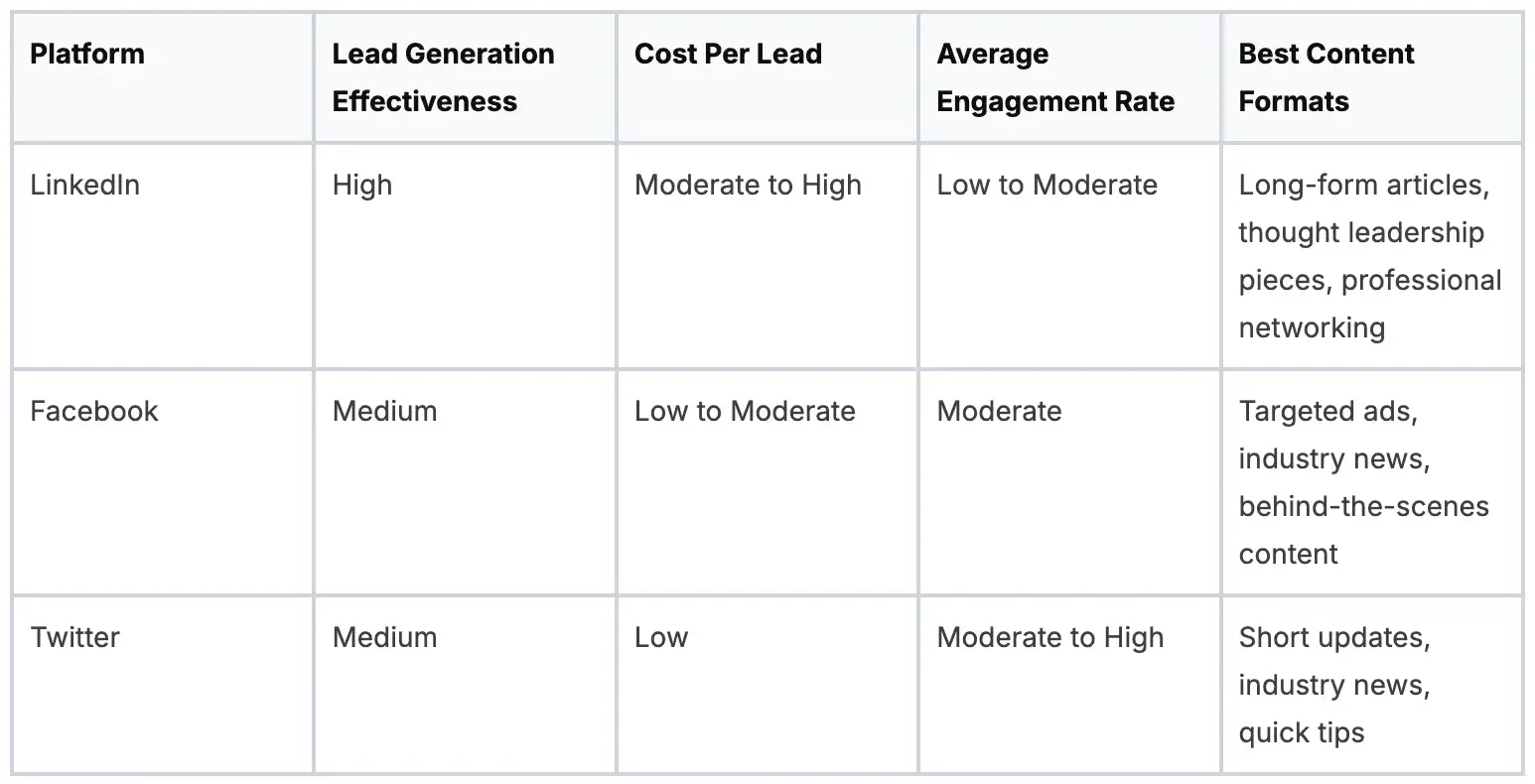
The table clearly demonstrates the distinct focus of B2B social media on building relationships and establishing expertise within the industry. B2C, conversely, centers on driving immediate sales and fostering brand affinity.
Successful B2B companies understand that building trust requires genuine engagement. It's not about simply broadcasting marketing messages. It's about interacting authentically, providing thoughtful responses, and offering real value.
This might involve sharing insightful articles, hosting webinars, or participating in relevant industry discussions. The core focus remains on cultivating relationships and showcasing expertise. Effective B2B social media needs to be strategic, data-driven, and aligned with the overall business goals.
Measuring B2B social media ROI can be complex due to the longer sales cycles. Traditional metrics like likes and shares often fall short of capturing the true impact. B2B marketers must focus on metrics that reflect the various stages of the buyer's journey.
Key metrics include website traffic from social media, lead generation, and influencer mentions. Tracking these KPIs helps businesses understand how social media contributes to pipeline growth and revenue generation. This data-driven approach allows for continuous optimization, ensuring that social media strategies stay effective and aligned with business objectives.
Not all social media platforms offer the same value for B2B marketing. A diverse online presence is good, but strategically focusing resources on platforms where your target audience spends time is crucial. This means understanding not only where B2B decision-makers are, but also how they interact on each platform. It’s about more than just posting; it’s understanding platform algorithms and user behavior.
For most B2B companies, LinkedIn should be the foundation of their social media strategy. As the primary platform for professional networking, it's the perfect place to connect with potential clients, partners, and industry leaders. Sharing thought leadership content, industry insights, and company updates on LinkedIn builds credibility and positions your business as a valuable resource. LinkedIn is the dominant platform in B2B social media marketing, with 85% of B2B marketers reporting it provides the most value compared to other channels like Facebook and YouTube. Over the past year, 68% of marketers have increased their LinkedIn usage, highlighting its importance in B2B strategies. Explore this topic further: 4 B2B Organic Social Media Trends.
While LinkedIn is vital, other platforms can contribute to a comprehensive B2B social media strategy. Twitter, for example, allows real-time engagement and participation in industry conversations. Sharing insightful comments and engaging in relevant discussions can build brand awareness and position your company as a thought leader.
Some B2B brands find surprising success on platforms typically associated with B2C marketing, like Instagram and even TikTok. These platforms offer opportunities to showcase company culture, connect personally with your audience, and reach a broader demographic.
The right platform mix for your B2B social media strategy depends on factors like your business objectives, target audience, and industry. A software company targeting developers might succeed on platforms like GitHub and Stack Overflow, while a manufacturing company might prioritize industry-specific forums or LinkedIn groups.
Analyzing engagement patterns within your industry offers valuable insights. Platforms like Octolens provide comprehensive social listening capabilities, allowing you to track conversations, identify key influencers, and understand competitor strategies. This data-driven approach empowers informed decisions about resource allocation. By understanding each platform's nuances and tailoring your content accordingly, you can effectively engage your target audience and achieve your B2B marketing goals.
.jpg&w=3840&q=75)
A successful B2B social media strategy depends on truly understanding your audience. This means creating content that speaks directly to decision-makers. It's not just about best practices; it's about understanding what motivates executives. This includes their pain points, priorities, and what kind of content they prefer.
B2B decision-makers are always searching for solutions to complex business problems. They're overwhelmed with information, so your content needs to stand out and deliver real value. Instead of generic product promotions, offer insightful analyses of industry trends. Showcase case studies that demonstrate tangible ROI. This positions your brand as a trusted advisor and a valuable resource.
Understanding the buying journey is also crucial. Decision-makers have different needs at each stage, from initial awareness to the final purchase. Tailor your content to address these specific needs, providing relevant information at the right time. This targeted approach effectively nurtures leads and guides them through the sales funnel. On average, B2B buyers interact with 3 to 7 pieces of content before contacting a sales representative. This highlights the importance of consistent, high-quality content in your B2B social media strategy. For more detailed statistics, check out this resource: Social Media Marketing Statistics.
Building trust means demonstrating real expertise. Thought leadership content is a powerful way to do this, but it must be authentic and avoid blatant self-promotion. Focus on offering unique perspectives, data-driven insights, and practical advice. This builds credibility and establishes your brand as a thought leader in your industry.
Consider creating original research reports. Contribute articles to respected industry publications. Host webinars on relevant topics. By consistently sharing valuable insights, you build authority and attract the attention of key decision-makers. This cultivates a following of engaged professionals who appreciate your expertise.
Different platforms and objectives call for different content formats. Long-form articles might do well on LinkedIn, while short, engaging videos perform better on platforms like Instagram or Twitter. Experiment with various formats – infographics, podcasts, interactive polls – to find what resonates with your target audience.
Consider the specific needs of each platform. LinkedIn might be ideal for sharing in-depth industry analyses, while Twitter is better suited for quick updates and real-time engagement. A diverse approach maximizes reach and engagement. Adapting your content strategy to each platform’s strengths ensures your message connects with the right audience effectively.
Many B2B companies operate in highly technical fields. However, decision-makers don't always have the same level of technical knowledge. Translate complex concepts into easily digestible insights. Use analogies, real-world examples, and clear visuals to make technical information accessible and engaging.
This helps decision-makers grasp the value of your product or service without getting lost in technical jargon. By focusing on practical applications and benefits, your content becomes relatable and impactful. This clear, concise communication ensures your message is understood and appreciated, even by non-technical decision-makers.
Artificial intelligence (AI) is making its presence felt in the B2B social media world. But it's important to look past the hype and concentrate on practical uses that bring real, measurable results. This means understanding how AI can improve, not replace, the human connection at the heart of B2B relationships.
One of the most useful ways to use AI in B2B social media is content personalization. AI algorithms sift through tons of data to understand individual preferences. This allows you to customize content and precisely target specific decision-makers. This personalized approach encourages stronger engagement and builds better relationships.
For example, AI can figure out what topics resonate with certain leads. This lets you deliver super-relevant content at the perfect time.
AI-driven personalization also improves B2B social media strategies by offering hyper-personalized ad targeting and lead generation. Considering the typically longer sales cycles in B2B, this is a big advantage. AI and machine learning tools examine loads of engagement data, helping companies identify promising leads and optimize their social media spending. This can lead to shorter sales cycles and better return on investment (ROI). Learn more about current organic social media trends: 4 B2B Organic Social Media Trends.
AI also offers powerful competitive intelligence tools. Platforms like Octolens can track competitor activity, analyze their social media approaches, and identify emerging industry trends. This allows you to stay ahead of the game, adjust to market changes, and make smart decisions about your own social media strategy.
Knowing your competitors’ strategies helps you find market gaps and tailor your messaging to differentiate yourself.
Predictive analytics is another area where AI shines. By analyzing past data, AI can anticipate future trends, predict campaign performance, and suggest the best times to post. This data-focused approach allows you to refine your content strategy, improve engagement rates, and maximize the impact of your B2B social media activities.
AI can even predict which kinds of content are most likely to generate leads, allowing you to focus on the most effective strategies.
While AI offers powerful tools for automation and optimization, it’s essential to keep the human element alive in B2B social media. Authenticity and genuine interaction are key to building solid relationships.
This means using AI strategically for tasks that benefit from automation, such as scheduling posts and analyzing data. Meanwhile, your team should handle tasks that require a human touch, like responding to comments and participating in conversations. Finding this balance ensures an efficient yet personable B2B social media strategy.
.jpg&w=3840&q=75)
Paid social media advertising presents a powerful opportunity to boost your B2B social media strategy and generate high-quality leads. It's more than just boosting organic posts; it's about using smart targeting and creative strategies to connect with key decision-makers and drive real business results.
Effective paid social campaigns start with laser-focused targeting. Instead of a broad approach, use professional data to zero in on actual decision-makers in your target industries. Platforms like LinkedIn offer powerful targeting based on job titles, company size, seniority, and even skills.
This granular approach ensures your ads are seen by the right people. It maximizes your budget and minimizes wasted impressions. Imagine a cybersecurity software company targeting CIOs and CISOs at Fortune 500 companies – that's the level of precision we're talking about.
This targeted approach differs significantly from B2C strategies, which often focus on broader demographics and interests. In B2B, reaching the right person is more valuable than reaching a large number of unqualified leads. This approach minimizes wasted ad spend and maximizes conversion potential. Also, consider retargeting to re-engage users who have already interacted with your website or content.
Your paid social ads, just like your organic content, need to resonate with decision-makers. B2B ad creative must address specific business challenges and offer clear solutions. Avoid generic messaging; focus on the specific pain points your target audience faces.
To showcase value, consider using case studies, testimonials, and data-driven insights. Experiment with different ad formats like video ads, carousel ads, and lead generation forms to discover what performs best. LinkedIn is a leader in organic social media, with 96% of content marketers using it. This is followed by Facebook at 76% and Twitter at 70%. Paid social media advertising also plays a vital role, with 85% of B2B marketers using promoted posts or ads. For more detailed statistics, check out this resource: Social Media Marketing Statistics.
This type of testing can help you identify which ad formats are most effective at capturing your audience's attention. Don't be afraid to try new things and see what works best.
B2B sales cycles are typically longer than B2C cycles, often involving multiple touchpoints and longer evaluation periods. Your paid social budget should account for this longer attribution window.
Don't expect instant conversions; focus on nurturing leads and tracking their progress through the sales funnel. Develop a clear attribution model that considers the different ways a lead might interact with your brand before converting.
For example, a lead might click a LinkedIn ad, download a white paper, and attend a webinar before becoming a qualified lead. Tracking these interactions provides valuable insights into the customer journey. This data allows you to accurately assess the impact of your paid social campaigns and optimize your spending. To understand the impact of your paid social media efforts, it's crucial to track these various touchpoints.
To further analyze platform effectiveness, let's look at the following table:
B2B Social Media Platform Performance Metrics
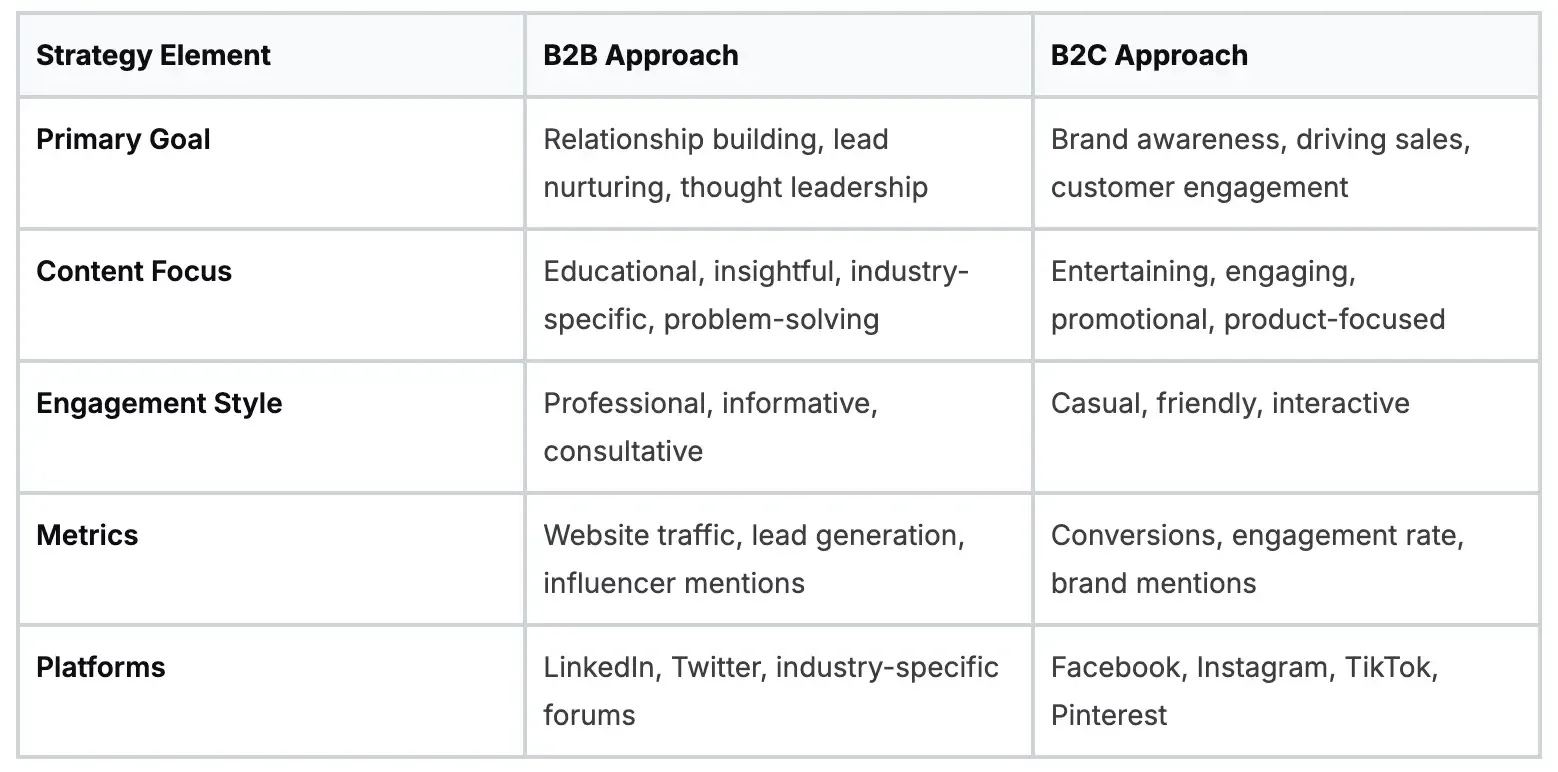
This table summarizes key performance indicators across major social platforms for B2B marketing, providing a helpful comparison for optimizing your strategy. As shown, LinkedIn generally provides high lead generation effectiveness but at a higher cost, while platforms like Facebook and Twitter offer lower costs per lead. Choosing the right platform depends on your specific goals and budget. Through careful planning and execution, paid social can become a core component of a successful B2B social media strategy.
Moving beyond vanity metrics like likes and shares, what truly defines a successful B2B social media strategy? The answer lies in tying social media activity to concrete business results, such as pipeline growth and revenue impact. This requires a shift in focus, prioritizing metrics that resonate with executive stakeholders who value tangible business outcomes.
Leading B2B organizations use attribution models to connect social media efforts to revenue generation. This involves tracking the entire customer journey, from the initial social media interaction to the final conversion. For example, a prospect might discover your brand through a sponsored LinkedIn post, download a whitepaper, attend a webinar, and eventually become a qualified lead. By mapping these touchpoints, you can accurately assess the role of social media in driving revenue.
This means moving beyond simply counting followers or likes. Instead, concentrate on metrics like website traffic from social media, lead generation, and influencer mentions. These key performance indicators (KPIs) provide a much clearer understanding of social media's contribution to business growth.
Communicating the value of your B2B social media strategy requires clear reporting. Develop dashboards that visualize key metrics and demonstrate the impact of social media on business objectives. This allows stakeholders to quickly grasp the return on investment (ROI) of your efforts.
These dashboards should present data in an easily digestible format. Visualizations like charts and graphs can effectively communicate complex data, highlighting trends and progress. Learn more in our article about 5 Best Social Listening Tools for B2B.
Benchmarking your performance against competitors and industry averages provides valuable context. This involves comparing your KPIs to similar businesses, which helps identify areas for improvement and showcase your competitive advantage.
Benchmarking isn’t about blindly copying others. Instead, use it to understand your market position and what steps are needed to achieve your objectives. For instance, knowing the average engagement rate for your industry allows for realistic goal setting and identifies areas for content or targeting improvements.
B2B social media is dynamic; continuous testing and optimization are vital for sustained success. By analyzing data and making data-driven adjustments, you can steadily improve results. This involves experimenting with different content formats, targeting strategies, and posting schedules.
Regularly analyze your performance and adapt as needed. What proved effective in the past might not work in the present. By remaining agile and responsive to data, you can ensure your strategy remains effective and aligned with business goals. This constant refinement is key to maximizing your impact and achieving long-term success in B2B social media.
The most impactful B2B social media strategies are directly connected to sales objectives. Instead of existing as separate marketing activities, they become integral parts of the sales process. This requires closing the gap between marketing and sales teams. It necessitates a collaborative strategy where insights gleaned from social media directly contribute to sales achievements.
Social media offers a treasure trove of information about potential customers. Find out more by reading our article on How Social Media Monitoring Can Inform Your Sales and Product Teams. This data can transform sales conversations. Instead of generic sales pitches, representatives can engage in personalized discussions.
For instance, imagine a sales rep learning that a prospect recently downloaded a whitepaper about a particular business challenge. Armed with this knowledge, the rep can tailor the conversation around that specific need. This instantly demonstrates value and builds rapport.
Furthermore, monitoring conversations on social media can reveal valuable buying signals. A prospect might mention a specific requirement, express dissatisfaction with a competitor, or actively seek recommendations. These signals create timely openings for sales outreach, significantly increasing the probability of a conversion.
Your B2B social media content should support every phase of the sales process. A prospect in the awareness stage, for example, might benefit from educational content that highlights industry trends and difficulties. On the other hand, a prospect in the decision-making stage needs content showcasing case studies, testimonials, and product demos.
This calls for a diverse content mix created to nurture leads through the sales funnel. By providing the right content at the right time, social media evolves into a powerful instrument for guiding prospects toward a purchase. A series of LinkedIn articles, for example, could address key challenges encountered by your target audience, ultimately leading to a product-focused webinar showcasing solutions.
Social selling enables your entire team to utilize the relationship-building potential of social media. This means equipping your team with the necessary tools and training to connect with prospects, develop relationships, and distribute valuable content.
Visualize your sales representatives as individual brand ambassadors on social media. This personalized approach builds trust and fortifies connections. It shifts sales away from a transactional process and fosters an ongoing dialogue. The focus is on cultivating genuine connections, not simply promoting products.
This authentic engagement fosters loyalty and positions your brand as a reliable collaborator.
Start leveraging the power of AI-driven social listening with Octolens today. Visit Octolens to learn more and try for free.