
B2B Customer Journey Mapping That Actually Drives Revenue
Why Most B2B Journey Maps Collect Dust (And Yours Won't)
Let's be straight: a slick B2B customer journey map doesn't magically equal success. I've personally witnessed tons of these maps become nothing more than expensive wall art, gathering dust in forgotten meeting rooms. The real difference? Treating B2B customer journey mapping as an ongoing process, not a one-and-done project.
One major trap is getting obsessed with making the map look perfect, while losing sight of its actual purpose: generating real business value. A visually stunning map is worthless if it doesn't give you usable insights. Always focus on the "so what?" for each touchpoint. For example, if you see cart abandonment at a certain stage, don't just note the rate. Dig into the why and brainstorm solutions right there on the map.
Getting everyone involved is also key. Successful B2B customer journey mapping needs input from everyone who interacts with customers – sales, marketing, customer service, product teams, even finance. Bring them in from the start. This way, your map accurately reflects the full customer experience and everyone’s bought into the changes that come out of the mapping process. It prevents the map from becoming just one department’s view of the world.
And the best maps are living, breathing documents. Customer behavior is always changing, so your map needs to keep up. Treat it like a constantly evolving guide, regularly updated with new data and insights. Build in feedback loops. Analyze shifts in customer actions. Adjust your map as needed. This keeps it relevant and a useful tool for making smart decisions.
To really get why some journey maps miss the mark, dive into strategies that actually work. This guide on B2B Customer Journey Mapping is a great starting point.
The real proof of B2B customer journey mapping is in the results. Companies using it often see a 15% boost in customer satisfaction, a 20-40% increase in revenue, and 10-20% in cost savings. These improvements come from better alignment between sales, marketing, and customer support, creating a smoother experience throughout the entire customer journey. Learn more about the impact of journey mapping here. By changing your approach from project to process, focusing on action over aesthetics, and embracing continuous improvement, your B2B customer journey map becomes a powerful growth engine, not just a pretty picture.
Forget those generic buyer persona templates you see everywhere. Real B2B customer journey mapping begins by truly understanding your customers. In my experience, the best insights don't come from simply asking customers what they want. Instead, look at what they actually do. The most successful B2B companies I've seen combine data like support ticket analysis with insightful customer interviews. This helps uncover the often hidden emotional drivers behind a purchase.
Let’s be honest: we don't always know why we make certain choices. Asking direct questions often leads to surface-level responses. But observing behavior – how customers navigate your website, what they ask your sales team, which support articles they read – tells a much richer story. This reveals the crucial gap between what customers say and what they do. And that’s the foundation of a truly insightful customer journey map.
For example, I once worked with a SaaS company struggling with low trial-to-paid conversions. Their surveys blamed "pricing." But after sitting in on sales calls and digging into website analytics, we found a different story. The problem wasn't the price, but the value proposition. The free trial wasn't showcasing the features that justified the cost. We redesigned onboarding to highlight the value drivers, and conversions jumped 20%.
Your frontline teams – sales, support, customer success – are a goldmine. They're talking to customers every day, hearing about their challenges, frustrations, and wins. Set up a system to capture this. Regular feedback sessions, dedicated Slack channels, or internal surveys can all unearth valuable nuggets. This creates a constant flow of real-world data to feed your customer journey map.
Tools like Octolens can also capture insights about your customers through social listening. You might be interested in: our article on the best social listening tools for B2B.
Here's an infographic showing the average number of touchpoints B2B customers have during their journey:
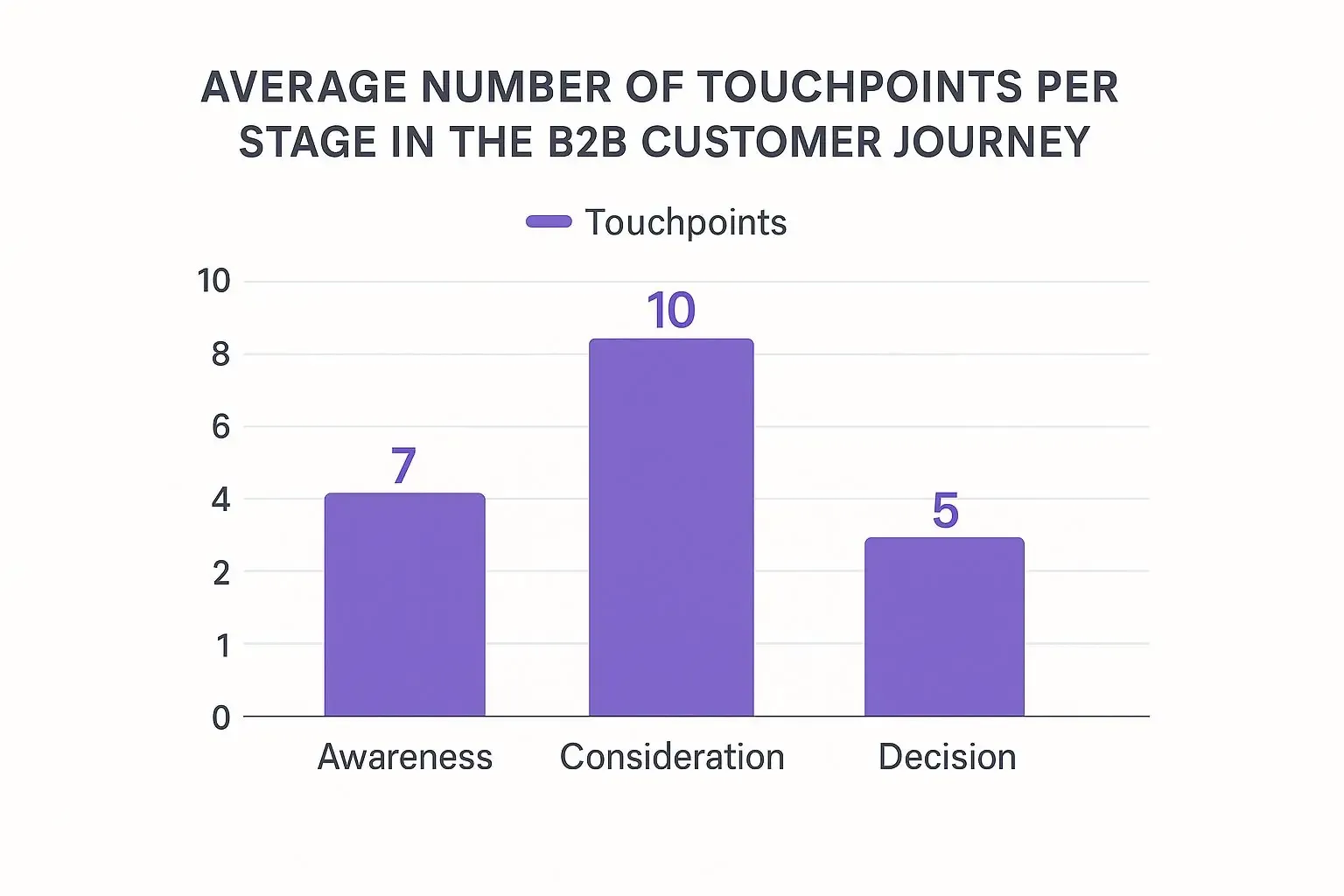
Notice the Consideration stage has the most touchpoints (10), followed by Awareness (7) and Decision (5). This reinforces the importance of valuable content and engaging experiences during research. Nurture those leads! It also suggests streamlining the decision stage to remove friction and smooth the path to conversion. Knowing these touchpoint patterns helps you allocate resources effectively and optimize each stage.
Before we move on, let's talk research. Choosing the right methods is crucial. The table below compares different approaches, considering cost, time, and the quality of insights you'll get.
Research Methods Comparison for B2B Journey Mapping
Research Method Time Required Cost Level Insight Quality Best Use Case Customer Interviews High Medium High Deep understanding of motivations and pain points Low High Medium Gathering broad feedback on specific aspects of the journey Ongoing Low Medium Understanding behavior and identifying friction points Medium Low High Uncovering objections and understanding the sales process Ongoing Medium Medium Identifying trends and monitoring brand perception
As you can see, each method has its strengths. Customer interviews offer rich qualitative data, while website analytics provide quantitative insights into behavior. Often, a combination of approaches yields the best results.
By shifting your focus from asking to observing, tapping into frontline insights, and visualizing touchpoints with data, your B2B customer journey mapping moves beyond theory. It becomes a real driver of business impact.
.webp&w=3840&q=75)
This Gartner screenshot really highlights how much more complex B2B buying has become. With so many touchpoints across various channels, a solid B2B customer journey mapping strategy is essential. Understanding these interconnected steps is key to a great customer experience and, ultimately, more conversions.
Your B2B buyers aren't passively waiting for a sales call anymore. They're online, doing their own research, forming opinions, and often making decisions long before your sales team even knows they exist. The real trick isn't tracking every click and download. It's figuring out which digital interactions actually matter in their purchase decision. A whitepaper download looks great on a report, but did it actually help close a deal?
Plus, the B2B landscape itself is changing. In recent years, it's become much more digital. Gartner predicts that by 2025, a whopping 80% of B2B sales interactions will be digital. This shift is largely thanks to Millennials and Gen Z taking over the market – they prefer self-service buying and AI-powered interactions. Check out more about this digital shift in B2B here. It just goes to show how important it is to understand how your buyers use digital channels to make decisions.
So, how do you make sense of all this digital activity? Focus on the interactions that truly move the needle. For instance, instead of tracking every social media like, look at which content actually drives traffic to your pricing page. Or, figure out which blog posts are leading to demo requests. This approach helps connect those online research patterns to actual offline purchases.
Another critical piece of B2B customer journey mapping is connecting online and offline actions. Just because a lead came through a referral doesn't mean they didn't check out your website first. Integrating your CRM data with website analytics and marketing automation platforms will give you a much clearer view. This helps understand how digital interactions contribute to offline conversions.
I remember working with a manufacturing company that swore trade shows were their main lead source. We analyzed their website traffic and found that many attendees were researching their products online before the event. Their website was playing a much bigger role than they realized. They ended up completely revamping their website content to specifically address those pre-show research needs.
Finally, prioritize your digital touchpoints. Not all interactions are created equal. Focus on the ones that drive real, measurable results. Think about using specialized customer experience mapping tools to visualize that digital-first B2B buyer journey. This lets you put your resources where they’ll have the biggest impact. By understanding how your buyers engage with your brand digitally, you can tailor your content to be in the right place at the right time, which ultimately leads to more revenue.
I've worked with a lot of B2B companies, helping them map their customer journeys. And let me tell you, the prettiest template won't do you any good if your team can't actually use the darn thing. The most effective maps find that sweet spot between deep insights and practical application. How? By building a flexible framework that works for everyone, from the C-suite to sales, while keeping it consistent across your customer segments.
Your B2B customer journey map shouldn't be a dusty document on a shelf. Think of it as a living, breathing tool. It needs to be easily digestible at a glance, but also offer deeper layers of information when needed. A clear visual layout is key. I often use a horizontal timeline – it just works. You can easily track touchpoints from left to right, like following a story.
Within each stage, clearly spell out the customer's actions, motivations, pain points, and even their emotions. For example, during the "Consideration" phase, imagine a customer comparing different vendors. They might be feeling overwhelmed by all the information, desperately trying to find a solution that seamlessly integrates with their current systems. That's where you can pinpoint opportunities.
Little visual cues go a long way. Emojis or color-coding can make the map even easier to scan. A simple green checkmark for a positive experience or a red "X" for a friction point communicates volumes instantly.
When it comes to B2B customer journey mapping, there’s no one-size-fits-all solution. Your sales team has different needs than your product team. Create variations of your map tailored to each audience. A high-level overview works for executive presentations, while frontline teams need the nitty-gritty details.
Let’s say you're creating a sales-focused map. You’d want to emphasize the touchpoints where sales reps can really make a difference – highlighting specific objections and upselling opportunities. On the other hand, a product team’s map might zoom in on feature usage and customer feedback to guide product development.
Want to get everyone on board? Mapping workshops are your secret weapon. Gather representatives from different departments and build the map together. I’ve run plenty of these, and the best ones are interactive and focused. Start with clear objectives. What do you want to achieve? Then, walk the group through each stage of the customer journey. Encourage open discussion and brainstorming.
Sticky notes are your friend here. They’re great for capturing ideas and pain points. Plus, it keeps everyone engaged and allows you to visually see different perspectives. After the workshop, document everything and assign owners for action items. That’s how you turn insights into real, tangible improvements.
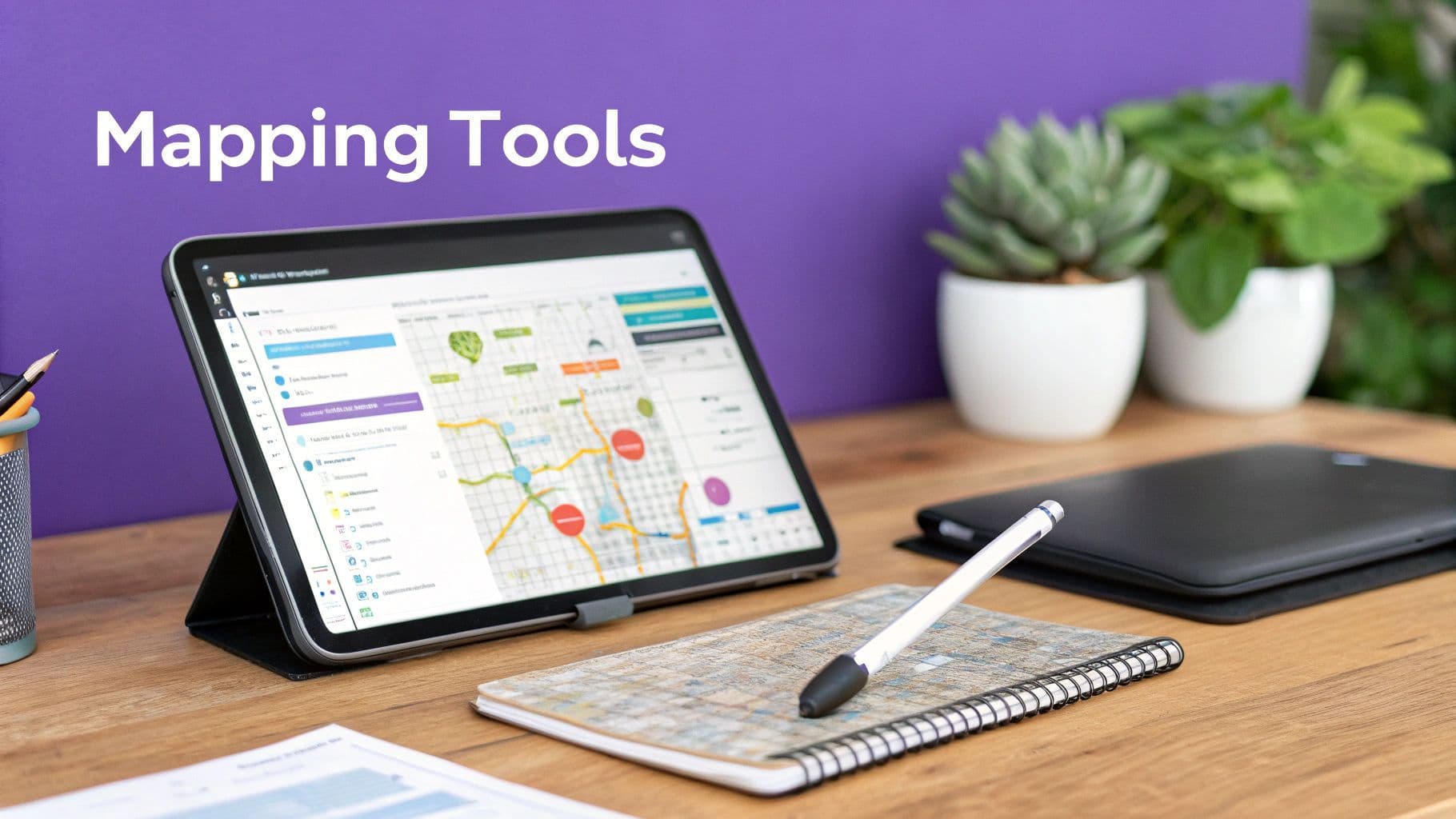
So, what tools should you use? There are tons of journey mapping platforms out there. The perfect one for your team depends on your budget and how you work. Some popular choices are Miro, Mural, and Smaply. My advice? Take advantage of free trials. Test drive a few and see which one clicks.
Before we move on, let's talk about some specific tools that can help you bring your customer journey maps to life. Here’s a quick comparison:
Journey Mapping Tools and Platforms Comparison: Evaluation of popular journey mapping tools based on features, pricing, and ease of use.
Tool Name Price Range Best Features Learning Curve Team Size Fit Miro Free - Enterprise (contact for pricing) Collaborative whiteboarding, versatile templates Easy Small to Large Mural Free - Enterprise (contact for pricing) Visual collaboration, robust facilitation tools Moderate Medium to Large Smaply Starts at $69/month Dedicated journey mapping features, stakeholder management Moderate Small to Medium
As you can see, each tool offers a unique set of features and pricing options. Miro is a great all-around choice for visual collaboration, while Mural excels in facilitating workshops. Smaply provides more specialized journey mapping capabilities.
The goal isn't just to create a map—it’s to create a map that your team actually uses. By focusing on usability, tailoring the details to different audiences, and building the map collaboratively, your B2B customer journey map becomes a powerful tool. It goes from being a static document to a dynamic asset that drives real business results. Don't let it gather dust; make it the heart of your customer-centric strategy.
This is where the real work begins. A visually appealing B2B customer journey map is fantastic, but it's useless if it doesn't result in actual change. I've witnessed countless companies stall at this stage, admiring their creation instead of putting it into action. The successful ones? They concentrate on implementing changes with measurable impact instead of trying to do everything at once.
Once you've mapped your customer journey, you'll likely uncover numerous potential areas for improvement. Don't feel overwhelmed! Prioritize changes based on their potential to boost revenue.
For example, if your B2B customer journey mapping reveals a significant drop-off during the demo scheduling process, simplifying that could directly impact sales. Perhaps it's as easy as adding a scheduling tool like Calendly directly onto your website. This removes friction and makes booking a demo a breeze.
Another high-impact area might be optimizing your onboarding process. If new customers are churning quickly, improving their initial experience can drastically increase their lifetime value. This could involve crafting more targeted training materials or assigning dedicated customer success managers.
Journey-driven changes often require collaboration across different teams. Getting buy-in from everyone involved is essential. Share the journey map with key stakeholders, highlighting specific pain points and proposed solutions. Explain how these changes will benefit not only the customer but also each department.
I once worked with a software company where sales and marketing weren't aligned on lead qualification criteria. This resulted in sales wasting time on unqualified leads, leaving marketing feeling like their efforts were wasted. By mapping the journey together, both teams recognized the disconnect and collaborated on a new, shared definition of a qualified lead.
To ensure those great ideas actually come to fruition, you need accountability. Assign owners for each action item and establish clear deadlines. Regular check-in meetings can help monitor progress and address any roadblocks. This fosters a sense of ownership and guarantees everyone is working towards the same objective.
How do you know if your efforts are successful? Track key metrics related to the specific changes you've implemented. If you streamlined the demo scheduling process, track demo conversion rates. If you improved onboarding, monitor customer churn and lifetime value. This data-driven approach provides tangible evidence of the impact of your B2B customer journey mapping and justifies continued investment in optimization.
For more information on generating leads from customer insights, check out our guide on how social listening can help find leads.
B2B customer journey mapping isn't a one-off project; it's an ongoing process. Customer behavior is constantly evolving, so your map needs to adapt. Cultivate a culture of continuous optimization. Regularly review your map, gather feedback from customers and internal teams, and make adjustments as needed. This ensures your journey map stays relevant and remains a valuable tool for driving revenue growth.
By prioritizing high-impact changes, fostering cross-functional alignment, establishing accountability, and measuring results, you can transform your B2B customer journey map from a static document into a dynamic engine for business growth. This ongoing dedication to improvement is what distinguishes companies that simply map the journey from those that truly master it.
Let's talk about measuring the success of your B2B customer journey mapping. So many companies get hung up on vanity metrics—likes, shares, downloads—stuff that looks good on a report but doesn't always translate into actual business growth. In my experience, the most effective B2B companies dig deeper. They're looking at the metrics tied directly to revenue and building long-term customer relationships.
Picking the right Key Performance Indicators (KPIs) really depends on where your customer is in their journey. Early on, in the Awareness stage, you might track website traffic from specific keywords or how people are engaging with your thought leadership pieces. This gives you a sense of whether your content is resonating with the right audience.
As customers move into the Consideration stage, things like demo requests, visits to your pricing page, and engagement with case studies become more important. These are signs of genuine interest and buying intent. Finally, in the Decision stage, you'll want to keep an eye on conversion rates, deal size, and how long the sales cycle takes. This data paints a clear picture of how well your sales process is turning leads into paying customers.
For example, imagine you're selling enterprise software. A vanity metric might be the number of whitepaper downloads. A much more insightful KPI would be the percentage of those downloads that actually turn into qualified sales leads. Big difference.
Effective B2B customer journey mapping isn't a one-and-done exercise. It's a constantly evolving process. Make it a habit to collect feedback from customers at every touchpoint. Short surveys, post-purchase interviews, or even feedback forms on your website can work wonders. Use this feedback to refine your journey map, identify areas for improvement, and make sure your strategy stays relevant.
I've seen firsthand how valuable this can be. For example, a customer might tell you they're frustrated with a long contract negotiation process. That's gold! You can then streamline the process, remove the friction, and shorten the sales cycle, making everyone happier.
Data is only powerful if you can understand it and act on it. Create clear, concise reports that track your KPIs across different journey stages. These reports shouldn't be complicated. They should be easy to digest and, most importantly, actionable. They should help you spot trends, identify potential problems, and measure the impact of your optimization efforts. This data-driven approach is also great for keeping stakeholders in the loop and ensuring everyone is working towards the same business objectives.
Smart B2B companies are using journey insights to get even more sophisticated. They’re predicting customer churn by looking at patterns of behavior. For example, decreased product usage or a sudden increase in support tickets might signal dissatisfaction and potential churn risk. If you catch these early warning signs, you can proactively address the issues and improve customer retention.
Journey mapping can also highlight expansion opportunities. If customers are constantly engaging with content related to a specific product feature, that’s a pretty good indicator they might be interested in upselling or cross-selling opportunities.
This isn't about simply drawing a map; it's about using that map to uncover actionable insights, optimize your sales and marketing, and ultimately boost your bottom line. You might also find our post on social listening vs. social monitoring useful for gathering these crucial insights.
By understanding which touchpoints and stages have the biggest influence on conversions, you can allocate your resources more strategically. This makes sure you’re investing your budget where it counts, maximizing your ROI across different customer segments. Effective B2B customer journey mapping gives you the clarity to pinpoint those high-impact areas.
Alright, so you’re ready to put all this customer journey mapping knowledge to work. This roadmap is your practical, get-it-done-today plan for launching your B2B customer journey mapping project. We’ll look at realistic timelines, potential roadblocks, and what to expect at each stage. Think of it as your friendly guide to journey mapping success.
This first phase is all about gathering the essential intel you need. Just like prepping the ground before building a house, this sets you up for long-term success.
Define Objectives: What are you hoping to achieve with B2B customer journey mapping? Are you aiming for higher conversions, improved customer retention, or something else entirely? Clearly defining your goals from the outset will keep your efforts laser-focused.
Identify Key Stakeholders: Get representatives from sales, marketing, customer service, and any other relevant departments on board. This ensures everyone’s voice is heard and you get a truly holistic view of the customer journey. From my experience, this cross-departmental collaboration is key to unlocking valuable insights.
Choose Your Tools: Select the right tools to make your life easier. Personally, I’m a big fan of collaborative platforms like Miro and Mural for visualizing journey maps.
Initial Customer Research: Start gathering both qualitative and quantitative data. A few initial customer interviews and a quick dive into your website analytics can reveal a surprising amount.
Now that you’ve laid the groundwork, it’s time to build your actual map. This is where your research starts to take shape.
Deep Dive into Customer Research: Go deeper with your research. More customer interviews, surveys, and analysis of data from your CRM systems and support interactions will paint a richer picture of your customer’s experience.
Develop Customer Personas: Create detailed personas representing your ideal customers. This will help you put a face to the data and make it easier to understand their specific needs and motivations as they interact with your brand.
Map Key Touchpoints: Identify every single interaction your customers have with your brand, both online and offline, across all channels. Think about everything from website visits and email interactions to social media engagement and in-person events.
Visualize the Journey: Use your chosen tools to create a visual representation of the journey. This visual map will become your central document for your B2B customer journey mapping initiative.
This is where the rubber meets the road. You’ve got your map, now it’s time to put it into action.
Prioritize Improvements: Identify the biggest pain points and the most promising opportunities for improvement. Focus your energy on changes that will have the greatest impact on your business. I've seen too many teams get bogged down in minor details; focus on the big wins first.
Implement Changes: Start putting your plan into action. This could involve website updates, process improvements, sales training programs, or any number of other changes.
Measure Results: Track key KPIs to see the real impact of your efforts. This data-driven approach proves the value of B2B customer journey mapping and guides future iterations. It also shows your stakeholders that this work is making a difference.
Continuous Optimization: Your journey map isn’t a static document. Regularly review and adjust it as needed to stay relevant in the ever-changing B2B landscape.
In my experience, setting realistic timelines and assigning clear ownership for each task is crucial. Don’t be afraid to adapt your plan as you go. The best journey maps are living documents that are actively used and constantly refined.
Ready to take your customer understanding to the next level and boost revenue growth? Octolens, an AI-powered social listening tool built for B2B SaaS, can help you unearth valuable customer insights and optimize your journey map for maximum impact. Check out how Octolens can elevate your B2B customer journey mapping.