All v2 connections use the same server URL and OAuth — there’s no API key to paste.
On first use, your client opens a browser tab where you sign in to Octolens and approve the connection.
You can launch any of these flows from inside the app under Settings → MCP → Setup Octolens MCP, which walks you through the same steps per tool.
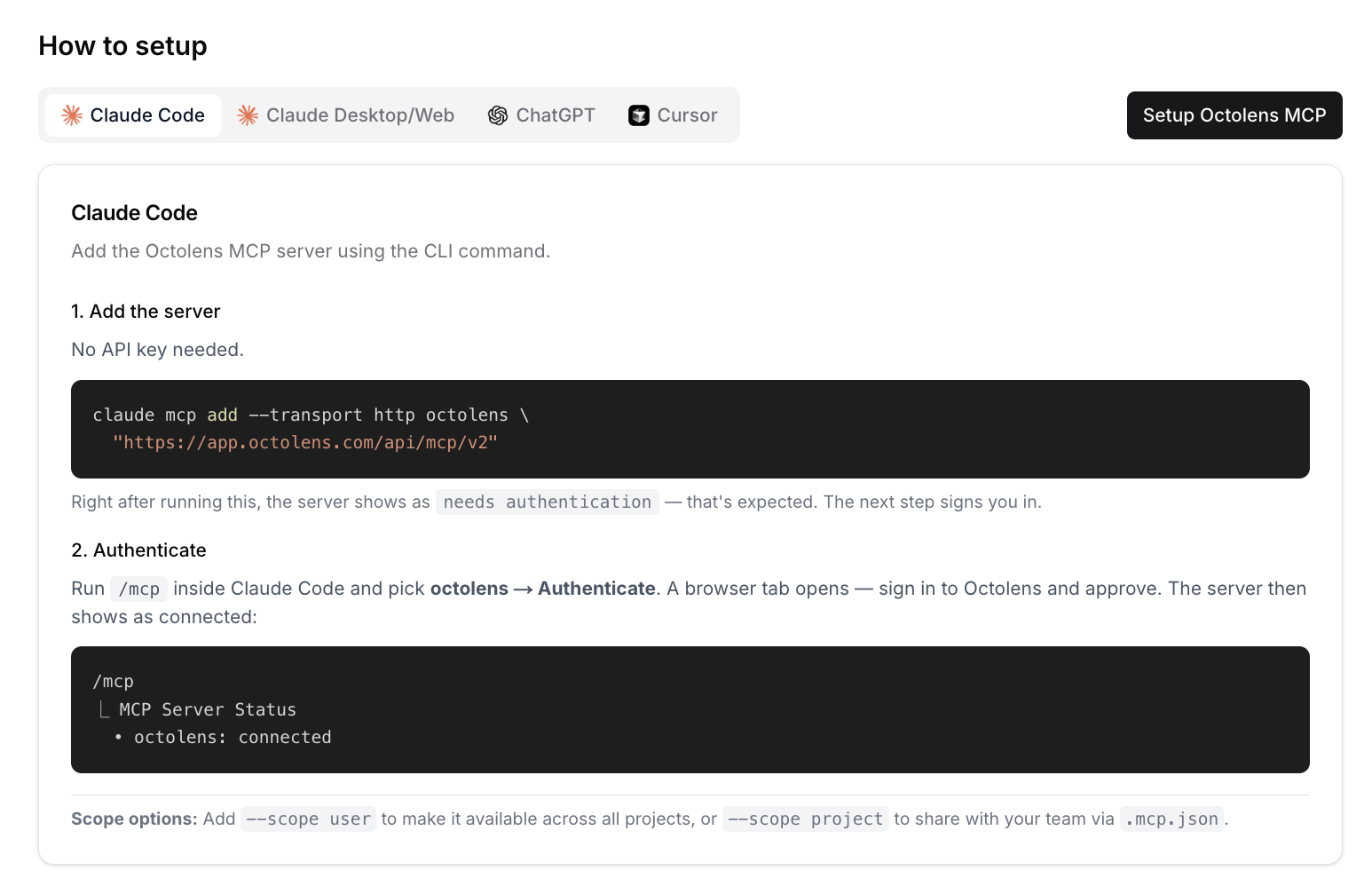
Claude Code
Add the Octolens MCP server using the CLI command.
1. Add the server
No API key needed.
Right after running this, the server shows as needs authentication — that’s expected. The next step signs you in.
2. Authenticate
Run /mcp inside Claude Code and pick octolens → Authenticate. A browser tab opens — sign in to Octolens and approve. The server then shows as connected:
Scope options: Add --scope user to make it available across all projects, or --scope project to share with your team via .mcp.json.
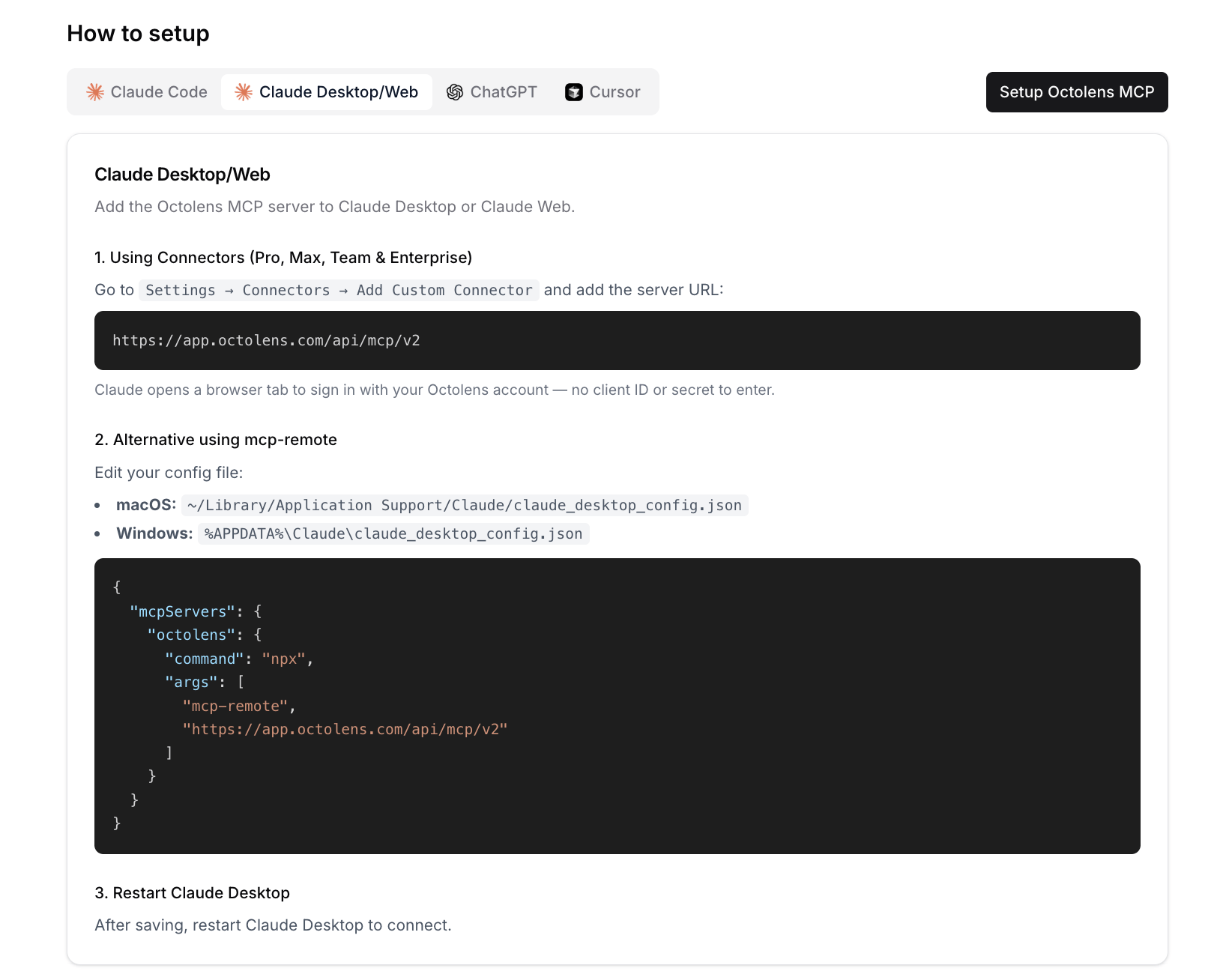
Claude Desktop / Web
Add the Octolens MCP server to Claude Desktop or Claude Web.
1. Using Connectors (Pro, Max, Team & Enterprise)
Go to Settings → Connectors → Add Custom Connector and add the server URL:
Claude opens a browser tab to sign in with your Octolens account — no client ID or secret to enter.
2. Alternative: using mcp-remote
Edit your config file:
- macOS:
~/Library/Application Support/Claude/claude_desktop_config.json
- Windows:
%APPDATA%\Claude\claude_desktop_config.json
3. Restart Claude Desktop
After saving, restart Claude Desktop to connect.
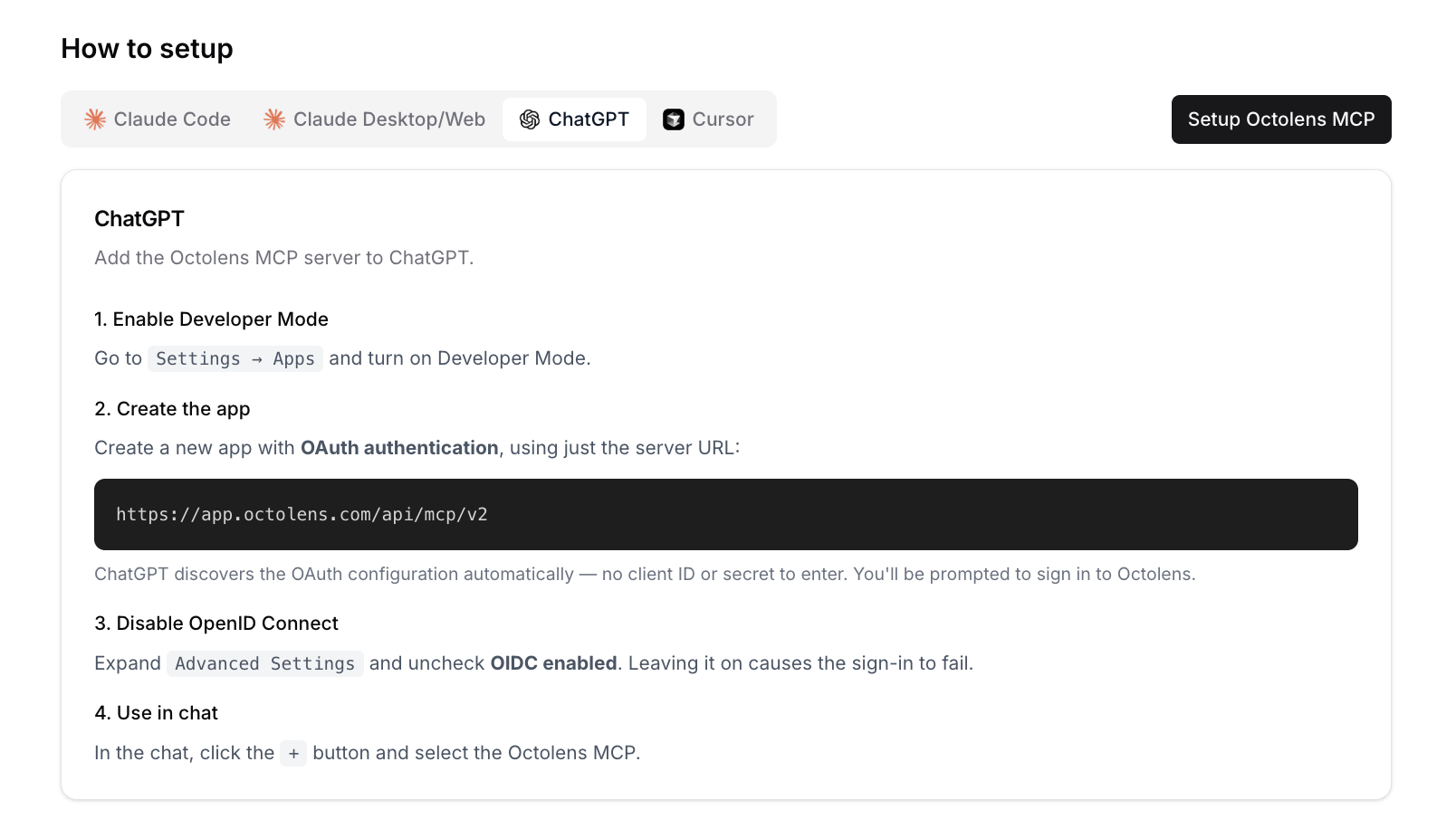
ChatGPT
Add the Octolens MCP server to ChatGPT.
1. Enable Developer Mode
Go to Settings → Apps and turn on Developer Mode.
2. Create the app
Create a new app with OAuth authentication, using just the server URL:
ChatGPT discovers the OAuth configuration automatically — no client ID or secret to enter. You’ll be prompted to sign in to Octolens.
3. Disable OpenID Connect
Expand Advanced Settings and uncheck OIDC enabled. Leaving it on causes the sign-in to fail.
4. Use in chat
In the chat, click the + button and select the Octolens MCP.
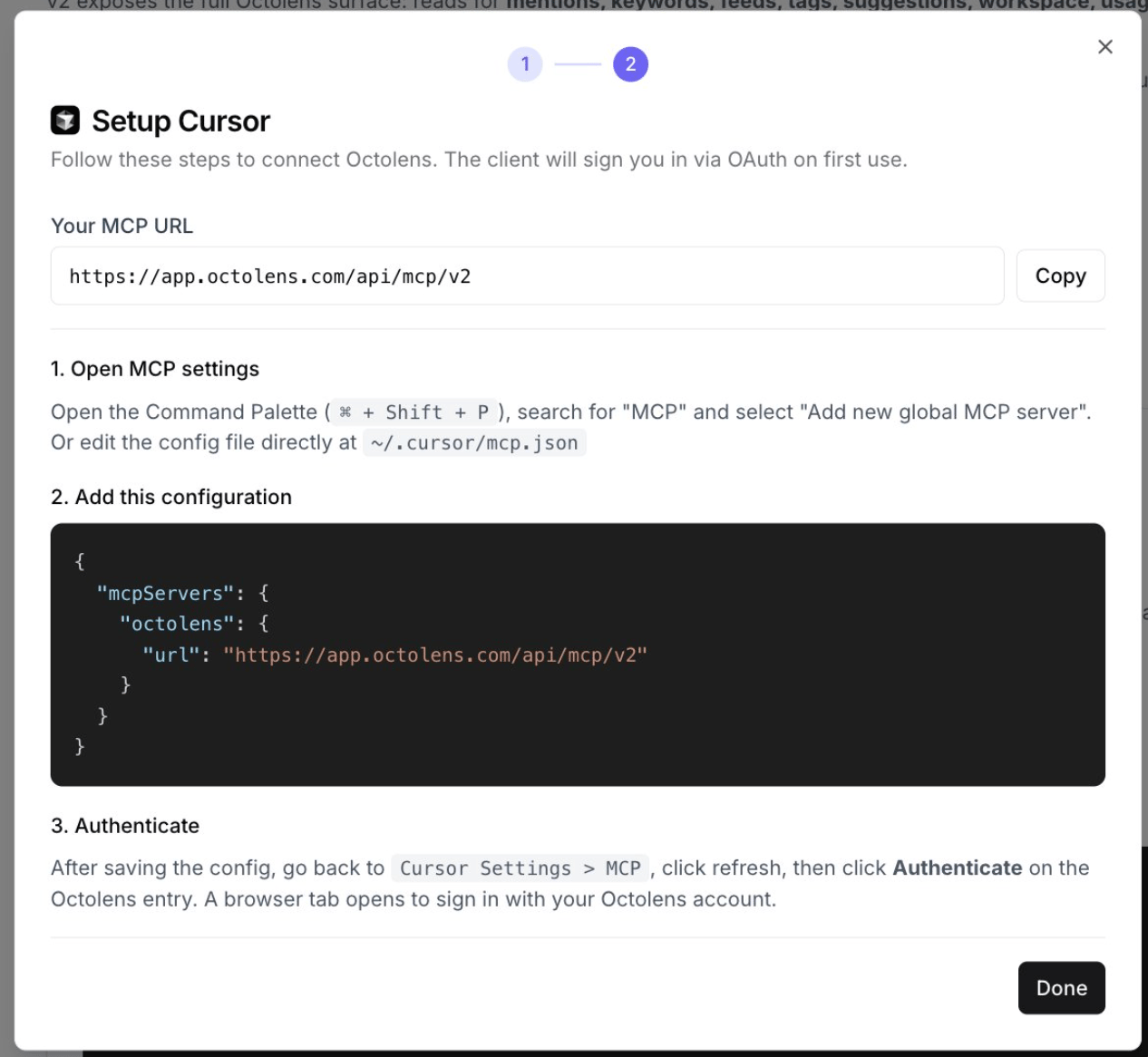
Cursor
Add the Octolens MCP server to your Cursor IDE.
1. Open MCP settings
Open the Command Palette (⌘ + Shift + P on Mac, Ctrl + Shift + P on Windows), search for “MCP” and select “Add new global MCP server”.
Or edit the config file directly:
- macOS/Linux:
~/.cursor/mcp.json
- Windows:
%USERPROFILE%\.cursor\mcp.json
2. Add this configuration
3. Authenticate
After saving the config, go back to Cursor Settings → MCP, click refresh, then click Authenticate on the Octolens entry. A browser tab opens to sign in with your Octolens account. Once connected, use the MCP tools in Agent mode.